


PureVPN Pricing Guide 2026: Plans, Discounts, and Best Value Options
PureVPN Pricing Guide 2026: Plans, Discounts, and Best Value Options is a detailed and updated guide that explains the latest PureVPN pricing structure, including monthly, yearly, and long-term subscription plans. It covers current discounts, coupon deals, and hidden savings opportunities to help users choose the most cost-effective option. The blog also breaks down each plan’s features, compares value across tiers, and highlights the best choices for streaming, privacy, and everyday browsing. This guide is designed to help readers make an informed decision and get the maximum value from their PureVPN subscription in 2026.
Table of Contents
- 1 Introduction to PureVPN Pricing in 2026
- 2 PureVPN Subscription Plans Overview
- 3 Monthly vs Annual vs Long-Term Plans
- 4 PureVPN Pricing Table Comparison
- 5 Discounts, Coupons, and Seasonal Offers
- 6 PureVPN Features 2026: What Makes It Stand Out
- 7 Add-Ons and Extra Costs
- 8 Free Trial and Refund Policy
- 9 Which PureVPN Plan Offers Best Value?
- 10 Hidden Costs You Should Know
- 11 Advantages of PureVPN
- 12 Disadvantages of PureVPN
- 13 PureVPN vs Competitors Pricing Snapshot
- 14 Expert Insights on VPN Pricing Trends
- 15 Conclusion
- 16 Frequently Asked Questions
Introduction to PureVPN Pricing in 2026
Pricing in the VPN world changes faster than most people expect, and PureVPN is no exception. One moment you’re seeing a cheap monthly deal, and the next, a long-term discount drops the price dramatically. This constant shift makes it confusing for users who just want a simple answer: How much does PureVPN actually cost in 2026?
PureVPN has positioned itself as a flexible, budget-friendly VPN with multiple pricing tiers and frequent promotional offers. Instead of a single fixed price, the service uses a “dynamic discount model,” meaning the final cost depends heavily on plan length, region, and ongoing promotions. In 2026, this approach is even more visible, with monthly plans sitting at premium levels while long-term subscriptions offer deep cuts.
At its core, PureVPN pricing is designed to push users toward longer commitments. The monthly plan feels expensive on purpose, while the 1-year and 2-year plans become significantly cheaper per month. This structure is common in the VPN industry, but PureVPN pushes it further with frequent coupon campaigns that can drop prices by up to 70% or more.
Understanding these pricing layers is essential before choosing a plan. Without it, users often end up overpaying for the same service simply because they didn’t explore the discount structure properly.
PureVPN Subscription Plans Overview
PureVPN offers three main subscription tiers in 2026: Standard, Plus, and Max. Each tier builds on the previous one, adding more privacy tools and security features.
Standard Plan Explained
The Standard plan is the entry-level option. It includes core VPN protection such as encryption, global servers, and basic privacy tools. It is designed for users who only need secure browsing, streaming access, and basic anonymity online.
While it is the cheapest tier, it still includes strong security foundations like AES-256 encryption and support for multiple devices. However, it does not include advanced extras like password management or dark web monitoring.
Plus Plan Explained
The Plus plan adds extra security layers beyond basic VPN protection. It typically includes password management tools, enhanced tracking protection, and cloud-based privacy features. This plan is ideal for users who want more than just a VPN tunnel.
It’s often considered the “balanced option” because it combines affordability with useful extras without reaching the high cost of premium tiers.
Max Plan Explained
The Max plan is the most advanced tier. It includes everything from the Plus plan along with additional privacy tools such as personal data monitoring and identity protection features.
This plan is targeted at users who prioritize full digital security rather than just VPN access. It is also the most expensive, but frequent discounts often bring it closer to mid-tier pricing.
Monthly vs Annual vs Long-Term Plans
Understanding PureVPN pricing requires comparing subscription lengths. The same service can cost drastically different amounts depending on how long you commit.
Monthly Subscription Costs Breakdown
Monthly pricing is the most expensive option. In 2026, monthly plans typically range between $10.95 and $19.95 per month, depending on the tier. This pricing is designed for short-term users or those testing the service.
While flexible, monthly plans are not cost-effective. Over a year, they can cost more than triple the discounted long-term plans.
One-Year Plan Pricing Advantages
The one-year plan is where pricing starts to become reasonable. On average, users pay around $2.99/month for Standard, with higher tiers costing more.
This plan often includes promotional months or seasonal discounts, making it a strong middle-ground option for users who want savings without committing for multiple years.
Two-Year and Five-Year Hidden Savings
The biggest savings appear in the 2-year plan, which can reduce the cost to as low as $2.03/month. Occasionally, PureVPN introduces rare five-year deals that drop pricing to around $1.49/month, making it one of the cheapest VPN offers in the market.
However, these long-term plans require upfront payment and depend heavily on promotional timing.
PureVPN Pricing Table Comparison
Below is a simplified comparison of current 2026 pricing structures:
Plan Type | Standard | Plus | Max |
Monthly | ~$10.95–$12.95 | ~$14.95 | ~$19.95 |
1-Year | ~$2.99/month | ~$4.66/month | ~$5.33/month |
2-Year | ~$2.03/month | ~$2.96/month | ~$3.48/month |
Promo 5-Year | ~$1.49/month | Not always available | ~$1.49/month |
Discounts, Coupons, and Seasonal Offers
Discounts play a huge role in PureVPN pricing. Without them, most plans would feel significantly more expensive.
Black Friday and Holiday Discounts
During major sales events, PureVPN can offer discounts ranging from 70% to 90% off long-term plans. These events are where users often see the lowest possible pricing.
Holiday deals also frequently include bonus months added to subscriptions, increasing overall value without raising cost.
Student and Limited-Time Deals
Occasionally, PureVPN runs student discounts or limited coupon codes that further reduce pricing. These deals are not always publicly advertised and often change monthly.
Because of this, many users rely on coupon tracking sites to find the best active offers.
PureVPN Features 2026: What Makes It Stand Out
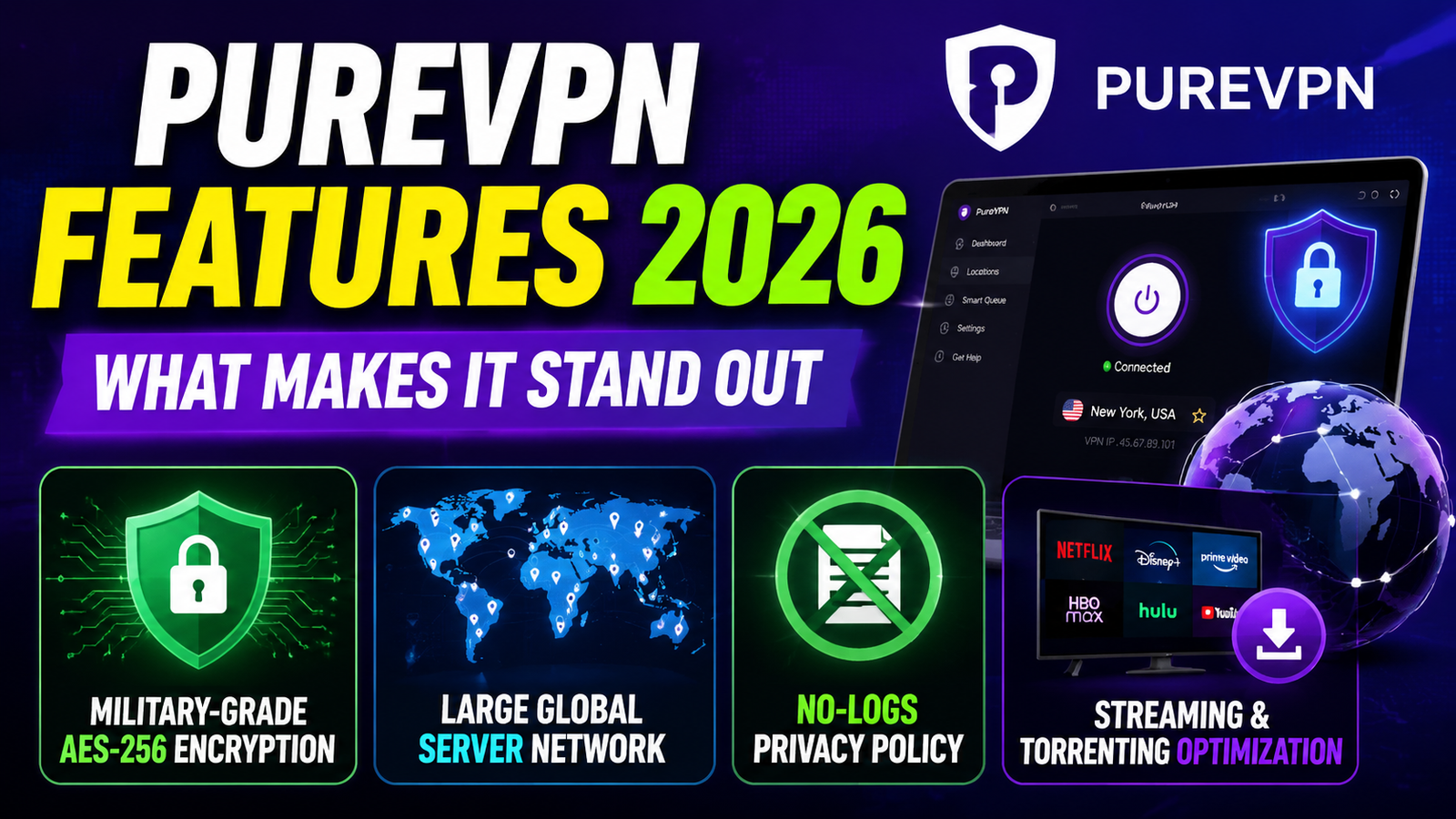
PureVPN comes packed with many tools, but a few features truly stand out in 2026 because they directly impact speed, privacy, and everyday usability. These are the core reasons users choose it over many competitors, especially when balancing affordability with strong security.
Military-Grade AES-256 Encryption
One of the strongest features of PureVPN is its AES-256 bit encryption, which is considered virtually unbreakable. This level of security is used by banks, governments, and military organizations to protect sensitive data.
Large Global Server Network
PureVPN offers access to a massive network of 6500+ servers across 70+ countries, making it easy to connect almost anywhere in the world. This wide coverage helps users bypass geo-restrictions and access content libraries from different regions without hassle.
No-Logs Privacy Policy
Privacy is one of the main reasons people use VPNs, and PureVPN addresses this with a strict no-logs policy. This means it does not store browsing history, connection activity, or personal online behavior.
For users, this adds an important layer of trust—what you do online stays private. Even in situations involving data requests, there is no stored activity to expose. This feature is especially important for journalists, remote workers, and privacy-conscious users who want complete anonymity.
Streaming & Torrenting Optimization
PureVPN is highly optimized for streaming HD/4K content and secure torrenting. It provides dedicated servers that help bypass geo-blocks on platforms like Netflix, Disney+, and Amazon Prime Video.
At the same time, it supports P2P file sharing, allowing users to download and upload torrents safely without revealing their real IP address. Combined with strong encryption, this ensures both speed and anonymity, making it a reliable option for entertainment and secure file transfer.
Add-Ons and Extra Costs
PureVPN is not just about subscription pricing—add-ons can significantly affect the final cost.
Dedicated IP Pricing
A dedicated IP is often available as an optional upgrade. This is useful for users who need stable access to banking systems, business tools, or remote servers.
It typically costs a few dollars per month extra depending on region and availability.
Port Forwarding & Security Tools
Some advanced networking features such as port forwarding or enhanced privacy tools are also billed separately. These are optional but can increase total monthly cost if enabled.
Free Trial and Refund Policy
7-Day Trial Overview
PureVPN offers a short trial on mobile platforms. This allows users to test basic features before committing to a subscription.
31-Day Money-Back Guarantee
A major advantage is the 31-day refund policy, which gives users a full month to evaluate performance risk-free. If the service does not meet expectations, users can request a refund within this period.
This makes PureVPN relatively safe to try compared to many subscription-based services.
How Cookly.me Helps Travelers Discover Authentic Cooking Classes
RDX Sports Explained: Features, Product Range, and Customer Benefits
Challenger Breadware Kitchen Review: Is It Worth the Investment for Serious Bakers?
How The Escape Game Entertainment Creates Unforgettable Group Adventures
How Gorila.sk Makes Online Shopping Easy for Book Lovers
Which PureVPN Plan Offers Best Value?
Best Choice for Beginners
For beginners, the Standard 1-year or 2-year plan is usually the best choice. It provides strong security at the lowest price without unnecessary extras.
Best Choice for Streaming
For streaming users, the Plus plan is often more suitable due to its improved privacy and connection stability features.
Best Choice for Privacy Users
For users focused on full digital protection, the Max plan is the strongest option, especially when discounted.
Hidden Costs You Should Know
One of the most overlooked aspects of PureVPN pricing is renewal cost. Many users sign up for discounted rates but are surprised when renewal prices increase significantly.
Another hidden factor is add-ons. While optional, features like dedicated IP or advanced monitoring tools can increase total monthly spending.
Understanding these factors helps avoid unexpected expenses later.
Advantages of PureVPN
PureVPN has become popular mainly because it combines affordability with a wide feature set. It is designed for users who want reliable privacy protection without paying premium VPN prices.
Affordable Long-Term Pricing
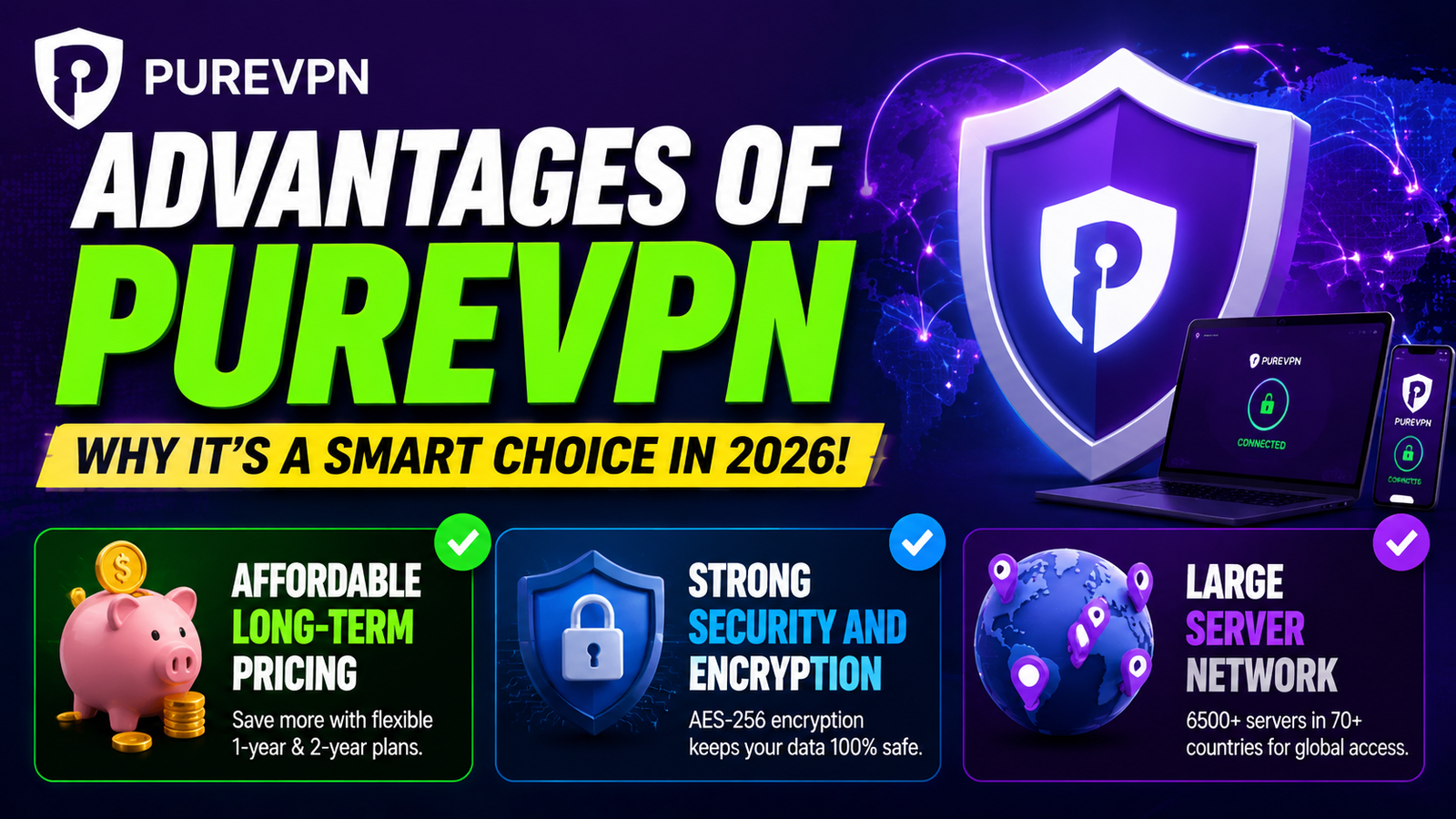
One of the biggest advantages of PureVPN is its low-cost long-term plans. When users choose 1-year or 2-year subscriptions, the monthly cost drops significantly, making it one of the more budget-friendly VPN options in 2026.
This pricing structure is especially useful for students, freelancers, and everyday internet users who want security without overspending.
Strong Security and Encryption
PureVPN uses AES-256-bit encryption, which is one of the highest security standards available today. This ensures that your internet traffic remains protected from hackers, trackers, and unauthorized access.
It also includes features like a kill switch, which automatically disconnects your internet if the VPN drops, preventing accidental data leaks.
Large Server Network
With 6500+ servers in 70+ countries, PureVPN provides excellent global coverage. This helps users access geo-restricted content easily and ensures better speed by reducing server congestion.
A wide server network also improves reliability, especially for streaming and browsing from different regions.
Disadvantages of PureVPN
High Monthly Pricing
The biggest drawback is the expensive monthly plan. While long-term plans are affordable, the monthly subscription is significantly higher, making it less attractive for short-term users.
This pricing structure pushes users toward longer commitments.
Inconsistent Speeds on Some Servers
Although PureVPN offers decent speeds overall, performance can vary depending on the server location and load. Some distant servers may result in slower connections, especially during peak usage hours.
For high-performance users like competitive gamers, this can be a limitation.
Add-Ons Increase Total Cost
PureVPN offers several optional features such as dedicated IPs and advanced security tools. While useful, these add-ons are not included in the base price and can increase the overall subscription cost.
This means the final price may be higher than expected if extra features are needed.
PureVPN vs Competitors Pricing Snapshot
Compared to other VPN services, PureVPN sits in the mid-range category. It is cheaper than premium providers but slightly more expensive than ultra-budget VPNs.
Its biggest advantage is flexibility—multiple tiers and frequent discounts allow users to customize cost based on their needs.
Expert Insights on VPN Pricing Trends
Industry analysts often note that VPN pricing is shifting toward subscription stacking models. Instead of one fixed price, services like PureVPN now bundle multiple tools into layered plans.
This reflects a broader cybersecurity trend: users are no longer buying just VPN access but complete privacy ecosystems.
Conclusion
PureVPN’s 2026 pricing structure is built around flexibility, discounts, and long-term value optimization. While monthly pricing may appear high, the real savings emerge in annual and multi-year plans. Users who understand the discount cycles can significantly reduce costs and access premium features at budget-friendly rates.
The key is choosing the right plan based on actual usage needs rather than marketing pressure. Whether it’s basic browsing protection or advanced privacy management, PureVPN offers a pricing tier for nearly every type of user.
Frequently Asked Questions
Q. How much does PureVPN cost in 2026?
It ranges from about $10.95/month to as low as $1.49/month on long-term promotions.
Q. Is PureVPN cheaper with long-term plans?
Yes, 2-year and promotional plans offer the lowest monthly rates.
Q. Does PureVPN offer a free trial?
Yes, a limited mobile trial is available along with a 31-day refund policy.
Q. Are there hidden fees in PureVPN?
Add-ons like dedicated IPs or advanced tools may increase total cost.
Q. Which PureVPN plan is best overall?
The 2-year Standard plan offers the best balance of price and features.
Recent Post

Understanding Managed Hosting Features and Tools Offered by WP Engine

A Practical Guide to Making the Most of gymdolphin for Fitness

Discovering Contemporary Men’s Clothing Styles at Incerunmen

Why Online Shoppers Are Exploring UOOZEE for New Products

How Weblium.com Helps Simplify the Website Creation Process

Understanding Supplement Selection and Quality at BulkSupplements.com

How Digital Solutions Are Evolving With CHENGDU OUMEI NETWORK INFORMATION L.T.D

Beauty Trends Worth Exploring With Dominique Cosmetics – 122027

The Growing Role of 3D Scanning and Revopoint 3D Technologies Inc
Releted Post