


Choosing a dietary supplement can seem simple until you start comparing ingredients, serving sizes, product forms, testing information, and manufacturer claims. A search for one ingredient can bring up powders, capsules, blends, extracts, flavored products, and products with very different concentrations. That is why supplement selection should not be based only on price or popularity. BulkSupplements.com takes a more ingredient-focused approach, offering a large range of individual nutritional ingredients and supplement products. According to the company’s current website, it supplies more than 500 pure nutritional supplement ingredients and serves both individual consumers and manufacturers.
Table of Contents
BulkSupplements.com is an online supplier specializing in nutritional supplement ingredients and finished supplement products. The company says it offers more than 500 nutritional ingredients, with products available in quantities ranging from grams to much larger commercial quantities. This model is particularly useful for people who prefer individual ingredients rather than buying products built around large proprietary blends.
The company serves both consumers and manufacturers, which gives its product catalog a somewhat different structure from a typical supplement store. Instead of focusing only on ready-to-use formulas, the catalog includes individual powders, vitamins, minerals, amino acids, botanical ingredients, sports nutrition products, and other nutritional ingredients. That variety can be helpful, but it also means the customer needs to pay closer attention to labels and serving instructions.
One of the main attractions of BulkSupplements.com is the range of individual ingredients. Depending on the product category, shoppers can find ingredients intended for sports nutrition, general nutritional supplementation, herbal products, vitamins, minerals, and other applications.
An ingredient-focused catalog can make comparison easier because you are often evaluating the ingredient itself rather than a complicated mixture. For example, someone looking for a particular nutritional ingredient can check its form, serving size, package quantity, and product information without automatically buying a large multi-ingredient formula.
However, having many choices also creates another challenge: more choice requires better evaluation. Two products can have similar names but different forms, concentrations, or recommended serving sizes. Reading the complete product page and label is therefore more useful than choosing based only on a product title.
Supplement quality matters because consumers cannot judge purity or potency simply by looking at a powder or capsule. A white powder may look clean while containing impurities that are not visible to the eye. Similarly, the presence of an ingredient on a label does not automatically tell you everything about its identity, concentration, or manufacturing process.
The U.S. Food and Drug Administration explains that dietary supplements are regulated differently from drugs and that FDA does not approve dietary supplements for safety and effectiveness before they reach the market. Manufacturers and distributors have important responsibilities for ensuring products meet applicable safety and quality requirements.
That makes quality information especially useful when comparing products. Testing, manufacturing controls, labeling accuracy, and documentation can give consumers additional information about how a product is handled. They do not mean that every supplement is suitable for every person, but they help answer an important question: What evidence is available about the product’s quality?
Three useful concepts when evaluating supplements are identity, purity, and potency. Identity asks whether the material is actually the ingredient described on the label. Purity concerns unwanted substances or contaminants. Potency relates to the amount or concentration of the intended ingredient.
These factors are especially important with powders and concentrated ingredients. A product may have a very simple ingredient list, but that does not mean quality should be assumed. Testing methods and manufacturing controls are valuable because they provide a structured way to evaluate the material.
BulkSupplements.com says its products are tested by third-party laboratories and that its testing can include different analytical methods depending on the product. A company response published on one of its product pages has also described testing such as heavy-metal analysis, purity testing, potency testing, microbiological testing, moisture analysis, pH, and particle-size testing when applicable.
Testing is only one part of supplement quality. Manufacturing practices matter because contamination or quality problems can occur during handling, processing, packaging, or storage.
Current Good Manufacturing Practices, or cGMPs, are designed to establish controls around areas such as manufacturing processes, equipment, sanitation, specifications, and production controls. FDA guidance explains that dietary supplement cGMP requirements help ensure that products are produced under appropriate conditions and meet established specifications.
BulkSupplements.com states that its products are manufactured in an FDA-registered and inspected cGMP facility. The company also currently describes its facility as NSF Certified
Testing is one of the most important areas to examine when researching a supplement company. BulkSupplements.com currently states that each supplement is tested by a third-party laboratory and that COAs are available for its products upon request.
This is significant because independent laboratory testing can provide an additional layer of verification. At the same time, consumers should understand exactly what a testing statement means. A statement that a product is tested does not mean every possible contaminant or characteristic is tested in exactly the same way for every product. Testing requirements can depend on the ingredient and product.
For that reason, asking for product-specific documentation is more useful than relying on a general quality statement alone.
Third-party testing means testing is performed by a laboratory that is separate from the company selling the supplement. BulkSupplements.com says it uses independent laboratories for product testing before distribution. Its current company information describes these as reputable, vetted U.S.-based independent laboratories.
Independent testing can be helpful because it adds another layer of analytical review. Depending on the product, laboratory methods may examine identity, purity, potency, microbial quality, heavy metals, or other characteristics.
The key point is to avoid treating “third-party tested” as a magic phrase. Consumers should still look at the specific product information, testing documentation, serving instructions, and intended use. Quality testing supports informed selection; it does not replace responsible use.
A Certificate of Analysis (COA) is a quality document that can provide analytical information about a particular product or batch. BulkSupplements.com says COAs are available upon request for its products.
For shoppers who care about supplement quality, a COA can be a useful document to request and review. Instead of simply asking whether a company tests products, you can look at the available documentation and understand what was tested.
A COA may contain information such as the product identity, testing method, specification, test result, batch or lot information, and laboratory details. The exact information depends on the product and testing process.
When reviewing a COA, check whether the document clearly relates to the product you are purchasing. Pay attention to the ingredient name, batch information, test results, and applicable specifications. If a technical result is difficult to understand, asking the manufacturer or a qualified professional for clarification is better than making assumptions.
The word “bulk” generally refers to purchasing an ingredient in a larger quantity rather than buying small individual servings. This can be attractive to regular users because the cost per gram or serving may be lower, depending on the product and package size.
There is also a practical benefit for people who already know which ingredients they use. Instead of repeatedly purchasing small containers, they can choose a larger package when appropriate. Still, larger quantities are not automatically better. A supplement can lose quality if it is stored poorly, exposed to moisture, heat, or contamination, or kept well beyond its useful period.
The smart approach is to balance quantity, usage rate, storage conditions, and product quality. Buying a large package only makes sense when you can reasonably use and store it according to the manufacturer’s instructions.
Manufacturing standards provide another useful layer when selecting supplements. FDA’s dietary supplement cGMP framework addresses production and process controls, specifications, equipment, sanitation, documentation, and related manufacturing activities.
BulkSupplements.com currently states that its products are manufactured in a facility that is FDA registered and inspected and follows cGMP requirements. Its company information also identifies the facility as NSF Certified.
For consumers, the practical lesson is that quality should be considered as a system. Testing the finished ingredient is useful, but consistent manufacturing controls are also important. A reliable supplement-selection process therefore looks at both testing evidence and manufacturing practices.
It is important to understand what FDA registration means. Consumers sometimes interpret “FDA registered” as “FDA approved,” but those terms are not interchangeable.
FDA states clearly that dietary supplements are not approved by FDA for safety and effectiveness before they are marketed in the same way that drugs undergo premarket approval. FDA’s oversight includes inspections, labeling enforcement, adverse-event monitoring, and actions against products that violate applicable requirements.
Therefore, when a company describes a facility as FDA registered or inspected, that information should be understood in its proper regulatory context. It is a manufacturing and regulatory detail, not a statement that FDA has individually approved a supplement for a specific health benefit.
NSF certification can provide another quality-related reference point. BulkSupplements.com’s current company information describes its manufacturing and distribution facility as NSF Certified and FDA-registered.
Certification and manufacturing standards can be useful when comparing suppliers because they indicate that external standards and processes are part of the manufacturing environment. Still, consumers should look at the exact certification and what it covers rather than assuming that one certification answers every question about a product.
The biggest mistake in supplement shopping is often starting with the product instead of the goal. A better approach is to identify what you are trying to accomplish and then determine whether supplementation is actually appropriate.
Supplements are not substitutes for a balanced diet, appropriate exercise, sleep, or medical care. FDA also advises consumers to speak with a healthcare professional before deciding whether a dietary supplement is appropriate, particularly because supplements can interact with medications or create risks in certain situations.
Start by asking a basic question: Why am I considering this supplement?
Your goal could relate to filling a nutritional gap, supporting a particular dietary pattern, sports nutrition, or another reason. The answer matters because different ingredients have different purposes, evidence levels, safety considerations, and dosing requirements.
Avoid choosing a product simply because it is trending online. Marketing can make almost any ingredient sound essential. A more reliable approach is to identify your objective first, research the ingredient, and then compare products.
The Supplement Facts panel is one of the most important parts of a supplement label. FDA requires dietary supplement labels to provide information such as serving size, dietary ingredients, amounts per serving where applicable, and other ingredients.
Do not look only at the package size. A large package does not necessarily mean a better value if the serving size is also large. Compare the amount of active ingredient per serving and calculate the approximate cost per serving or gram when comparing similar products.
An ingredient may be available in multiple forms. These forms can differ in concentration, solubility, preparation, taste, or intended use.
For powders, consider whether the product is convenient for your routine and whether you can accurately measure the recommended amount. For capsules or tablets, consider serving size and additional ingredients. For extracts, check whether the label identifies the relevant extract information or standardization where applicable.
The Growing Role of 3D Scanning and Revopoint 3D Technologies Inc
Improving Website Performance and User Experience With Strategy11
A Closer Look at Modern Nutrition Trends With Real Health Supplements LTD
Exploring Modern Beauty Tools and the Growing Appeal of Luxie
Key Benefits of Choosing Water Filtration Products From Waterdrop (US)
BulkSupplements.com’s catalog includes many categories of nutritional ingredients. Its current website highlights areas such as sports nutrition, herbal supplements, and a broad range of products organized by ingredient.
The variety makes the platform useful for shoppers who already know which ingredients they are looking for. It can also be useful for comparing different package sizes and product formats.
However, a large catalog can create information overload. Instead of browsing randomly, narrow your search by purpose and ingredient first. Then evaluate the product page, label, testing information, and available documentation.
Sports nutrition is one area where individual ingredients are commonly purchased in bulk. Products may include ingredients associated with workout nutrition, protein support, amino acids, creatine, and other sports-focused categories.
For athletes and fitness users, dosage discipline is particularly important. More is not automatically better, and combining several products can lead to overlapping ingredients or unnecessarily high intake.
Look at the serving instructions and research the ingredient independently. If you compete in organized sport, also consider whether your governing body has specific rules concerning prohibited substances and product certification.
Vitamins and minerals can be useful when dietary intake is insufficient or supplementation has been recommended. Herbal ingredients are another major category, but they require careful evaluation because plants and extracts can have biological effects and may interact with medicines.
A “natural” label should not be interpreted as a guarantee of safety. FDA specifically advises consumers not to assume that natural products are automatically safe.
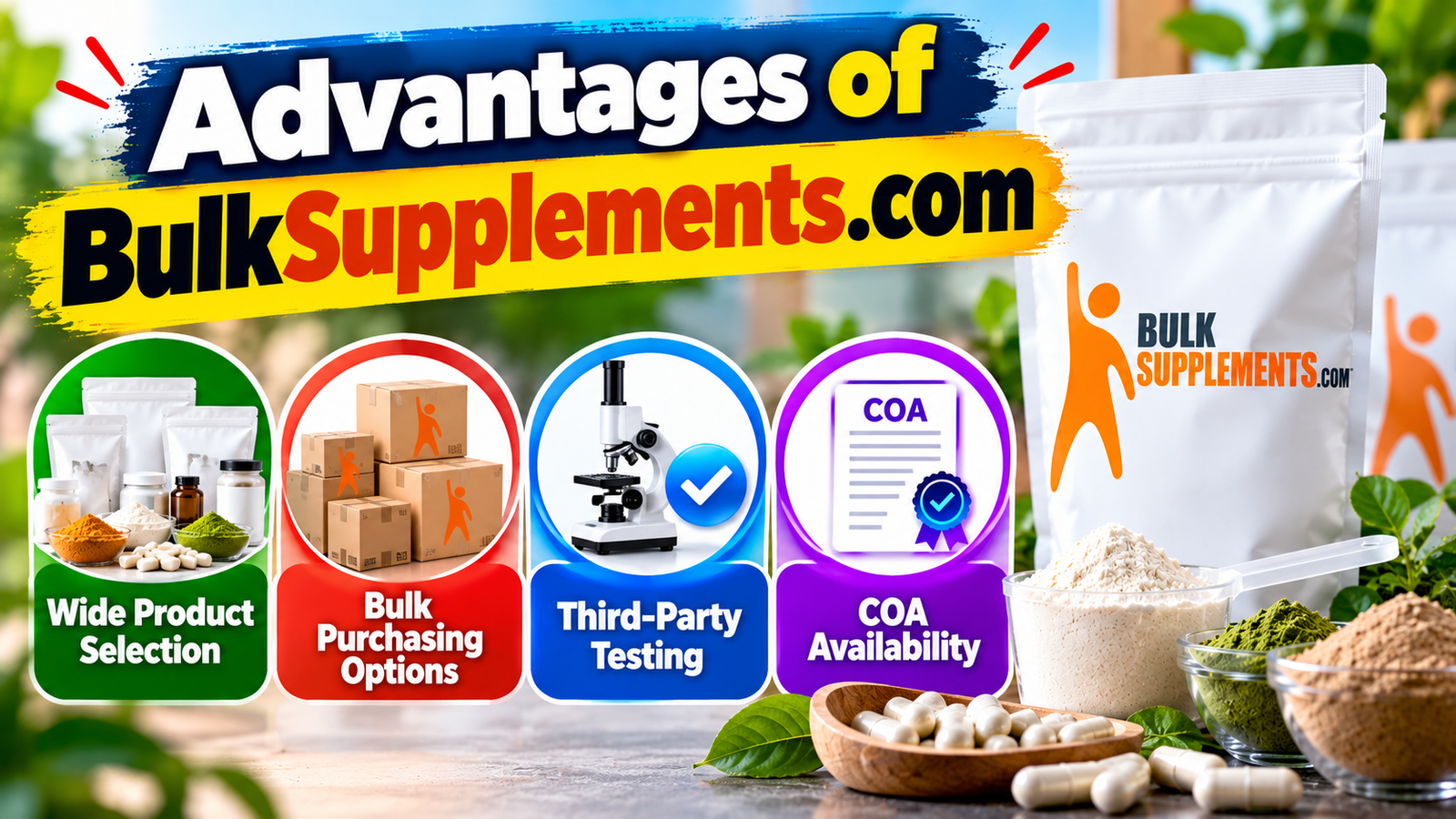
Good supplement selection does not end when you click the purchase button. Once a product arrives, storage and usage also matter.
Keep supplements according to the manufacturer’s instructions. Powders can be especially sensitive to moisture, while some products may require specific temperature or light conditions. Always use the original container when possible and keep products away from children.
FDA advises consumers to follow label directions and warns that some ingredients can cause harm when consumed at high amounts, used for long periods, or combined with certain medications or foods.
A supplement label should be treated as an instruction sheet, not just marketing material. Check the serving size, ingredient amount, directions, warnings, storage instructions, and expiration or best-by information where provided.
Be particularly careful when using multiple products. For example, a multivitamin, sports formula, and separate mineral supplement may contain some of the same nutrients. Adding the amounts together can give you a very different total intake than looking at each bottle individually.
If you are unsure about a dosage, do not simply increase it because a larger amount seems likely to produce a stronger result. More is not always better in nutrition.
A healthcare professional can help determine whether supplementation makes sense for your individual situation. This is particularly important if you take medications, have an existing medical condition, are pregnant or breastfeeding, are preparing for surgery, or are considering high-dose supplementation.
FDA recommends consulting a healthcare professional before deciding to use dietary supplements because supplements can have risks and may interact with medicines or other products.
You should also seek professional advice if you experience an unexpected reaction after taking a supplement. FDA provides mechanisms for reporting supplement-related adverse events and product problems.
Reading the ingredient label is one of the easiest ways to improve your supplement-selection process. A product name may sound straightforward, but the label provides much more useful information. Look for the exact ingredient name, serving size, amount per serving, other ingredients, and recommended directions.
If you are comparing two products, make sure you are comparing equivalent quantities. For example, one product might list an ingredient per capsule while another lists it per two capsules. Comparing the front label alone could therefore give you the wrong impression.
You should also pay attention to ingredient forms. Some nutrients are available in different chemical forms, and these forms can have different characteristics. When a specific form matters, research that form rather than assuming that every version of an ingredient is identical.
Understanding supplement quality is about looking beyond the front of the package. BulkSupplements.com provides a broad selection of individual nutritional ingredients and currently states that its products are tested by third-party laboratories, with COAs available upon request. The company also identifies its manufacturing environment as cGMP, FDA registered and inspected, and NSF certified.
For consumers, these details can be useful starting points, but they should be combined with careful label reading and responsible decision-making. Compare the ingredient, serving size, product form, testing information, package quantity, and total cost before purchasing.
Most importantly, remember that product quality and personal suitability are two different questions. A product can have quality documentation and still not be appropriate for a particular person. Using supplements responsibly means understanding both the product and your own circumstances.
BulkSupplements.com operates as a supplier of nutritional supplement ingredients and products and says it serves both consumers and manufacturers. Its current company information states that products are produced through its manufacturing operation in a facility described as NSF Certified, FDA registered, inspected, and cGMP compliant.
Yes. BulkSupplements.com currently states that COAs are available for its products upon request. A COA can provide useful information about testing and product specifications, although it should not be treated as medical advice or a guarantee that a product is suitable for every individual.
The company states that each supplement is tested by a third-party laboratory before distribution. It also says that it uses independent U.S.-based laboratories for testing. The exact testing performed can vary by product, so checking product-specific documentation is a useful step.
Generally, no. FDA explains that dietary supplements are regulated differently from drugs and are not approved by FDA for safety and effectiveness before marketing. Manufacturers and distributors have responsibilities for product safety, quality, and compliance, while FDA performs postmarket oversight and enforcement.
Start with your purpose for using the product. Then check the Supplement Facts panel, ingredient form, serving size, dosage, other ingredients, testing information, COA availability, package size, and storage instructions. If you take medication or have a medical condition, discuss the supplement with a healthcare professional before using it.
Recent Post
Understanding Supplement Selection and Quality at BulkSupplements.com

How Digital Solutions Are Evolving With CHENGDU OUMEI NETWORK INFORMATION L.T.D

Beauty Trends Worth Exploring With Dominique Cosmetics – 122027

The Growing Role of 3D Scanning and Revopoint 3D Technologies Inc

Why Fitness Fashion Lovers Are Exploring WISKII ACTIVE LIMITED

Improving Website Performance and User Experience With Strategy11

Website Design Trends and the Growing Role of Weblium.com

Photography Styling Trends and the Role of KATE BACKDROP INC
A Guide to Finding Everyday Fashion Inspiration on rihoas.com

How Connected Home Technology Is Evolving With eufy | Fantasia Trading LLC
Releted Post