


Implementing an ERP (Enterprise Resource Planning) system is one of the biggest operational decisions a small manufacturer can make. Choose the right one and your production runs smoother, inventory becomes predictable, purchase orders are automated, and manual spreadsheets disappear. Choose the wrong one and you’re stuck with bloated features you’ll never use, complex setup costs that rival your annual revenue, and a system that feels like it was built for someone else’s company.
Table of Contents
At its heart, MRPeasy is a cloud‑based ERP/MRP system uniquely tailored for small to medium manufacturers and job shops. What does that really mean? Rather than trying to be everything for everyone like enterprise giants (think SAP or Oracle), MRPeasy zeroes in on core manufacturing functions like production planning, inventory control, procurement, and basic sales/CRM — all in a single unified platform that’s approachable and affordable.
Unlike heavy‑duty ERPs that take months and tens of thousands of dollars to implement, MRPeasy was intentionally built for teams with 10 to 200 employees who want powerful functionality without months of training or an in‑house IT specialist.
One key reason MRPeasy attracts a dedicated audience is because it knows exactly who it was built for. It isn’t trying to serve global conglomerates — it’s optimized for small discrete manufacturers such as:
For operations that historically rely on spreadsheets and whiteboards, MRPeasy represents a dramatic upgrade — bringing real planning logic and automation to core workflows without enterprise complexity.
So what makes manufacturers choose MRPeasy over spreadsheets… or other ERPs?
First, small manufacturers often struggle with basic problems:
MRPeasy addresses these pain points by putting production scheduling, inventory control, and procurement all in one place, giving even non‑technical staff the power to plan and manage workflows effectively.
One of MRPeasy’s biggest competitive advantages is its pricing relative to capability.
Starting at around $49 per user per month, MRPeasy’s entry plan includes essential features like production planning, stock management, and basic CRM — with a 15‑day free trial to test it out.
This pricing is significantly lower than most traditional manufacturing ERPs — many of which can start at hundreds of dollars per user or demand large implementation fees.
Higher tiers — such as the Professional and Enterprise plans — add features like multi‑warehouse support, barcode scanning, advanced analytics, API access, and priority support.
For small manufacturers that want step‑by‑step growth without being hit by massive upfront software costs, this tiered model strikes a reasonable value proposition.
MRPeasy isn’t just affordable — it’s also user‑friendly.
Where traditional ERP deployments drag on for months or even a year, MRPeasy implementations typically go live in 2–3 weeks. Smaller teams with simpler workflows can be up and running in under 10 days.
This means less disruption and quicker ROI.
Because MRPeasy is designed for small teams, its interface is generally intuitive and doesn’t require a dedicated IT team to maintain — a huge advantage for lean manufacturers without in‑house tech experts.
Let’s break down the features that most manufacturers cite as game‑changers in their daily operations.
MRPeasy’s planning engine isn’t just a list of tasks. It calculates what needs to be made, when it should be made, and what materials are required — and then presents it all in a drag‑and‑drop calendar/Gantt chart. This makes rearranging the schedule intuitive and visual rather than manual and spreadsheet‑driven.
Tracking raw materials and finished goods manually is one of manufacturing’s biggest headaches. With MRPeasy, manufacturers can manage:
This means less stockouts, fewer surprises, and better overall control.
Rather than waiting for someone to manually create purchase orders, MRPeasy automatically generates purchase requests and orders based on production demand. Supplier lead times feed into your schedule so your planning is truly realistic.
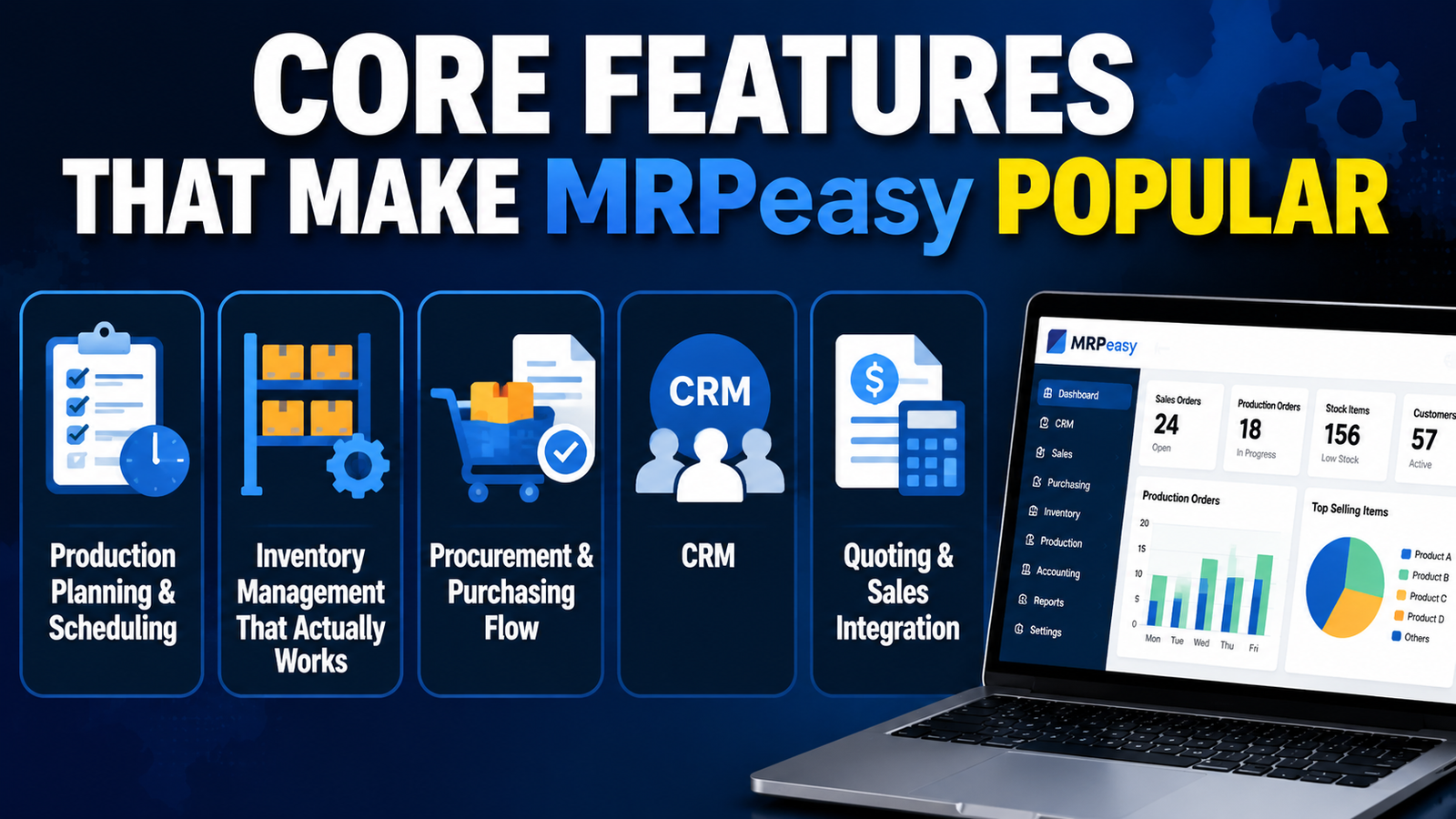
MRPeasy includes basic CRM and quoting tools that let manufacturers convert quotes directly into production orders. For many small manufacturers, this eliminates the headache of double data entry and keeps sales, production, and delivery tightly aligned.
Many small manufacturers have transformed their operations with MRPeasy. For example, a custom furniture manufacturer using MRPeasy automated its production scheduling, eliminating manual planning errors. This not only reduced lead times by 25% but also improved order accuracy, boosting customer satisfaction.
Another example comes from electronics assembly shops, where MRPeasy’s inventory management helped track parts across multiple warehouses. This reduced stockouts and surplus inventory simultaneously, cutting costs by nearly 15% annually.
Highlighting real-world results shows readers that MRPeasy isn’t just theoretical—it’s practical and actionable.
Small manufacturers often use multiple tools: accounting software, CRM, or ecommerce platforms. MRPeasy supports essential integrations like:
Adding this section shows MRPeasy’s flexibility and reassures readers they won’t be stuck in a closed system.
Hosting Your Website with WebHosting UK Com Ltd.: Pros & Cons
SunTransfers (US, UK, ES) vs Competitors: Which Transfer Service Is Better?
How to Find the Best Deals on Zen Hotels US Bookings
Why PearlMountain Limited Stands Out in the Digital Software Industry
How to Join Notta’s partner program Step-by-Step
MRPeasy isn’t just about manufacturing; it also improves:
Adding these benefits reinforces why MRPeasy is a “complete small manufacturing solution.”
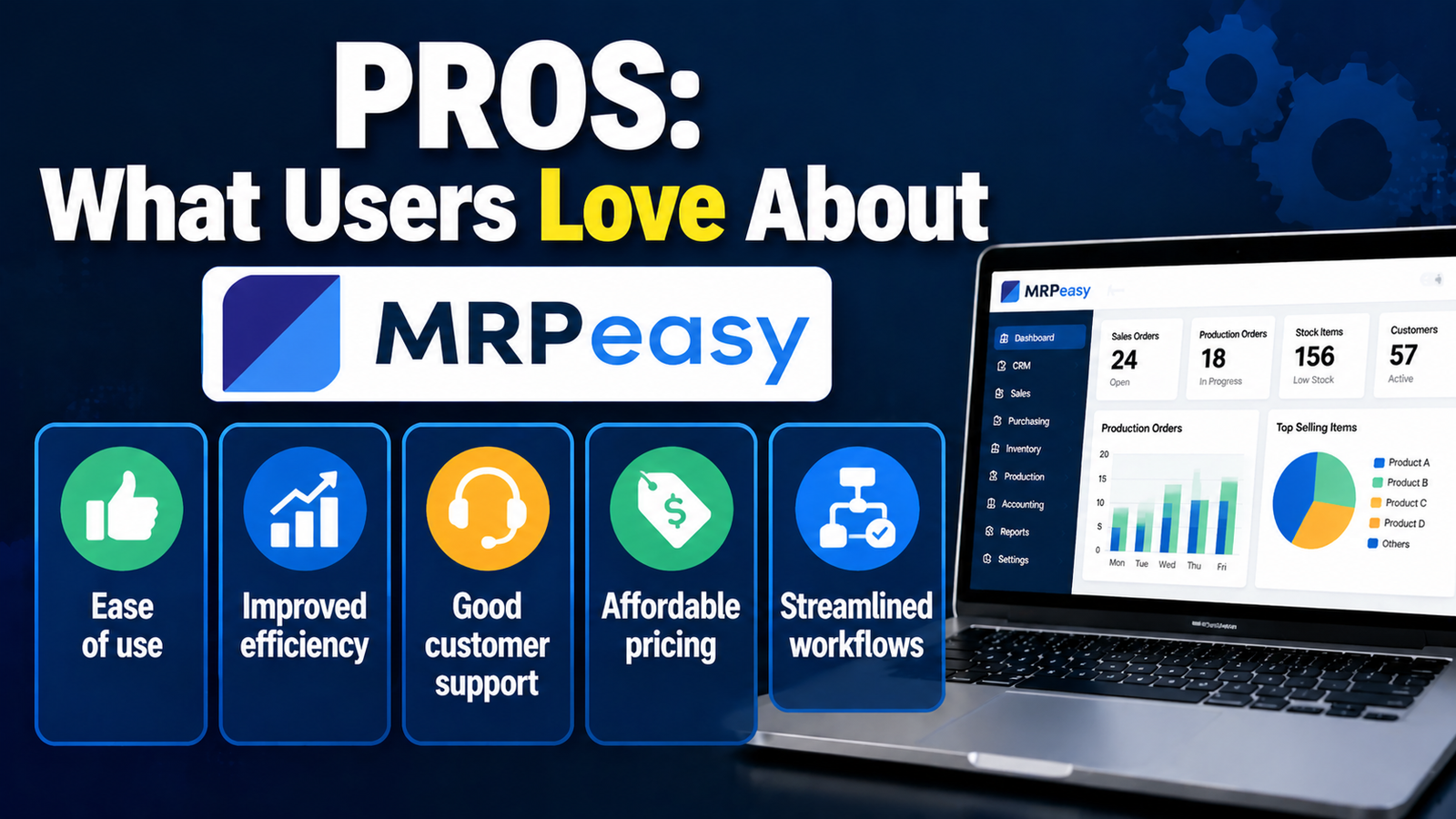
Here’s what real users consistently praise:
User feedback from platforms like G2 also highlights efficiency gains and better operational visibility after adopting MRPeasy.
MRPeasy is a great tool — but it’s not perfect, especially if your business is rapidly scaling or has complex needs.
Some of the common criticisms include:
These limitations mean that MRPeasy might hit a ceiling as your business grows beyond ~200 employees or requires advanced enterprise features.
Adding a “mistakes to avoid” section makes your post more credible:
If your operation requires deep finance reporting, extensive customizations, multi‑entity support, or enterprise‑level analytics, higher‑end ERPs like Odoo, NetSuite, or Microsoft Dynamics 365 may be better fits despite higher costs and complexity.
Likewise, if specialized production workflows (e.g., batch process manufacturing with strict compliance needs) are mission‑critical, industry‑specific solutions might serve you better than a generalized small‑business MRP/ERP.
You can expand the blog by briefly discussing trends:
Connecting MRPeasy to these trends shows your post is forward-looking, which boosts credibility and SEO.
So, is MRPeasy the best ERP for small manufacturers in 2026? The short answer: Yes — for its segment.
It delivers a compelling mix of manufacturing‑focused features, straightforward pricing, rapid deployment, and real‑world ease of use that make it one of the leading choices for small to mid‑sized manufacturers ready to move off spreadsheets but not ready for full enterprise ERP complexity.
To be clear, “best” depends on your needs. If you seek deep financial analytics, highly customizable modules, or enterprise‑grade features, there are stronger competitors — but they come with significantly higher costs and complexity.
For small manufacturers wanting practical ERP without enterprise headaches, MRPeasy checks most boxes and delivers real operational value.
MRPeasy is optimized for teams with roughly 10–200 employees — particularly job shops and discrete manufacturing operations.
No — most implementations are completed in 2–3 weeks, with smaller teams sometimes ready in under 10 days.
Yes — MRPeasy’s production planning, inventory control, and purchasing automation replace manual spreadsheets and reduce errors.
It may work for some, but features are most robust for discrete manufacturing, and complex batch compliance needs may require more specialized systems.
MRPeasy’s pricing begins at around $49/user/month, which is significantly more affordable than most enterprise ERP platforms, with lower implementation costs.
Recent Post
How Weblium.com Helps Simplify the Website Creation Process

Understanding Supplement Selection and Quality at BulkSupplements.com

How Digital Solutions Are Evolving With CHENGDU OUMEI NETWORK INFORMATION L.T.D

Beauty Trends Worth Exploring With Dominique Cosmetics – 122027
The Growing Role of 3D Scanning and Revopoint 3D Technologies Inc

Why Fitness Fashion Lovers Are Exploring WISKII ACTIVE LIMITED

Improving Website Performance and User Experience With Strategy11

Website Design Trends and the Growing Role of Weblium.com

Photography Styling Trends and the Role of KATE BACKDROP INC
A Guide to Finding Everyday Fashion Inspiration on rihoas.com
Releted Post