



What Is iubenda? Full Review & Features Explained
Discover what iubenda is, how it works, and why it’s a popular privacy compliance tool for websites. This full review covers iubenda features, pricing, pros, cons, and whether it’s worth using for GDPR, cookie consent, and legal policy management.
Table of Contents
- 1 What Is iubenda and Why Do Websites Use It?
- 2 The Core Problem iubenda Solves
- 3 Who Should Use iubenda
- 4 How iubenda Works
- 5 Key Features of iubenda
- 6 Advanced Compliance Tools
- 7 iubenda Pricing Explained
- 8 Pros and Cons of iubenda
- 9 Is iubenda Easy to Use for Beginners?
- 10 iubenda vs Competitors
- 11 Is iubenda Worth It in 2026?
- 12 Conclusion
- 13 Frequently Asked Questions
What Is iubenda and Why Do Websites Use It?
If you have ever landed on a website and seen a cookie banner asking whether you want to accept tracking, chances are you have already interacted with a tool like iubenda. At its core, iubenda is a privacy compliance platform built for websites, apps, and online businesses that need to follow data protection laws without hiring a legal team for every small update. Think of it like a legal autopilot for your website. Instead of manually writing privacy policies, building cookie banners, tracking consent logs, and constantly monitoring whether regulations have changed, iubenda bundles those moving parts into one system and automates most of the heavy lifting.
That matters because privacy laws are no longer optional background noise. Regulations like GDPR, UK GDPR, CCPA/CPRA, LGPD, and Switzerland’s FADP have turned privacy compliance into a real operational requirement for even small websites. If your website collects emails, uses analytics, runs Facebook ads, installs remarketing pixels, embeds YouTube videos, or accepts payments, you are collecting user data in some form. That means privacy disclosures, consent management, and legal transparency are no longer “nice to have.” They are expected. iubenda exists to make that process less painful, especially for founders, bloggers, agencies, SaaS teams, and eCommerce operators who need compliance tools that work without slowing down growth.
The Core Problem iubenda Solves
The biggest problem iubenda solves is simple: most website owners know they need privacy compliance, but very few know how to build it correctly. Writing legal documents from scratch is slow, expensive, and risky. Copying another site’s privacy policy is worse because privacy documents must match your exact tools, data flows, and tracking stack. A generic template may look polished, but it can become legally useless the moment your website uses a different analytics tool, email provider, ad platform, or payment processor. That mismatch is where compliance problems begin, and it is exactly where iubenda is strongest.
Instead of giving you a static template and sending you on your way, iubenda generates dynamic legal documents based on the services your website actually uses. If your site uses Google Analytics, Stripe, Meta Pixel, Mailchimp, Shopify, or WordPress plugins, iubenda can reflect those services in your legal disclosures. It then keeps those documents updated when privacy rules evolve. That is the real selling point. You are not just buying a policy generator. You are buying a compliance maintenance engine that keeps the legal plumbing working in the background while you focus on traffic, conversions, and customers.
Who Should Use iubenda
iubenda is built for a wide range of users, but it makes the most sense for people running websites that actively collect user data or rely on tracking-based marketing. That includes bloggers using ad networks, affiliate marketers using analytics, agencies building client websites, SaaS businesses collecting leads, eCommerce stores processing customer data, and app developers handling user sessions or device-level identifiers. If your business touches cookies, forms, ads, analytics, payments, or user accounts, iubenda is relevant.
It is especially useful for small and mid-sized businesses that need a reliable compliance system but do not want to spend thousands on legal consultations. According to recent software review data, iubenda holds a 4.7/5 average rating across 189 reviews, which reflects strong satisfaction among startups, agencies, and SMBs using it as a practical alternative to custom legal setups. That makes sense because iubenda sits in a very useful middle ground: more robust than a basic policy generator, but far more affordable than building a compliance stack from scratch with lawyers, consultants, and multiple SaaS tools.
How iubenda Works
The easiest way to understand iubenda is to think of it as three systems working together behind the scenes: legal document generation, consent collection, and compliance monitoring. Each one solves a different part of the privacy puzzle, and the platform becomes most useful when all three run together. A lot of tools only solve one piece. They might give you a cookie banner, but no legal policy. Or they generate a privacy policy, but do not log consent. iubenda is built to cover the full loop.
First, it creates legal documents tailored to your website. Then it helps collect and manage user consent through banners and controls. After that, it stores proof of consent and keeps your setup aligned with evolving privacy rules. That flow matters because privacy compliance is not just about showing a pop-up. It is about proving what users saw, what they accepted, what data was collected, and whether your site followed the right consent rules before tracking began. That is where a lot of website owners get caught off guard, and that is exactly where iubenda earns its value.
Policy Generation
The policy generator is one of iubenda’s most popular tools because it turns a painful legal task into something manageable. Instead of drafting legal documents manually, users select the services they use, such as analytics tools, payment processors, ad networks, forms, CRMs, or hosting platforms, and iubenda assembles a privacy and cookie policy using lawyer-drafted clauses. These documents are not just static PDFs. They are hosted, customizable, embeddable, and updated over time.
This is important because privacy documents age quickly. A policy written once and forgotten can become outdated fast, especially if your business changes tools, expands to new markets, or starts collecting new categories of data. iubenda’s system reduces that maintenance burden by continuously updating policy language when legal standards shift. It currently supports legal documents in up to 27 languages, which makes it especially useful for international businesses serving traffic across multiple regions.
Consent Collection
The second layer is consent collection, which is where iubenda moves beyond basic policy generation and into real compliance infrastructure. It gives you a cookie banner and privacy controls that allow users to accept, reject, or customize tracking preferences before non-essential scripts load. This matters because under privacy frameworks like GDPR, you cannot simply collect consent after tracking begins. Consent often needs to be informed, specific, and obtained before optional cookies are activated.
iubenda handles that by offering prior blocking, asynchronous script reactivation, and customizable consent flows. In simple terms, it can stop non-essential cookies from firing until the user gives permission, then selectively reactivate them based on what the user allowed. That sounds technical, but it solves one of the biggest compliance mistakes websites make: loading trackers too early. If your analytics, ad pixels, or remarketing scripts fire before consent, your banner becomes decoration rather than compliance. iubenda is designed to prevent that gap.
Key Features of iubenda
What makes iubenda stand out is not just that it offers privacy tools, but that it combines several compliance functions inside one platform instead of forcing users to stitch together multiple services. This all-in-one approach is the reason it has become popular with agencies, marketers, and small businesses that want fewer moving parts. Instead of using one tool for policies, another for cookie banners, another for consent logs, and another for legal updates, iubenda brings them under one roof.
Privacy and Cookie Policy Generator
This is the foundation of the platform and still one of its best features. iubenda’s policy generator builds privacy and cookie policies using a library of more than 2,000 legal clauses, which can be tailored to the services and data practices on your website. That is a major step up from fixed templates because it allows your legal documents to better match how your business actually handles user data.
Cookie Consent Banner
The cookie banner is where many businesses first encounter iubenda, and for good reason. It is one of the most visible parts of privacy compliance and one of the easiest to get wrong. iubenda’s banner is designed to support opt-in consent, prior blocking, customization, and geolocation-based behavior depending on plan level. That means users can show different consent experiences depending on where visitors are coming from and what legal framework applies.
Terms and Conditions Generator
A lot of users discover iubenda for privacy policies and stay for the Terms and Conditions Generator. This tool helps businesses create legal terms for websites, stores, and digital services without drafting them from scratch. That includes rules around usage, payments, refunds, user obligations, intellectual property, and liability.
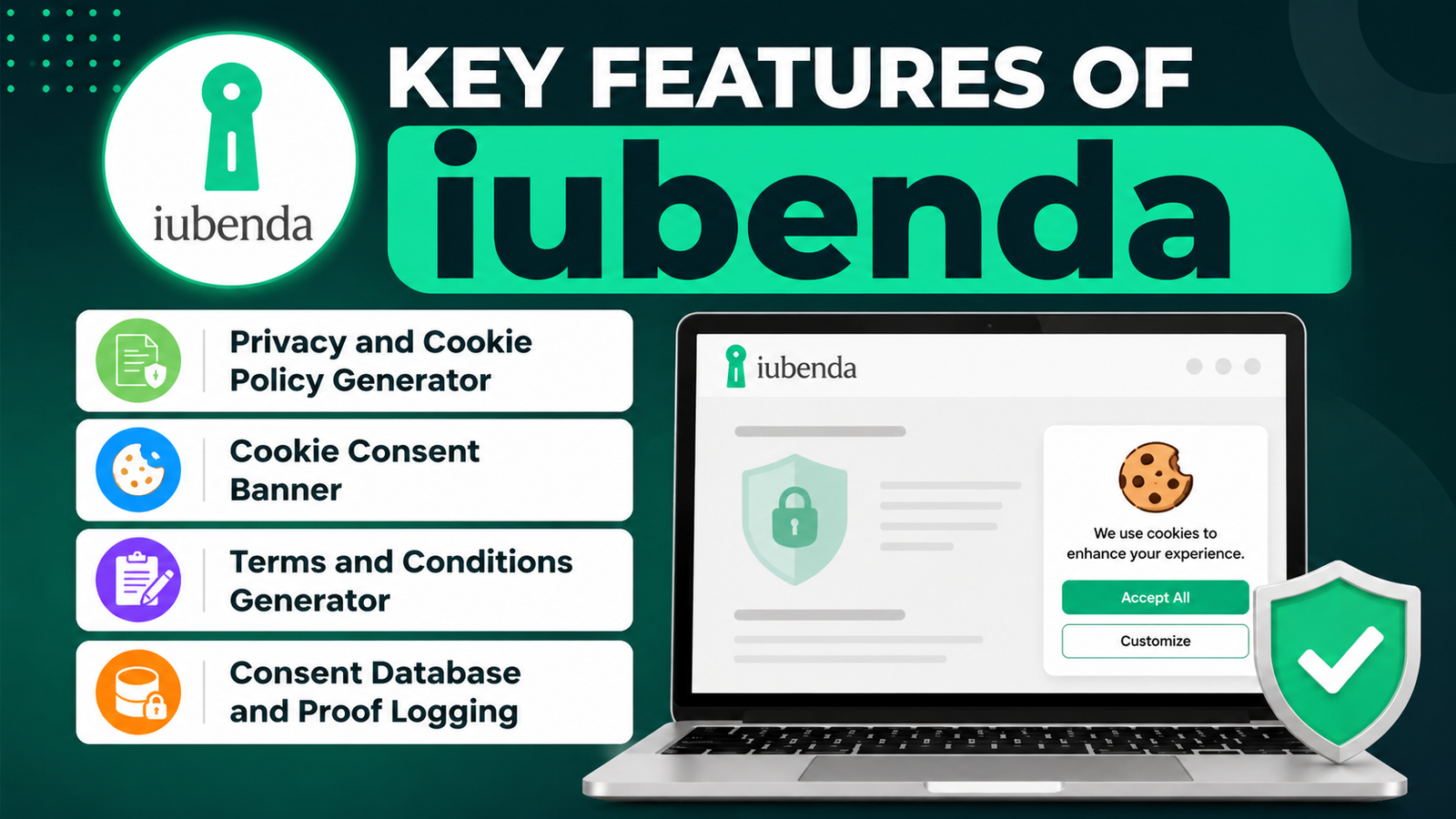
Consent Database and Proof Logging
One of iubenda’s most underrated features is its permanent consent log database. This stores proof of user consent and records what users accepted, rejected, or customized. That matters because compliance is not only about collecting consent. It is also about proving it later if needed.
Advanced Compliance Tools
Where iubenda becomes more interesting is in its advanced compliance layer. This is the part that moves it beyond “cookie banner software” and into something closer to a real compliance operations tool. For small websites, the basic policy and banner may be enough. For ad-supported businesses, agencies, and scaling brands, the advanced features are where the real value starts to show.
Google Consent Mode Support
iubenda supports Google Consent Mode, which is a big deal for advertisers and publishers running Google Ads, Analytics, or conversion tracking. Consent Mode helps adjust how Google tags behave depending on user consent choices, which allows businesses to preserve some measurement and modeling even when users reject tracking.
That balance matters because privacy and performance are constantly pulling in opposite directions. Marketers want clean attribution. Regulators want informed consent. Google Consent Mode is one of the few bridges between those goals, and iubenda includes support for it across paid plans.
IAB TCF v2.2 Compatibility
For publishers and ad-supported businesses, iubenda also supports IAB TCF v2.2, the consent framework used widely in digital advertising. This matters if your business relies on ad exchanges, programmatic revenue, or third-party ad tech that expects structured consent signals.
Multi-Language Legal Documents
iubenda supports multilingual legal documents and localized compliance workflows, which is a major advantage for businesses serving users in different countries. This is one of those features that sounds small until your business grows internationally and suddenly your English-only policy becomes a liability.
Being able to publish localized privacy documents without rebuilding your legal infrastructure from scratch makes iubenda much more scalable than many entry-level compliance tools.
Top InVideo Features Marketers Can Use to Boost Engagement
Top Benefits of Using Katana Cloud Inventory for Small and Medium Businesses
Complete Guide to Booking LATAM Airlines ( USA – EU) Flights at the Best Price
Ferrari World Abu Dhabi: The Ultimate Theme Park Experience Guide
BigRock.in Review: Is It the Best Domain and Hosting Provider in India?
iubenda Pricing Explained
iubenda offers a free plan, which is one of the reasons it is easy to test. That free tier covers basic privacy and cookie policy generation with limited services and lower traffic thresholds, making it suitable for personal sites, prototypes, or very small blogs. It is enough to understand the workflow, but most businesses will outgrow it quickly.
Paid plans scale based on traffic, customization, and feature access. Recent pricing data shows Starter begins around $3.49/month, Essentials around $5.99/month, Advanced around $24.99/month, and Ultimate around $99.99/monthwhen billed annually. Higher plans unlock more page views, more clauses, stronger customization, geolocation controls, terms generation, analytics, and advanced consent tools.
Plan | Best For | Starting Price | Key Limitation |
Free | Personal sites | $0 | Very limited traffic and services |
Starter | Small sites | $3.49/mo | Limited customization |
Essentials | Growing sites | $5.99/mo | Moderate traffic limits |
Advanced | Businesses | $24.99/mo | Higher cost jump |
Ultimate | Large teams | $99.99/mo | Expensive for small users |
Pros and Cons of iubenda
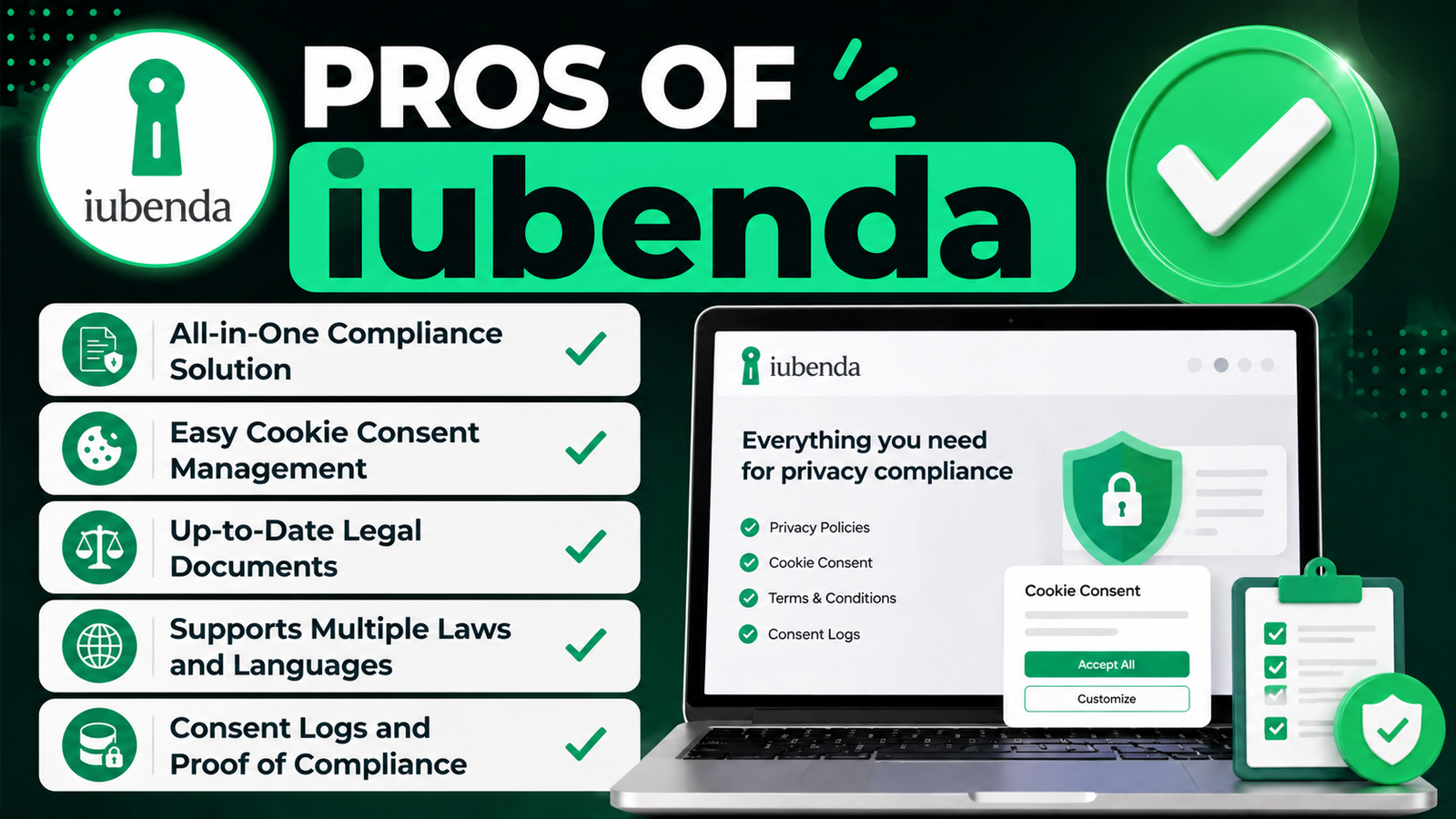
iubenda’s biggest strength is convenience. It combines legal documents, consent collection, policy hosting, and compliance proof in one place. That makes it far more efficient than juggling multiple tools. It is also flexible enough to serve solo site owners and growing businesses without forcing an enterprise-level setup on day one. The platform is especially strong for European privacy compliance and businesses that need legal updates handled automatically.
Its main weakness is that pricing can climb as traffic and complexity grow. Some users also report that advanced consent configuration takes a bit of setup, especially if your site uses custom scripts or a heavy tag manager setup. That does not make it difficult, but it does mean beginners may need a short learning curve before everything is configured cleanly.
Is iubenda Easy to Use for Beginners?
Yes, especially compared with building privacy compliance manually. The dashboard is designed for non-lawyers, and most of the setup is guided rather than technical. You do not need to understand legal jargon to generate a usable privacy policy, and you do not need to code a banner from scratch to collect consent. That alone removes a huge barrier for small business owners.
The learning curve appears when you move beyond basic setup and start customizing script behavior, geolocation logic, or advanced consent flows. Beginners can still use it, but advanced features reward users who are willing to spend a little time configuring things properly. In other words, iubenda is beginner-friendly at the surface and powerful underneath, which is exactly what most growing businesses need.
iubenda vs Competitors
Compared with tools like Termly, TermsFeed, CookieYes, and Cookiebot, iubenda stands out because it combines policy generation and consent management in one platform. Tools like TermsFeed are often cheaper for one-time legal documents, but they are lighter on automation. Cookie-focused tools can be stronger in narrow CMP use cases, but many do not offer the same depth in legal document generation.
That makes iubenda a strong middle-ground option. It may not be the cheapest one-time document tool, and it may not be the most specialized enterprise CMP, but it is one of the most balanced all-in-one compliance platforms available right now.
Is iubenda Worth It in 2026?
For most websites, yes. If your site collects user data, runs analytics, uses ad trackers, or sells anything online, iubenda is one of the easiest ways to turn privacy compliance from a recurring headache into a manageable system. It is not magic, and it does not replace legal counsel for highly regulated edge cases, but for the majority of websites, it solves the practical compliance work that usually gets ignored until it becomes urgent.
That is really what makes iubenda useful. It takes a messy, legal, technical problem and turns it into something operational. Less guesswork, fewer moving parts, better documentation, and a much lower chance of accidentally running a non-compliant setup while trying to grow your business.
Conclusion
iubenda is best understood as a compliance operating system for modern websites. It does much more than generate a privacy policy. It helps businesses publish legal documents, manage cookie consent, log user choices, support advertising compliance, and stay aligned with evolving privacy laws without rebuilding everything from scratch. That makes it especially useful for websites that want a practical, scalable way to handle privacy without treating compliance like a full-time job.
For bloggers, agencies, SaaS teams, eCommerce stores, and digital businesses, iubenda offers one of the strongest all-in-one privacy compliance solutions available in 2026. It is not the cheapest option in every category, but it is one of the most complete, and that balance is exactly why it continues to stand out.
Frequently Asked Questions
Q. Is iubenda free to use?
Yes, iubenda offers a free plan with basic privacy and cookie policy features. It is useful for testing or small sites, but most growing businesses will need a paid plan for better traffic limits and customization.
Q. Does iubenda help with GDPR compliance?
Yes, GDPR compliance is one of iubenda’s core strengths. It supports privacy policies, cookie consent, prior blocking, consent logging, and legal updates built around GDPR requirements.
Q. Is iubenda good for WordPress?
Yes, iubenda works well with WordPress and supports integrations for major CMS platforms, including WordPress, Shopify, Magento, Joomla, and others.
Q. Does iubenda support Google Consent Mode?
Yes, iubenda supports Google Consent Mode, which helps businesses align privacy choices with Google Ads and Analytics behavior.
Q. Is iubenda worth it for small businesses?
Yes, especially for small businesses that need privacy compliance without hiring legal teams or stitching together multiple compliance tools. It is one of the most practical all-in-one options for growing websites.

Recent Post

Key Factors to Know Before Exploring Bellway Products

Exploring Modern Beauty Tools and the Growing Appeal of Luxie

How Innovative Consumer Products Are Changing With Dip Devices

What Makes Creative Haircare Stand Out With IGK Hair?

A Beginner-Friendly Guide to Understanding R+R Medicinals CBD

A Complete Guide to Choosing the Right Products From R+Co

A Complete Guide to Building a Simple Routine With Bubble Skincare

The Essential Guide to Understanding and Building a Legacy

Key Benefits of Choosing Water Filtration Products From Waterdrop (US)
Releted Post