


How Remote Teams Improve Marketing Productivity
How Remote Teams Improve Marketing Productivity explores how Remote work models help marketing teams achieve better focus, faster execution, and higher ROI. The article highlights how flexibility, global talent access, digital collaboration tools, and data-driven workflows enable Remote marketing teams to work smarter, reduce burnout, and consistently deliver stronger campaign results in today’s digital-first world.
Table of Contents
- 1 Introduction to Remote Marketing Teams
- 2 Understanding Marketing Productivity
- 3 Why Remote Teams Are a Game Changer for Marketing
- 4 Access to Global Talent
- 5 Improved Work-Life Balance Boosts Performance
- 6 Fewer Distractions, More Deep Work
- 7 Better Use of Marketing Tools and Automation
- 8 Faster Execution and Agile Campaigns
- 9 Data-Driven Decision Making in Remote Teams
- 10 Enhanced Collaboration Through Documentation
- 11 Reduced Operational Costs, Higher ROI
- 12 Challenges of Remote Marketing Teams (And How to Overcome Them)
- 13 Best Practices for Managing Remote Marketing Teams
- 14 Real-World Impact of Remote Marketing Teams
- 15 The Future of Remote Marketing Teams
- 16 Conclusion
- 17 Frequently Asked Questions
Introduction to Remote Marketing Teams
Remote work is no longer a temporary solution or a passing trend. It has become a permanent shift in how modern marketing teams operate. From content creators and SEO specialists to paid ads managers and data analysts, marketing roles are perfectly suited for remote environments.
But here’s the big question: does remote work actually improve marketing productivity?
Short answer—yes, and in more ways than one.
The Rise of Remote Work in Marketing
Marketing has always been a digital-first function. Campaigns run online, analytics live in dashboards, and collaboration happens through tools—not conference rooms. When remote work entered the picture, marketing teams adapted faster than most departments.
Instead of slowing things down, remote work unlocked speed, flexibility, and focus.
Why Productivity Matters More Than Ever
In today’s competitive digital landscape, marketing productivity isn’t about working longer hours. It’s about producing better results—faster campaigns, higher ROI, and consistent growth. Remote teams help achieve exactly that by shifting the focus from where people work to what they deliver.
Understanding Marketing Productivity
What Does Productivity Mean in Marketing?
Marketing productivity is the ability to generate measurable outcomes—leads, conversions, engagement, and revenue—using time, tools, and talent efficiently. A productive marketing team executes campaigns smoothly, analyzes performance accurately, and optimizes continuously.
Common Productivity Challenges in Traditional Offices
Office environments often come with hidden productivity killers:
- Endless meetings
- Interruptions and noise
- Rigid schedules
- Commute fatigue
These factors drain energy and creativity—two things marketers rely on heavily.
Why Remote Teams Are a Game Changer for Marketing
Flexibility Leads to Better Focus
Remote marketers can work during their peak productivity hours. Some people write better early in the morning, others brainstorm best late at night. Remote work allows marketers to align work with their natural rhythms.
Results Over Hours Mentality
Remote teams prioritize outcomes, not clock-ins. When success is measured by campaign performance instead of desk time, productivity naturally increases. It’s like switching from counting steps to measuring distance covered—you focus on progress, not motion.

Access to Global Talent
Hiring the Best, Not the Closest
Remote teams remove geographical limitations. Instead of settling for local talent, companies can hire specialists from anywhere in the world.
Diverse Skills and Perspectives
A global team brings fresh ideas, cultural insights, and creative diversity—key ingredients for high-performing marketing campaigns.
Cost-Effective Talent Acquisition
Hiring remotely often reduces salary overhead while maintaining—or even improving—quality. That means more budget for tools, ads, and experimentation.
Improved Work-Life Balance Boosts Performance
Reduced Burnout
No commute. Fewer distractions. More autonomy. These factors reduce burnout significantly. And when marketers aren’t exhausted, their creativity thrives.
Higher Employee Satisfaction
Happy marketers are productive marketers. Remote teams often report higher job satisfaction, which directly impacts consistency, accountability, and output quality.
Fewer Distractions, More Deep Work
Escaping Office Noise
Open offices can feel like trying to write poetry in a crowded café. Remote work allows marketers to design distraction-free environments suited to deep thinking and creativity.
Personalized Work Environments
Whether it’s silence, music, or standing desks, remote workers customize their space for peak performance—something offices rarely allow.
Better Use of Marketing Tools and Automation
Cloud-Based Collaboration Tools
Remote teams rely heavily on digital tools, which improves transparency and efficiency.
Project Management Platforms
Clear task ownership, deadlines, and workflows reduce confusion and speed up execution.
Communication and Reporting Tools
Async communication minimizes interruptions, while dashboards keep everyone aligned on performance.
Faster Execution and Agile Campaigns
Shorter Feedback Loops
Remote teams document everything—ideas, changes, results. This creates clarity and faster iteration cycles.
Always-On Marketing Across Time Zones
With team members in different regions, work continues around the clock. Campaigns move forward while others sleep—like a relay race with no downtime.
How Lightinthebox Helps Agencies Drive Global E-Commerce Sales
PADI and Adventure Tourism: Marketing the Underwater Experience
Jobscan.co: How AI Is Improving Resume Optimization in 2026
Top InVideo Features Marketers Can Use to Boost Engagement
How GoMoWorld Revolutionizes Global Connectivity: Marketing Insights
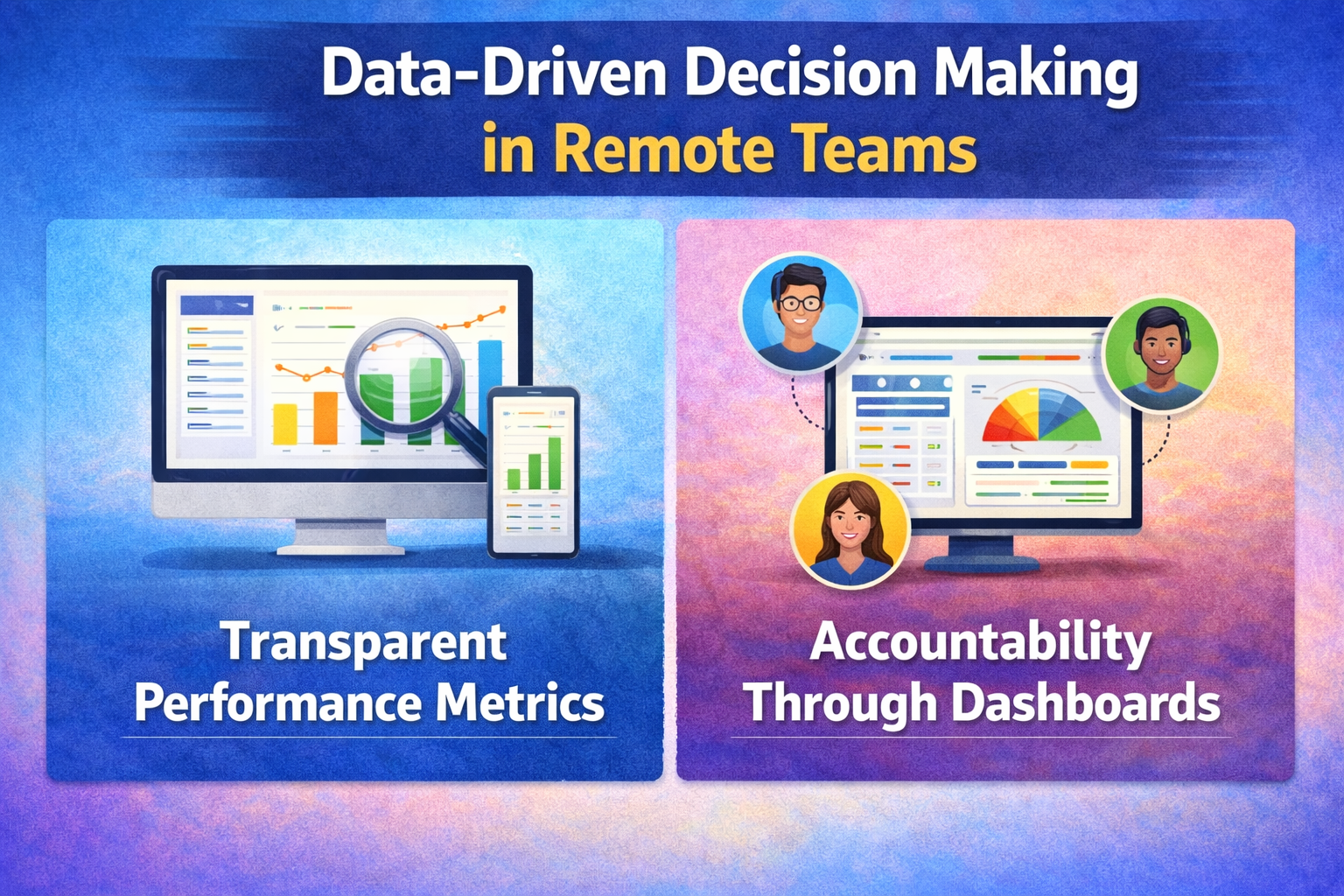
Data-Driven Decision Making in Remote Teams
Transparent Performance Metrics
Remote teams depend on numbers, not assumptions. KPIs, analytics, and dashboards guide every decision.
Accountability Through Dashboards
When performance is visible to everyone, accountability increases naturally—no micromanagement required.
Enhanced Collaboration Through Documentation
Clear Processes and SOPs
Remote teams document workflows thoroughly. This reduces dependency on individuals and increases consistency.
Knowledge Sharing Without Silos
Everything lives in shared systems. There will be no more problems with “only one person knows how this works.”
Reduced Operational Costs, Higher ROI
Savings on Office Infrastructure
No rent, utilities, or office maintenance. Those savings can be redirected into marketing experiments and growth initiatives.
Reinvesting in Marketing Growth
More budget for content, ads, tools, and talent leads directly to better performance and scalability.
Challenges of Remote Marketing Teams (And How to Overcome Them)
Communication Gaps
Without face-to-face interaction, miscommunication can happen—but structured communication solves this.
Time Zone Differences
Overlapping hours and async workflows keep things moving smoothly.
Practical Solutions and Best Practices
- Clear documentation
- Regular check-ins
- Defined response-time expectations
Best Practices for Managing Remote Marketing Teams
Setting Clear Goals and KPIs
When expectations are clear, productivity follows. Every marketer should know exactly how success is measured.
Building a Strong Remote Culture
Trust, autonomy, and recognition form the backbone of high-performing remote teams.
Real-World Impact of Remote Marketing Teams
Productivity Gains
Many companies report higher output with fewer working hours after going remote.
Faster Campaign Scaling
Remote teams adapt quickly, test faster, and scale campaigns with less friction.
The Future of Remote Marketing Teams
Hybrid and Fully Remote Models
The future isn’t office vs remote—it’s flexibility. Teams that embrace this will win.
Skills Marketers Need to Thrive Remotely
- Self-management
- Clear communication
- Data literacy
- Tech adaptability
Conclusion
Remote teams don’t just change where marketing happens—they transform how it happens. By focusing on results, embracing flexibility, and leveraging global talent, remote marketing teams consistently outperform traditional setups. Productivity improves not because people work harder, but because they work smarter. In a world driven by speed, creativity, and data, remote teams are not the future—they’re the present.
Frequently Asked Questions
Q. Are remote marketing teams more productive than in-office teams?
Yes, in most cases remote teams show higher productivity due to flexibility, reduced distractions, and outcome-focused workflows.
Q. What marketing roles work best remotely?
Content writers, SEO specialists, PPC managers, designers, email marketers, and analysts all perform exceptionally well remotely.
Q. How do remote teams collaborate effectively?
Through clear documentation, async communication, and shared project management tools.
Q. What are the biggest challenges of remote marketing teams?
Communication gaps and time zone differences—but both are manageable with the right systems.
Q. Is remote marketing suitable for small businesses?
Absolutely. Remote teams reduce costs and allow small businesses to access high-quality talent globally.

Recent Post

Maxaroma: A Complete Guide to Luxury Fragrances Online

Holiday Autos: A Complete Guide to Car Rental Services

WA Production INT: A Complete Guide to Its Business Model

Content Development Pros: A Complete Review for Businesses

HireWriters.com: A Complete Guide for Content Buyers

How CorpNet, Incorporated Helps Entrepreneurs Succeed Faster

Espresso Parts LLC: A Complete Guide to Its Market Leadership

Medical Guardian: How It’s Transforming Personal Safety Solutions

Georgie and Tom’s: A Complete Guide to Their Brand Growth Strategy
Releted Post