




PrivateVPN Review 2026: Features, Performance, and Security Explained is a detailed and beginner-friendly guide that explores everything you need to know about the VPN service PrivateVPN. This blog post breaks down its core features, including strong encryption, streaming support, and privacy tools, while also analyzing real-world performance in terms of speed and stability. It also highlights how PrivateVPN handles security with its no-logs policy and VPN protocols, helping users understand how safe their online activity really is.
Table of Contents
The VPN market in 2026 is more competitive than ever, and users are no longer satisfied with just basic encryption or simple IP masking. Today, they want speed, streaming access, strong privacy laws, and smooth performance across devices. That is where PrivateVPN comes into the conversation. It is a long-running VPN service that has managed to stay relevant despite facing competition from giants like NordVPN and ExpressVPN.
What makes PrivateVPN interesting is its balance between simplicity and affordability. It does not try to overwhelm users with hundreds of features. Instead, it focuses on essential tools like encryption, streaming access, and basic anonymity. However, this simplicity also comes with trade-offs that become more visible when compared to modern VPN standards.
VPN usage itself has surged globally due to rising concerns about online privacy, data tracking, and geo-restrictions. Many users now expect VPNs to act like digital shields that protect everything from browsing habits to financial data. PrivateVPN positions itself as a lightweight yet effective solution, but whether it meets modern expectations is what this review explores in depth.
PrivateVPN is operated under a Swedish jurisdiction, which places it under European privacy regulations. Sweden is part of the 14 Eyes intelligence-sharing alliance, which sometimes raises concerns among privacy-focused users. However, the company claims to follow a strict no-logs policy, meaning it does not store user activity data.
Despite being a smaller provider, PrivateVPN has maintained a loyal user base because of its consistent performance in streaming and ease of use. It is not a flashy brand, but rather a practical one.
PrivateVPN is mainly designed for users who want:
It is not primarily built for advanced users who expect features like multi-hop routing or extensive customization. Instead, it focuses on everyday internet users who want plug-and-play privacy protection.
One of the biggest limitations of PrivateVPN is its relatively small server network. It offers around 200+ servers across 60+ countries, which is significantly lower than industry leaders.
According to recent 2026 testing reports, this smaller network still performs reasonably well for streaming and browsing but lacks the global depth of larger VPN services.
A smaller server network can lead to:
While PrivateVPN optimizes its servers for performance, scale remains a challenge.
Speed performance is where PrivateVPN delivers mixed results. On nearby servers, speeds are often stable and fast enough for HD and even 4K streaming. However, long-distance connections may experience noticeable drops.
Recent independent reviews show that while PrivateVPN is not the fastest VPN on the market, it still maintains acceptable performance for most users. Streaming and browsing remain smooth under normal conditions, but competitive gamers or heavy downloaders may notice limitations.
Streaming is one of PrivateVPN’s strongest areas. It consistently unblocks major platforms such as Netflix, Disney+, and BBC iPlayer. However, certain regional libraries may occasionally fail due to VPN detection systems.
Overall, its streaming reliability is above average for a budget VPN.
PrivateVPN claims a strict no-logs policy, meaning it does not track or store user browsing activity. While this is standard among reputable VPNs, the lack of independent audits makes full verification difficult.
PrivateVPN supports multiple VPN protocols such as:
These protocols provide flexibility between speed and security.
Despite strong encryption, PrivateVPN lacks:
These gaps make it less appealing for highly security-sensitive users.
PrivateVPN uses AES-256-bit encryption, which is considered military-grade security. This ensures that user traffic is heavily encrypted and extremely difficult to intercept. Even on public Wi-Fi networks, this level of encryption provides strong protection against attackers.
A kill switch is a critical VPN feature that disconnects your internet if the VPN connection drops. PrivateVPN includes this feature on select platforms, helping prevent accidental IP leaks. However, its availability across all devices is still limited compared to premium competitors.
One standout feature is Stealth VPN, which helps bypass restrictive networks such as those found in schools, workplaces, or heavily censored regions. It disguises VPN traffic as normal HTTPS traffic, making it harder to detect and block.
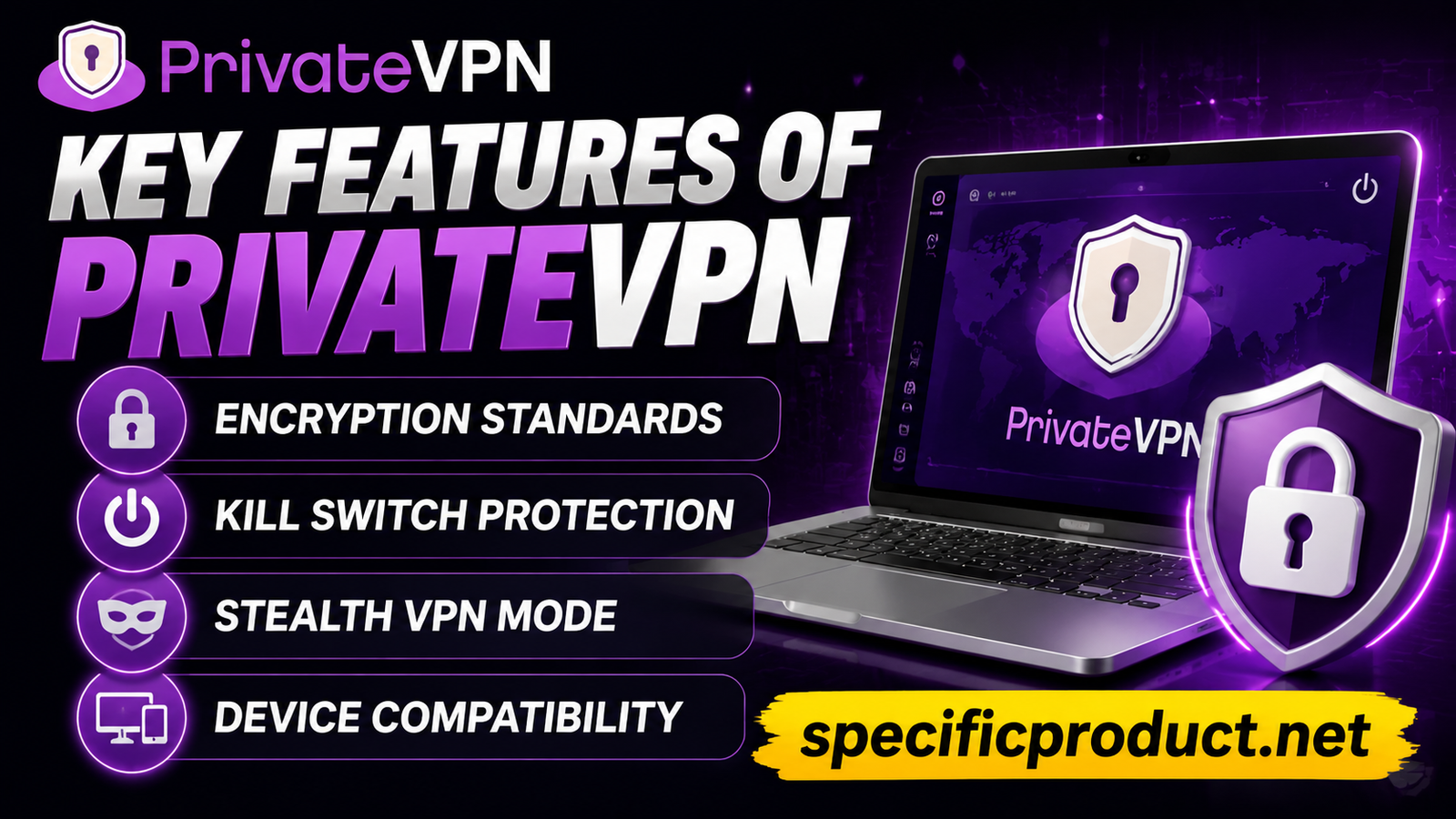
PrivateVPN supports major platforms including:
It also allows multiple simultaneous connections, making it suitable for families or multi-device users.
PrivateVPN performs surprisingly well in streaming scenarios. It can unblock multiple Netflix libraries and other major streaming services. This makes it a popular choice among users who want global entertainment access without restrictions.
PrivateVPN also supports P2P file sharing. Torrenting is allowed on most servers, and users report stable download performance. However, due to limited server distribution, performance may vary depending on load.
PrivateVPN is considered affordable, especially on long-term plans.
Plan Type | Estimated Price |
Monthly Plan | Higher (~$9–$10/month) |
Long-Term Plan | Much lower (~$2–$3/month equivalent) |
The long-term plans provide the best value and make PrivateVPN competitive in the budget VPN category.
A 30-day money-back guarantee is available, allowing users to test the service risk-free.
Challenger Breadware Kitchen Review: Is It Worth the Investment for Serious Bakers?
How BathMate Works: A Complete Beginner’s Guide
How The Escape Game Entertainment Creates Unforgettable Group Adventures
How Mixhers Supports Women’s Wellness and Daily Health Goals
How Musement Makes Booking Travel Activities Easy and Affordable
One of the biggest reasons users still consider PrivateVPN in 2026 is its strong focus on core security fundamentals. While it may not offer every advanced feature seen in premium competitors, it still delivers a solid protection layer for everyday internet users. The service relies on AES-256-bit encryption, which is widely recognized as one of the strongest encryption standards available today. This ensures that all your internet traffic remains unreadable to hackers, ISPs, or any third-party monitoring systems.
Another important element is its DNS leak protection, which ensures that your browsing activity does not accidentally expose your real IP address. Many VPN users underestimate DNS leaks, but they can completely break privacy if not handled properly. PrivateVPN also supports secure tunneling protocols like OpenVPN and IKEv2, which help balance speed and security depending on your usage needs.
When evaluating a VPN in 2026, speed is one of the most important factors because modern users stream in 4K, join video calls, and download large files. PrivateVPN performs reasonably well in everyday conditions, especially when connected to nearby servers.
On local servers, users generally experience stable speeds suitable for HD and 4K streaming without buffering. However, when connecting to distant regions like the US or Australia from Asia or Europe, a noticeable drop in speed can occur. This is mainly due to its smaller server network, which can sometimes lead to congestion during peak usage hours.
Despite this, PrivateVPN still maintains a balance between speed and encryption. It is not the fastest VPN in the market, but it delivers consistent enough performance for casual browsing, streaming, and light downloading.
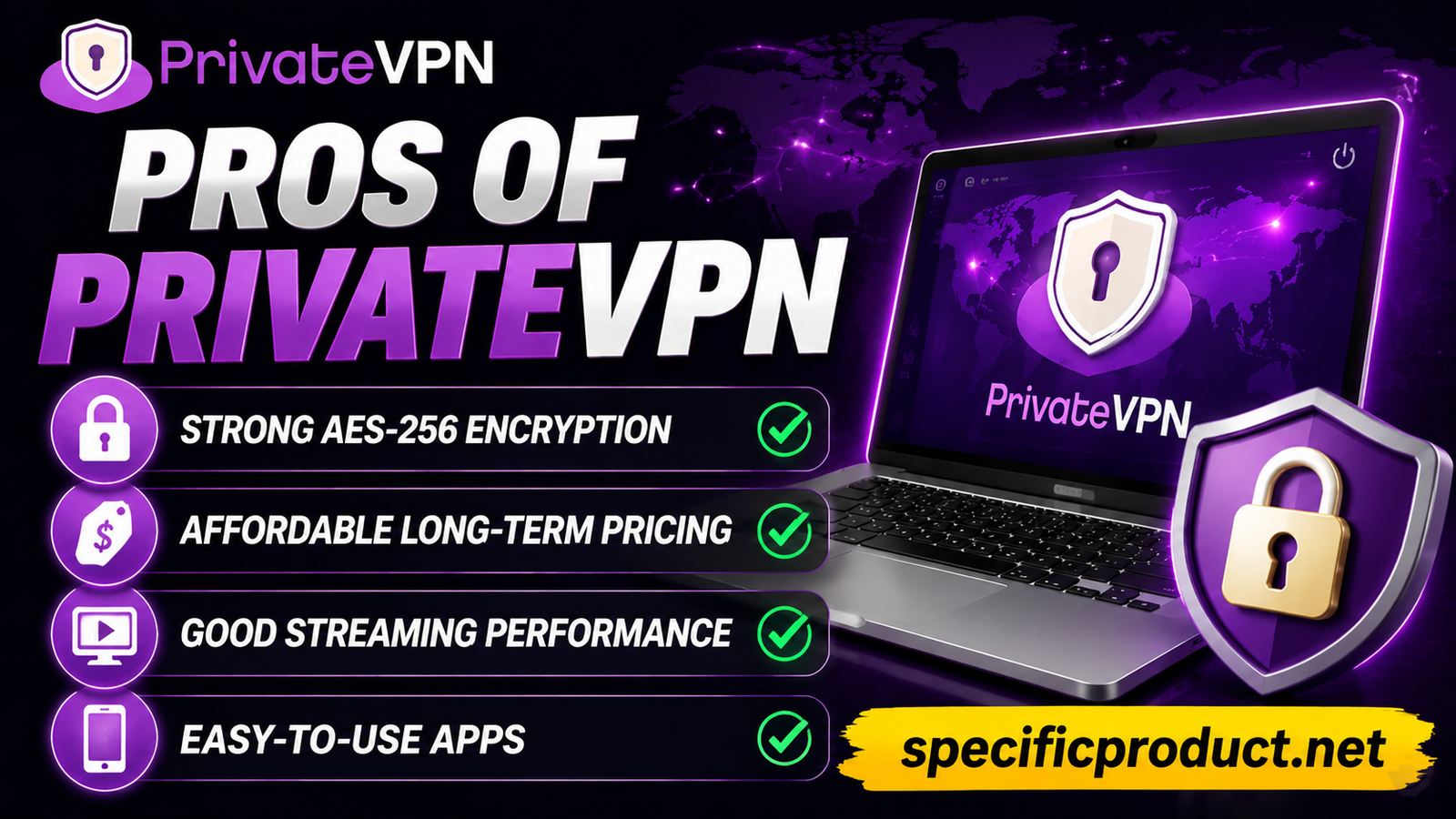
Pros | Cons |
Strong AES-256 encryption | Small server network |
Affordable long-term pricing | No full independent audit |
Good streaming performance | Limited advanced features |
Easy-to-use apps | Inconsistent long-distance speed |
PrivateVPN is designed for simplicity. The interface is clean and beginner-friendly. Users can connect to a server with just one click, making it suitable for non-technical users.
However, advanced customization options are limited, which may disappoint power users.
Support is available via email and help guides. While responses are generally helpful, the absence of 24/7 live chat support is a noticeable drawback.
Compared to NordVPN, PrivateVPN is significantly smaller in scale. NordVPN offers thousands of servers, audited security systems, and advanced features like multi-hop routing, making it a more complete privacy solution.
Surfshark provides unlimited device connections and stronger feature sets at similar pricing levels. This makes Surfshark more appealing for families or heavy users.
PrivateVPN is ideal for:
It is not ideal for:
PrivateVPN remains a solid entry-level VPN service in 2026. It offers strong encryption, reliable streaming access, and easy usability. However, its small server network and lack of advanced features make it less competitive against modern VPN giants.
It is best described as a budget-friendly streaming VPN with basic privacy features, rather than a full-scale security platform. For users who prioritize simplicity over advanced control, it still holds value.
Yes, it uses AES-256 encryption and a no-logs policy, but it lacks independent audits.
Yes, it can unblock multiple Netflix regions, though performance may vary.
It supports up to 10 simultaneous device connections.
Yes, it supports P2P traffic and performs well on most servers.
Its small server network and limited advanced features compared to competitors.

Recent Post
How Weblium.com Helps Simplify the Website Creation Process

Understanding Supplement Selection and Quality at BulkSupplements.com

How Digital Solutions Are Evolving With CHENGDU OUMEI NETWORK INFORMATION L.T.D

Beauty Trends Worth Exploring With Dominique Cosmetics – 122027

The Growing Role of 3D Scanning and Revopoint 3D Technologies Inc

Why Fitness Fashion Lovers Are Exploring WISKII ACTIVE LIMITED

Improving Website Performance and User Experience With Strategy11

Website Design Trends and the Growing Role of Weblium.com

Photography Styling Trends and the Role of KATE BACKDROP INC
A Guide to Finding Everyday Fashion Inspiration on rihoas.com
Releted Post