Lightspeed Commerce Review: Best POS for Growing Retail Brands
Lightspeed Commerce is a powerful, cloud-based POS solution designed for growing retail brands that need more than basic billing tools. In this in-depth Lightspeed Commerce review, we explore its key features, pricing, inventory management, analytics, and omnichannel capabilities to help retailers decide if it’s the right POS system to scale operations, improve customer experiences, and drive long-term business growth.
If you’re running a growing retail or hospitality business, you already know this truth: spreadsheets and basic cash registers don’t scale. That’s exactly where Lightspeed Commerce steps in.
Lightspeed Commerce is a cloud-based point-of-sale (POS) platform designed for ambitious brands that want more than just billing. It combines POS, inventory, payments, customer data, and analytics into one powerful system. Think of it as the brain of your business—quietly working in the background while you focus on selling.
What Makes Lightspeed Different From Traditional POS Systems
Traditional POS systems are like calculators. Lightspeed is more like a business command center.
Instead of just processing sales, Lightspeed helps you:
Track inventory across locations
Understand customer behavior
Sell online and offline seamlessly
Make data-driven decisions in real time
It’s built for growth, not just survival.
Who Should Use Lightspeed POS?
Lightspeed isn’t for everyone—and that’s a good thing. It’s best suited for businesses that are serious about scaling.
Retailers
Perfect for fashion stores, electronics shops, lifestyle brands, and specialty retailers managing complex inventories.
Restaurants & Hospitality
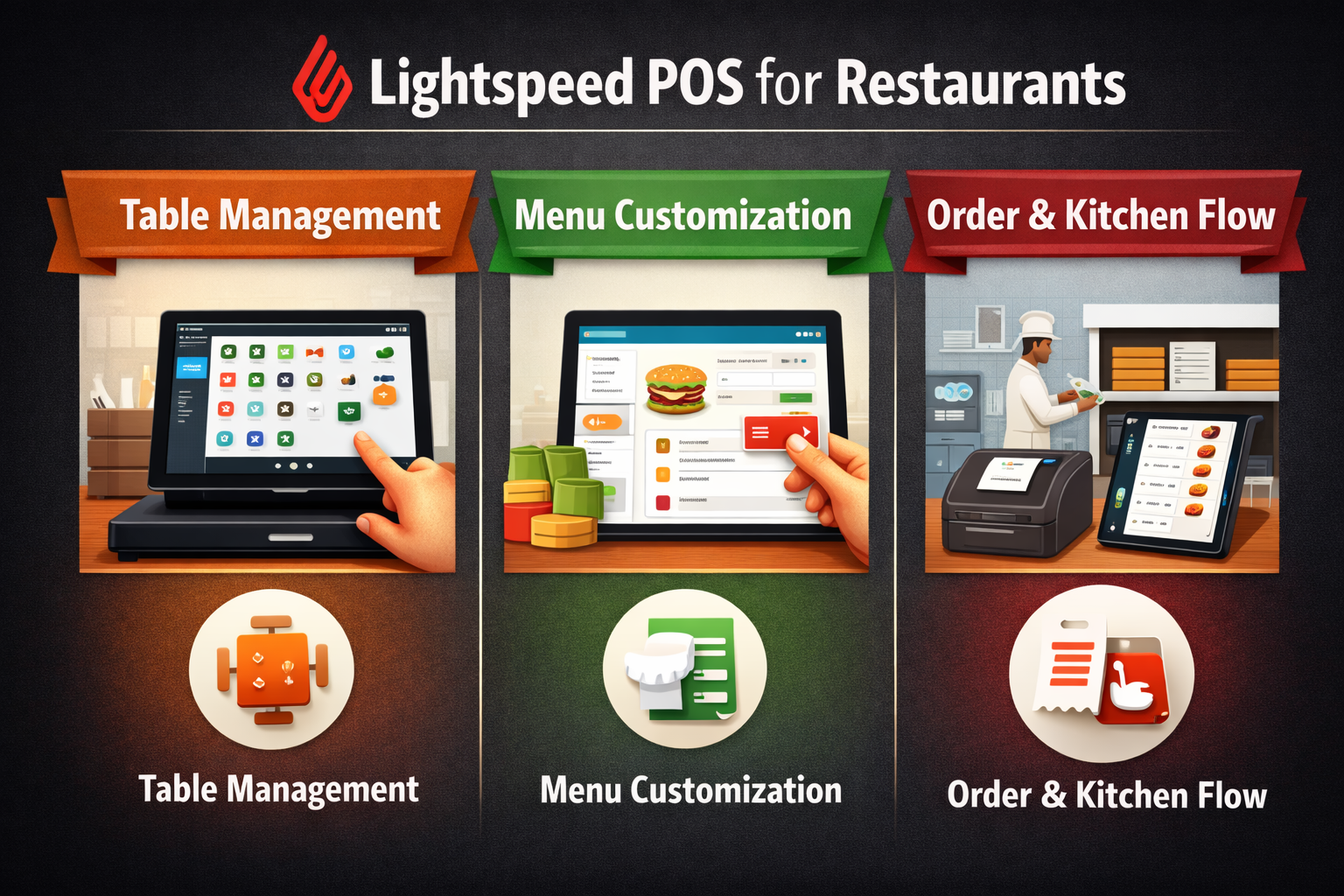
Ideal for restaurants, cafés, bars, and hotels that need table management, menus, and fast order workflows.
Ecommerce & Omnichannel Brands
If you sell both online and offline, Lightspeed helps unify everything under one roof.
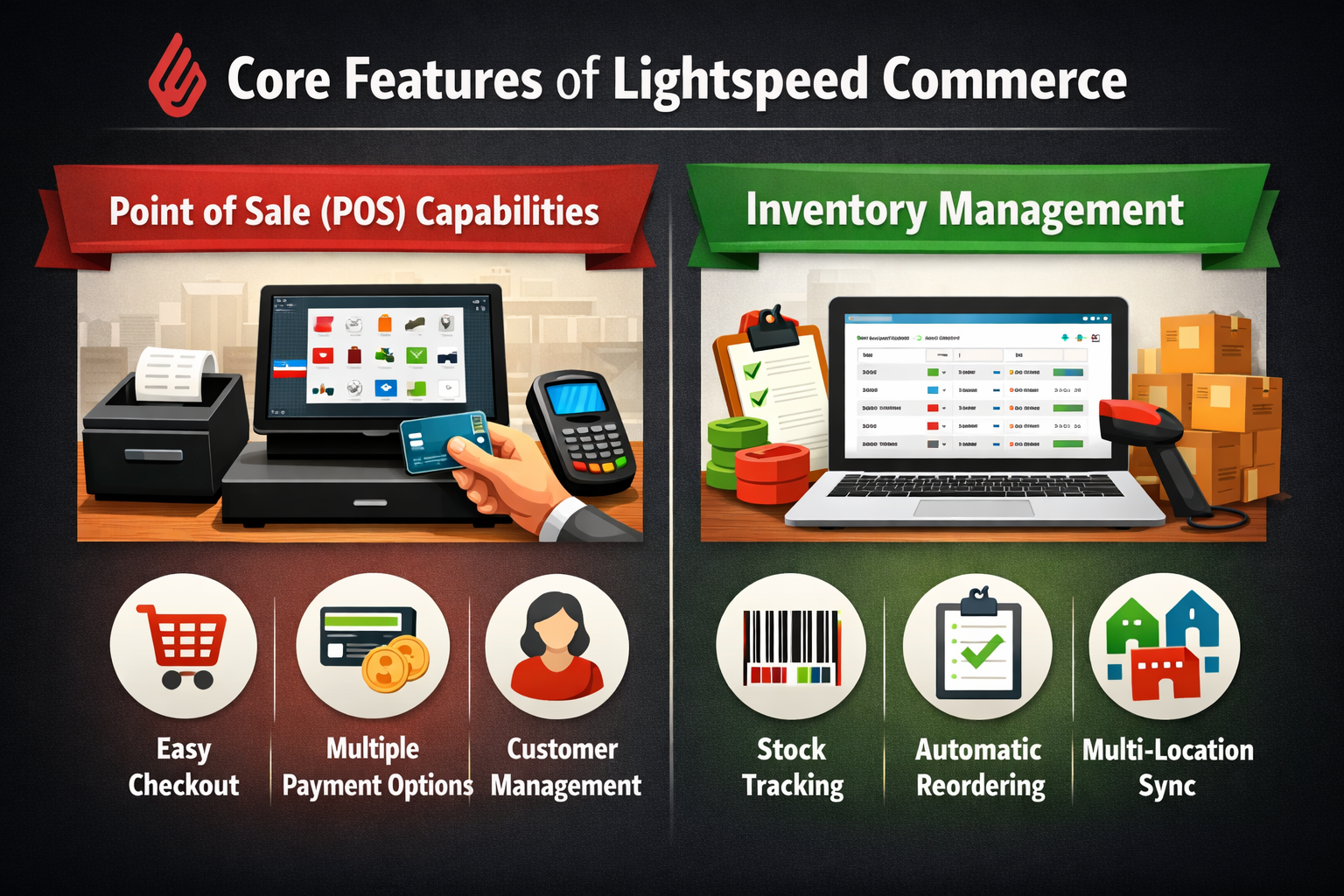
Core Features of Lightspeed Commerce
Point of Sale (POS) Capabilities
At its core, Lightspeed POS is fast, reliable, and intuitive. You can process sales, accept multiple payment methods, apply discounts, and manage returns without slowing down checkout.
It works smoothly on tablets and desktops, making it flexible for different store layouts.
Visual floor plans make it easy to manage tables, reservations, and seating.
Menu Customization
Create menus with modifiers, combos, and daily specials in just a few clicks.
Order & Kitchen Flow
Orders move smoothly from server to kitchen, reducing errors and speeding up service.
Ease of Use & User Interface
Despite being feature-rich, Lightspeed doesn’t feel overwhelming. The interface is clean, modern, and well-organized.
Most users can get comfortable within a day or two—no tech degree required.
Integrations & App Ecosystem
Lightspeed integrates with popular tools like:
Accounting software
Email marketing platforms
Ecommerce apps
Staff scheduling tools
This flexibility lets you build a tech stack that fits your business, not the other way around.
Pricing Plans Explained
Lightspeed pricing varies based on business type and features.
Retail plans
Restaurant plans
Ecommerce add-ons
Payment processing fees
It’s not the cheapest POS—but it’s priced for value, not shortcuts.
Pros and Cons of Lightspeed Commerce
Pros
Powerful inventory management
Excellent analytics
Omnichannel support
Scalable for growth
Modern UI
Cons
Higher cost than basic POS systems
Learning curve for advanced features
Some features locked behind higher plans
Lightspeed vs Other POS Systems
Compared to entry-level POS tools, Lightspeed offers deeper control and better insights. While simpler systems focus on transactions, Lightspeed focuses on business intelligence.
If you’re planning long-term growth, Lightspeed feels like a strategic investment rather than an expense.
Customer Support & Resources
Lightspeed provides:
24/7 support (plan-dependent)
Onboarding assistance
Help center and guides
Webinars and training materials
Support quality is generally rated strong, especially during onboarding.
Security & Compliance
Security isn’t optional—and Lightspeed treats it that way.
PCI-compliant payments
Encrypted transactions
Secure cloud infrastructure
Regular system updates
Your data—and your customers’ data—stays protected.
Real-World Use Cases
A fashion retailer managing stock across three locations
A café handling peak-hour rush without chaos
A brand selling online and in-store with unified inventory
Lightspeed adapts to different industries without forcing rigid workflows.
Conclusion
Lightspeed Commerce isn’t just a POS—it’s a growth engine. It empowers retailers and restaurants with insights, control, and flexibility that basic systems simply can’t offer.
If you’re serious about scaling, streamlining operations, and understanding your customers better, Lightspeed Commerce earns its place at the checkout counter.
Frequently Asked Questions
Q. Is Lightspeed good for small businesses?
Yes, but it’s best suited for small businesses planning to grow rather than stay static.
Q. Does Lightspeed support online selling?
Absolutely. It offers strong ecommerce and omnichannel capabilities.
Q. Can Lightspeed handle multiple store locations?
Yes, multi-location management is one of its core strengths.
Q. Is Lightspeed POS easy to learn?
The basics are easy. Advanced features may take some time but are well-documented.
Q. Is Lightspeed better than free POS systems?
For serious growth and analytics, Lightspeed offers far more value than free POS tools.