


The Essential Guide to Understanding and Building a Legacy
Discover the meaning of Legacy and learn how to build a lasting impact through your values, relationships, and contributions. This guide explores how Legacy supports fertility planning with at-home sperm testing and sperm freezing, helping you prepare for the family you want in the future.
Table of Contents
- 1 Introduction
- 2 What Is Legacy?
- 3 Why Fertility Preservation Matters
- 4 How Legacy Supports Family Planning
- 5 How the Legacy Sperm Freezing Process Works
- 6 Key Features of Legacy
- 7 Legacy Pricing and Costs
- 8 Understanding Sperm Health and Fertility
- 9 What Can Affect Sperm Health?
- 10 Why Consider Sperm Freezing Before Medical Treatment?
- 11 Who Can Benefit from Legacy?
- 12 Benefits and Limitations of Legacy
- 13 How to Choose the Right Fertility Service
- 14 Legacy and the Future of Fertility Planning
- 15 Conclusion
- 16 Frequently Asked Questions
Introduction
Building a legacy is about preparing for the future and protecting what matters most to you. For many people, starting a family is an important part of that future. Whether you are trying to conceive, considering fertility preservation, or preparing for medical treatment, understanding your reproductive health can help you make informed decisions.
Legacy is a fertility company that provides at-home sperm testing and sperm freezing services. Its goal is to make fertility testing and preservation more convenient, with clinical-quality laboratory services and access to qualified medical providers. This guide explores what Legacy offers, how its process works, and how its services may support your family planning goals.
What Is Legacy?
Legacy is a U.S.-based fertility service that focuses on sperm health, semen analysis, and sperm cryopreservation. Instead of requiring every customer to begin with a visit to a fertility clinic, Legacy offers home collection kits that can be ordered online. Customers can use these kits to submit samples for laboratory analysis and, when appropriate, preservation. The company also offers fertility-related support for people with different reproductive goals, including those preparing for medical treatment or planning to have children in the future.
Why Fertility Preservation Matters
Fertility can be affected by age, medical conditions, certain treatments, and lifestyle factors. People who expect to undergo cancer treatment, start testosterone therapy, or have a vasectomy may want to discuss sperm preservation with a healthcare professional before treatment. Freezing sperm can provide an option for future assisted reproduction, although it does not guarantee a successful pregnancy. Legacy explains that its services are designed to help people preserve the possibility of having a family later.
How Legacy Supports Family Planning
Family planning looks different for everyone. Some people are ready to have children now, while others want to preserve their options for a later stage of life. Legacy provides services that can help people understand their sperm health and consider preservation before certain medical or personal milestones. The company’s website lists support for trying to conceive, vasectomy, gender-affirming care, testosterone therapy, cancer treatment, and military or dangerous jobs.
At-Home Sperm Testing
At-home testing allows you to collect a sample in a familiar environment and send it to a laboratory for analysis. Legacy offers clinical-quality semen analysis, which can help assess aspects of sperm health and fertility potential. Its website describes a private dashboard where customers can access their results. A semen analysis can be a useful starting point, but it is not a complete assessment of every factor that affects fertility.
Sperm Freezing for Future Use
Sperm freezing, also called cryopreservation, is a method of preserving sperm at very low temperatures for possible use in assisted reproduction. Legacy states that its samples are frozen using liquid nitrogen vapors at -196°C and stored at multiple cryo laboratories. When a customer is ready to pursue treatment, the company coordinates with a healthcare provider to transfer the sample to the appropriate clinic. Frozen sperm may be used in procedures such as artificial insemination or in vitro fertilization, depending on the individual’s medical circumstances.
How the Legacy Sperm Freezing Process Works
The sperm freezing process involves several stages, from ordering a kit to arranging future use of the stored sample. Understanding each step can make the experience easier to plan.
Step 1: Order Your Collection Kit
The process begins when you choose the appropriate service and order a kit online. Legacy states that a doctor’s visit is not required to order its kit. Depending on your situation, you may still need medical guidance before testing or preservation, particularly if you have a fertility concern or an upcoming medical procedure.
Step 2: Collect and Ship Your Sample
Once you receive the kit, you follow the collection instructions and send your sample to the laboratory. It is important to follow the instructions carefully because collection and shipping conditions can affect sample quality. If you have questions about timing or collection requirements, contact the provider before submitting the sample.
Step 3: Laboratory Analysis and Freezing
Legacy explains that it first analyzes a sample to determine whether it is suitable for freezing. The sample is then frozen using liquid nitrogen vapors at -196°C. This process preserves sperm for potential future use. A healthcare professional can help explain the results and discuss whether additional samples or other fertility testing may be appropriate.
Step 4: Long-Term Storage
After freezing, the sample is stored in cryogenic facilities. Legacy reports that frozen sperm can remain healthy for decades and that it stores samples at multiple cryo laboratories. Long-term storage involves ongoing costs and requires attention to the provider’s storage policies.
Step 5: Future Fertility Treatment
When you are ready to use a stored sample, Legacy says it coordinates with your healthcare provider to transfer the sperm to their clinic. The sample may then be used for artificial insemination or IVF, depending on the treatment plan. The success of any future procedure depends on many factors, including sperm quality, the partner’s reproductive health, and the medical treatment selected.
Key Features of Legacy
Convenient Home Collection
Legacy’s home collection model is designed to make the first steps of fertility testing and preservation more convenient. Customers can order a kit online, collect their sample at home, and send it to the laboratory. This approach may be helpful for people who find traditional collection rooms uncomfortable or who have limited time for clinic appointments. The company states that its kits are sent directly to customers and that samples are analyzed before freezing.
Clinical-Quality Laboratory Services
Legacy provides semen analysis and cryopreservation through CLIA-certified, CLEP-approved laboratories. These services can help customers obtain information about their reproductive health and explore fertility preservation options. The company reports that it has performed more than 75,000 analyses. While this is a company-reported figure, it indicates the scale of its laboratory testing activity.
Privacy and Secure Storage
Privacy is an important consideration when dealing with reproductive health information. Legacy says that its kits arrive in discreet packaging and that test results are available through a private virtual dashboard. It also reports that samples are stored in multiple locations to reduce the risk associated with a single storage facility. Customers should review the company’s current privacy and storage policies before choosing a service.
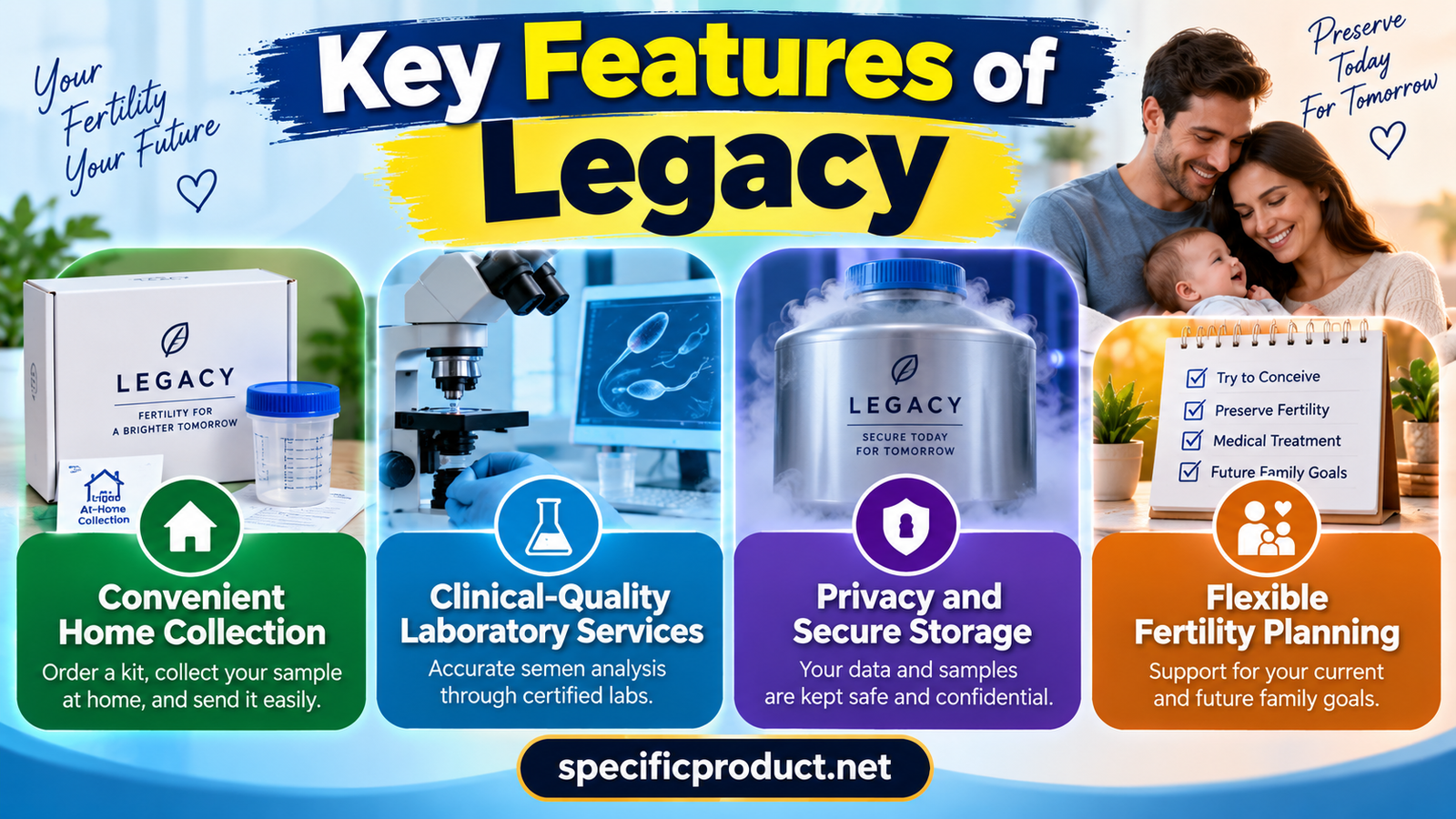
Flexible Fertility Planning
Legacy’s services can be relevant to people who want to start a family soon as well as those who want to preserve the possibility of having children later. This flexibility may be useful for people facing medical treatment, considering a vasectomy, or planning gender-affirming care. The company provides fertility-related options for these different situations, but the best approach depends on your individual health and reproductive goals.
Legacy Pricing and Costs
The cost of fertility testing and preservation is an important part of choosing a provider. Legacy’s website states that sperm freezing starts at $245 per year and that the company is in network with many major insurance plans and benefits. It also advertises savings compared with traditional clinics. These figures are subject to change, and the total cost may depend on the service selected, storage duration, insurance coverage, and other requirements.
Service | Information from Legacy |
At-home sperm testing | Home collection kit with laboratory semen analysis |
Sperm freezing | Starts at $245 per year, according to the website |
Storage | Cryogenic storage at multiple locations |
Insurance | In-network with many major insurance plans and benefits |
Availability | Currently available to clients within the United States |
Understanding Sperm Health and Fertility
Sperm health plays an important role in male fertility. A semen analysis can provide information about sperm count, movement, and shape, helping you understand certain aspects of reproductive health. If you are trying to conceive or planning for a family in the future, learning about these factors can help you have more informed conversations with a healthcare professional. Legacy offers at-home semen analysis to help customers explore their sperm health through laboratory testing.
How Sesame Care Connects Patients With Accessible Healthcare Services
The Ultimate Guide to Frey Products for Modern Consumers
The Ultimate Guide to Rachael Ray Kitchen and Lifestyle Essentials
Key Features and Services Investors Should Know About Hargreaves Lansdown
How AKKO Is Becoming Popular Among Modern Keyboard Users
What Can Affect Sperm Health?
Several factors can influence sperm production and quality. Age, certain medical conditions, medications, lifestyle habits, and exposure to heat or harmful substances may affect reproductive health. If you are concerned about fertility, a doctor can help identify possible causes and recommend appropriate testing. Understanding your health today can be a useful step toward making decisions about future family planning.
Why Consider Sperm Freezing Before Medical Treatment?
Some medical treatments can affect sperm production or fertility. Cancer treatment, including chemotherapy and radiation, may damage sperm-producing cells. Testosterone therapy can also reduce sperm production. If you are preparing for treatment that may affect fertility, discussing sperm freezing with your medical team before treatment begins can help you understand your preservation options. Legacy lists cancer treatment and testosterone therapy among the situations it supports.
Planning Ahead for Future Parenthood
You may not be ready to start a family today, but that does not mean you cannot prepare for tomorrow. Sperm freezing allows you to preserve sperm for possible future use in assisted reproduction. It can be particularly relevant if you expect a medical procedure or treatment that may affect fertility. However, freezing sperm does not guarantee a future pregnancy, and your doctor can help you understand how preservation fits into your individual family planning goals.
Who Can Benefit from Legacy?
Legacy may be useful for people who want to understand their sperm health or preserve fertility for the future. Its services can be relevant to individuals who are trying to conceive, preparing for a vasectomy, or considering medical treatments that may affect fertility. The company also lists testosterone therapy, cancer treatment, and gender-affirming care among the situations it supports.
People Trying to Conceive
Semen analysis can provide information about sperm health when a couple is trying to become pregnant. If results suggest a possible concern, a healthcare professional can recommend further evaluation or treatment. Home testing may be a convenient first step, but it should not replace medical advice when fertility problems are suspected.
People Considering Vasectomy
A vasectomy is a form of permanent birth control. Some people choose to preserve sperm before the procedure so that they have an option for future family planning. Anyone considering this step should discuss fertility preservation and the limitations of vasectomy reversal with a qualified healthcare provider.
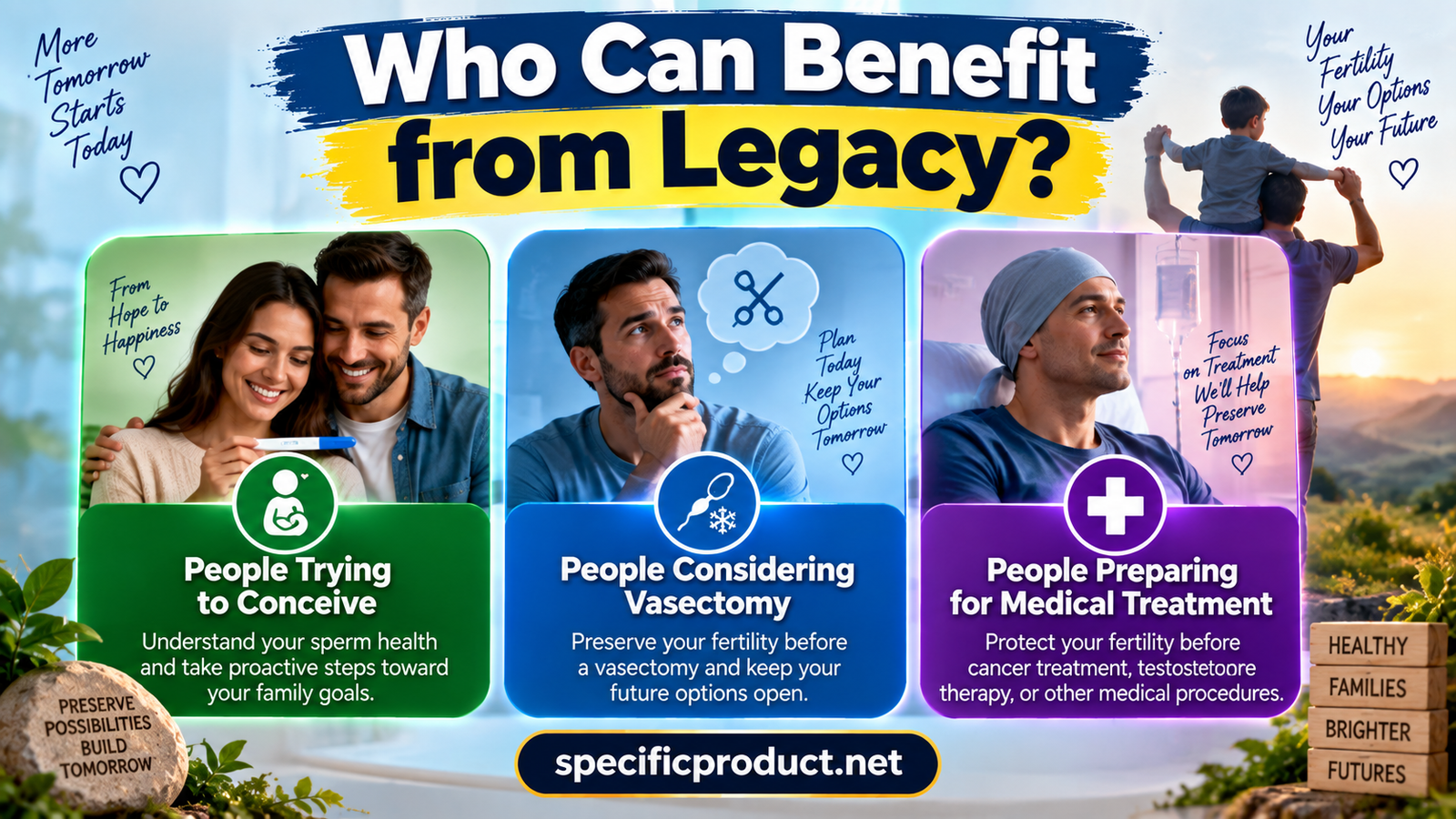
People Preparing for Medical Treatment
Certain cancer treatments and other medical interventions may affect fertility. Discussing sperm freezing before treatment can help a person understand available options. The timing of preservation is important, so anyone preparing for potentially fertility-affecting treatment should speak with their medical team as early as possible.
Benefits and Limitations of Legacy
Legacy offers several potential advantages for people who want a convenient way to explore fertility preservation. At-home collection may reduce the need for clinic visits, and the company provides laboratory analysis and cryogenic storage through its fertility services. Its website also describes discreet packaging, a private results dashboard, and support for different family planning situations. These features can make the process easier to manage for some customers.
How to Choose the Right Fertility Service
Choosing a fertility provider is a personal decision. Start by identifying your main goal: understanding sperm health, preparing for treatment, or preserving fertility for future family planning. Next, compare the services available, including the type of testing, collection process, storage arrangements, and support offered. It is also useful to check the provider’s laboratory credentials, privacy practices, and current pricing. If you are receiving medical treatment or have a fertility concern, discuss your options with a qualified healthcare professional.
Legacy and the Future of Fertility Planning
Fertility preservation is one way to prepare for future family goals. Legacy provides services that may help people understand sperm health and preserve fertility options through at-home testing and sperm freezing. Its website describes support for people trying to conceive, preparing for medical treatment, and considering other reproductive decisions.
Conclusion
Legacy provides at-home sperm testing and freezing services designed to help people understand their reproductive health and preserve fertility options for the future. Its home collection kits, laboratory analysis, cryogenic storage, and support for different family planning goals make it a relevant option for people exploring fertility preservation. The company states that its services are currently available only to clients in the United States.
Whether you are trying to conceive, preparing for medical treatment, or planning for a family later in life, the right fertility decisions begin with accurate information and professional guidance. Legacy can be one part of that process, but your individual health, goals, and circumstances should guide your final choice.
Frequently Asked Questions
Q. What is Legacy used for?
Legacy is a fertility service that offers at-home sperm testing and sperm freezing. Its services help people understand sperm health and preserve fertility options for possible future family planning.
Q. How much does sperm freezing cost with Legacy?
Legacy's website states that sperm freezing starts at $245 per year. The actual cost may vary depending on the service, storage requirements, and insurance coverage. Check the current pricing before ordering.
Q. Can I use Legacy if I am preparing for medical treatment?
Legacy lists cancer treatment, testosterone therapy, and gender-affirming care among the situations it supports. Speak with your healthcare provider about the best time to preserve sperm before treatment.
Q. Does Legacy guarantee future pregnancy?
No. Sperm freezing preserves an option for future assisted reproduction, but it does not guarantee a successful pregnancy. The outcome depends on many medical and reproductive factors.
Q. Is Legacy available outside the United States?
Legacy's website states that its services are currently available only to clients within the United States. Check the official website for current eligibility and service availability.

Recent Post

Key Benefits of Choosing Water Filtration Products From Waterdrop (US)

The Powerful Lessons About Resilience We Can Learn From The Phoenix

How Sesame Care Connects Patients With Accessible Healthcare Services

K9 Training Institute: Exploring Training Solutions for Modern Dog Owners

Why Choose Pets Best Pet Insurance for Your Beloved Pets?

Peanut Butter & Co.: A Complete Guide to Delicious Peanut Butter

The Ultimate Guide to Frey Products for Modern Consumers

Discover Anolon Kitchen Essentials for Better Cooking Results

IQAir: How Advanced Air Purifiers Improve Your Home Environment
Releted Post