HubSpot Marketing Strategy: Why It’s the Gold Standard for Automation
This blog post explores why HubSpot is considered the gold standard for marketing automation, breaking down its powerful tools, inbound marketing approach, and data-driven workflows. Learn how HubSpot helps businesses automate campaigns, personalize customer journeys, align sales and marketing, and scale growth efficiently—all from a single, easy-to-use platform.
Not too long ago, marketing meant spreadsheets, cold emails, and endless follow-ups. It worked—but it was slow, messy, and hard to scale. Fast forward to today, and automation has changed everything. Businesses now expect smarter systems that can nurture leads, personalize experiences, and track results without burning out teams.
Why automation is no longer optional
In a world where customers expect instant responses and personalized content, manual marketing just can’t keep up. Automation isn’t a “nice-to-have” anymore—it’s the engine that keeps modern marketing running. And this is exactly where HubSpot shines.
What Is HubSpot?
Overview of the HubSpot ecosystem
HubSpot is a comprehensive platform for inbound marketing, sales, and customer support that aims to improve business growth. It brings CRM, marketing automation, content management, sales tools, and analytics under one roof.
HubSpot’s inbound marketing philosophy
At its core, HubSpot is built around inbound marketing—attracting customers by providing value rather than chasing them with aggressive ads. Think of it like a magnet instead of a megaphone.
Understanding HubSpot Marketing Strategy
Core pillars of the strategy
HubSpot’s marketing strategy rests on four pillars: attract, engage, convert, and delight. Every tool inside HubSpot supports at least one of these stages, creating a smooth customer journey.
How automation fits into inbound marketing
Automation allows marketers to deliver the right message to the right person at the right time—without manual intervention. HubSpot automates this entire process while keeping it human and personalized.
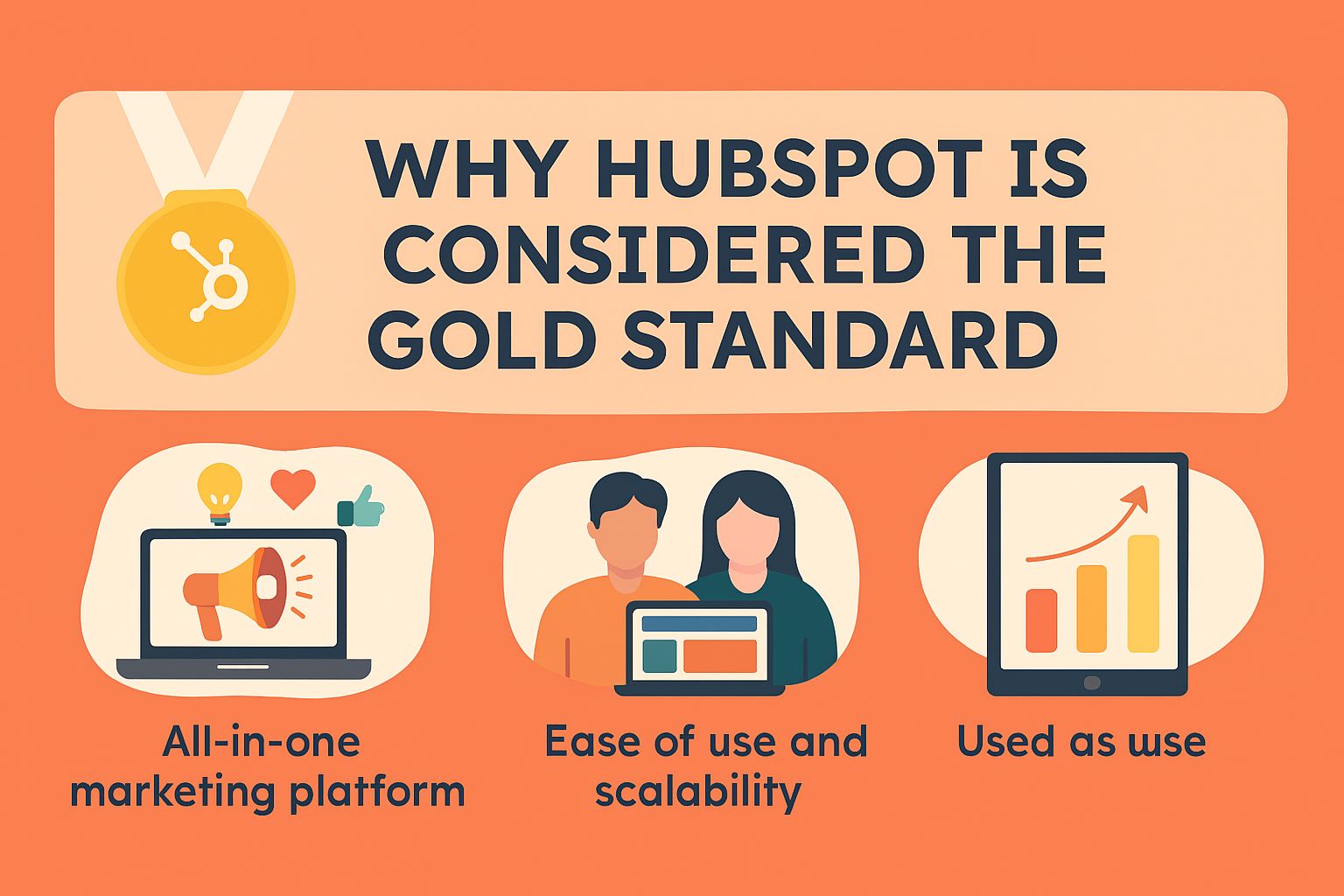
Instead of juggling multiple tools for email, CRM, analytics, and landing pages, HubSpot centralizes everything. One login. One database. One source of truth.
Ease of use and scalability
HubSpot is powerful yet beginner-friendly. Whether you’re a solo marketer or a global enterprise, the platform scales with you without becoming overwhelming.
HubSpot Marketing Hub Explained
Email marketing automation
HubSpot’s email tools let you build automated campaigns based on user behavior—opens, clicks, website visits, and more.
Lead generation and nurturing
From landing pages to gated content, HubSpot makes lead capture effortless.
Smart forms and CTAs
Smart forms recognize returning visitors, while dynamic CTAs adapt based on user behavior. It’s like having a personal sales assistant on your website.
Content Strategy with HubSpot
Blogging and SEO tools
HubSpot includes built-in SEO recommendations, keyword tracking, and content optimization—perfect for organic growth.
Topic clusters and pillar pages
The topic cluster model helps you organize content for better search visibility and authority. It’s SEO with structure, not guesswork.
HubSpot allows you to show different content to different users based on location, lifecycle stage, or behavior.
Personalized user journeys
From first visit to loyal customer, HubSpot maps personalized journeys without feeling robotic.
HubSpot Analytics and Reporting
Real-time dashboards
Visual dashboards give instant insights into campaign performance, traffic, and conversions.
ROI tracking and attribution
HubSpot tracks which campaigns drive revenue, helping marketers prove real business impact.
HubSpot for Email Marketing Automation
Behavior-based email campaigns
Emails are triggered by actions, not guesswork. If a user clicks, downloads, or visits—HubSpot responds automatically.
A/B testing and optimization
Test subject lines, content, and timing to continuously improve results.
Social Media Automation with HubSpot
Scheduling and monitoring
Plan, schedule, and publish posts across platforms from one dashboard.
Social performance insights
Track engagement, clicks, and ROI—no extra tools required.
HubSpot Integrations and Ecosystem
Connecting tools seamlessly
HubSpot integrates with hundreds of apps, from Slack to Zoom to Shopify.
App marketplace advantages
The HubSpot App Marketplace allows businesses to extend functionality without complexity.
HubSpot vs Other Marketing Automation Tools
HubSpot vs Marketo
Marketo is powerful but complex. HubSpot offers similar capabilities with better usability.
HubSpot vs Mailchimp
Mailchimp handles email well, but HubSpot delivers full-funnel automation and CRM integration.
Pros and Cons of HubSpot Marketing Strategy
Advantages
All-in-one platform
Powerful automation
User-friendly interface
Strong analytics and reporting
Excellent scalability
Limitations
Premium plans can be costly
Advanced features require learning time
Who Should Use HubSpot Marketing Automation?
Startups and small businesses
HubSpot simplifies marketing without needing large teams.
Enterprises and growing teams
Advanced automation and reporting make HubSpot enterprise-ready.
Conclusion
HubSpot Marketing Strategy has earned its reputation as the gold standard for automation by combining power, simplicity, and scalability. It doesn’t just automate tasks—it creates meaningful, personalized customer experiences at scale. For businesses serious about growth, HubSpot isn’t just a tool—it’s a long-term marketing engine.
Frequently Asked Questions
Q. Is HubSpot suitable for beginners?
Yes, HubSpot is beginner-friendly with intuitive tools and guided setup.
Q. Can HubSpot replace multiple marketing tools?
Absolutely. It combines CRM, email, automation, analytics, and content tools.
Q. Is HubSpot only for large businesses?
No, HubSpot is ideal for startups, SMBs, and enterprises alike.
Q. Does HubSpot support SEO and content marketing?
Yes, it includes built-in SEO tools, blogging features, and content optimization.
Q. Is HubSpot worth the investment?
For businesses focused on long-term growth and automation, HubSpot delivers strong ROI.