


Atlas VPN Review: Features, Security, Pricing, and Performance Explained
Atlas VPN Review: Features, Security, Pricing, and Performance Explained is a detailed blog post that explores everything you need to know about this popular VPN service. It covers how Atlas VPN works, its key features, security standards like encryption and kill switch protection, pricing plans, and overall performance in real-world use. The article also breaks down its pros and cons, helping users understand whether it is the right choice for safe browsing, streaming, and online privacy.
Table of Contents
- 1 Introduction to Atlas VPN
- 2 Company Background and Ownership
- 3 Atlas VPN Core Features Overview
- 4 Security and Encryption Standards
- 5 Privacy Policy and No-Logs Claim
- 6 Server Network and Global Coverage
- 7 Features of Atlas VPN
- 8 Speed and Performance Analysis
- 9 Streaming and Torrenting Support
- 10 User Interface and Ease of Use
- 11 Pricing Plans and Value for Money
- 12 Advantages of Atlas VPN
- 13 Limitations and Drawbacks
- 14 Device Connections and Compatibility
- 15 Atlas VPN Alternatives in 2026
- 16 Expert Opinion and User Feedback
- 17 Conclusion
- 18 Frequently Asked Questions
Introduction to Atlas VPN
Atlas VPN entered the VPN market as a lightweight and beginner-friendly privacy tool designed to help users secure their internet connection without overwhelming technical complexity. At its core, it functions like a digital tunnel that hides your IP address and encrypts your traffic, making it harder for websites, hackers, or even internet providers to track your online activity. What makes it especially interesting is its freemium model, which gives users access to a basic version without requiring payment.
Over time, Atlas VPN gained attention for being simple, fast, and accessible. Many users preferred it because it removed the confusing settings that often come with traditional VPN services. Instead of complex dashboards, it focused on one-click connection and automatic protection. However, its journey in the VPN industry has been mixed, especially after major changes in ownership and service availability in recent years.
Company Background and Ownership
Atlas VPN was developed as a modern privacy tool and later became part of the larger cybersecurity ecosystem under Nord Security, the same group behind major VPN platforms like NordVPN and Surfshark. This acquisition significantly influenced its development direction and feature integration.
The goal of the service was always to make privacy accessible to everyday users, especially those who do not want to deal with technical configurations. However, despite strong backing, Atlas VPN struggled to compete with larger VPN providers that offer extensive server networks and advanced customization features.
Industry experts have often pointed out that consolidation in the VPN market leads to stronger infrastructure but sometimes reduces diversity in features. Atlas VPN is a clear example of this trend.
Atlas VPN Core Features Overview
Atlas VPN offers essential VPN features that most users expect, including encrypted browsing, IP masking, and basic security tools. One of its most attractive aspects is its free plan, which allows users to test the service before committing financially.
The premium version expands access to more server locations, faster speeds, and additional privacy features. However, compared to competitors, it still lacks some advanced tools like dedicated IP and extensive multi-device configuration options.
Device Compatibility
Atlas VPN supports major platforms including Windows, macOS, Android, and iOS. Linux support exists but is more limited compared to graphical interfaces on other platforms. The design philosophy is clearly focused on simplicity rather than advanced configuration.
Security and Encryption Standards
Security is one of the strongest aspects of Atlas VPN. It uses AES-256 encryption, which is widely considered military-grade and extremely difficult to break. It also supports modern VPN protocols such as WireGuard, known for balancing speed and security efficiently.
Kill Switch Functionality
The kill switch feature ensures that if the VPN connection drops unexpectedly, internet traffic is immediately blocked. This keeps your actual IP address from being unintentionally revealed. While effective, some user reports suggest occasional instability depending on the platform version.
Privacy Policy and No-Logs Claim
Atlas VPN claims to follow a no-logs policy, meaning it does not store user browsing activity or sensitive online behavior. However, like many VPN providers, it may collect limited diagnostic data such as app performance metrics and crash reports.
This is standard across most VPN services and is generally used to improve stability and user experience rather than track personal activity.
Privacy-conscious users should always evaluate how much trust they place in any VPN provider, especially those operating under larger corporate ecosystems.
Server Network and Global Coverage
One of the main limitations of Atlas VPN is its relatively small server network compared to industry leaders. While it does provide access to multiple countries, the number of servers is limited, which can sometimes lead to congestion during peak usage hours.
Smaller server networks can affect:
- Connection stability
- Streaming access
- Speed consistency
Despite this, users in major regions often still experience acceptable performance for general browsing and streaming tasks.
Features of Atlas VPN
Strong Encryption Security
Atlas VPN uses AES-256 encryption, which is considered military-grade security. This ensures that all your internet traffic is securely encrypted and protected from hackers, trackers, and unauthorized access.
Secure VPN Protocols
It supports modern VPN protocols like WireGuard, which provides a balance of high speed and strong security. This helps users enjoy smooth browsing and streaming without compromising safety.
Unlimited Device Connections
One of its standout features is support for unlimited simultaneous device connections, allowing users to protect all their devices under one account.

Free and Premium Plans
Atlas VPN offers both free and premium versions. The free plan gives basic protection, while the premium plan unlocks faster speeds, more server locations, and better performance.
Speed and Performance Analysis
Performance is where Atlas VPN delivers mixed results. On modern protocols like WireGuard, it can achieve fast speeds suitable for HD and even 4K streaming. However, performance can fluctuate depending on server load and distance.
In real-world usage, browsing is generally smooth, and latency remains low for nearby servers. However, long-distance connections may experience noticeable slowdowns.
Think of it like driving on a highway with occasional traffic congestion—fast most of the time, but not always predictable.
Streaming and Torrenting Support
Atlas VPN is known for its ability to unblock several major streaming platforms, including Netflix libraries, Disney+, and BBC iPlayer in many regions. This makes it useful for users who want to access geo-restricted content.
Torrenting is also supported on select servers, with encryption ensuring safe peer-to-peer transfers. However, due to the limited server network, performance may vary depending on availability.
Beginner’s Guide to the Kayak IN CPC Program for Bloggers and Publishers
Top Benefits of Choosing Vidgo Live Streaming TV for Sports and Entertainment
Top Benefits of Shopping at Modelones.com for Nail Care Products
Why ACDSee Is a Popular Choice for Photographers and Creators
Vitauthority Supplements Explained: Ingredients and Key Benefits
User Interface and Ease of Use
One of Atlas VPN’s biggest strengths is its simple user interface. The app is designed for beginners, with a clean layout and minimal settings. Users can connect to a server with just one click.
Mobile vs Desktop Experience
Mobile apps are generally smoother and more optimized, while desktop versions sometimes lack advanced customization options. Still, both versions prioritize ease of use over technical depth.
Pricing Plans and Value for Money
Atlas VPN was widely recognized for its affordable pricing structure, especially when compared to premium competitors.
Free Plan Limitations
The free version offers basic protection but comes with restrictions such as limited servers and reduced speed. It is best suited for casual browsing rather than heavy streaming or gaming.
Subscription Pricing Structure
Plan Type | Features | Value |
Free Plan | Limited servers, basic encryption | Basic use |
Premium Plan | Full servers, faster speeds | Best performance |
Advantages of Atlas VPN
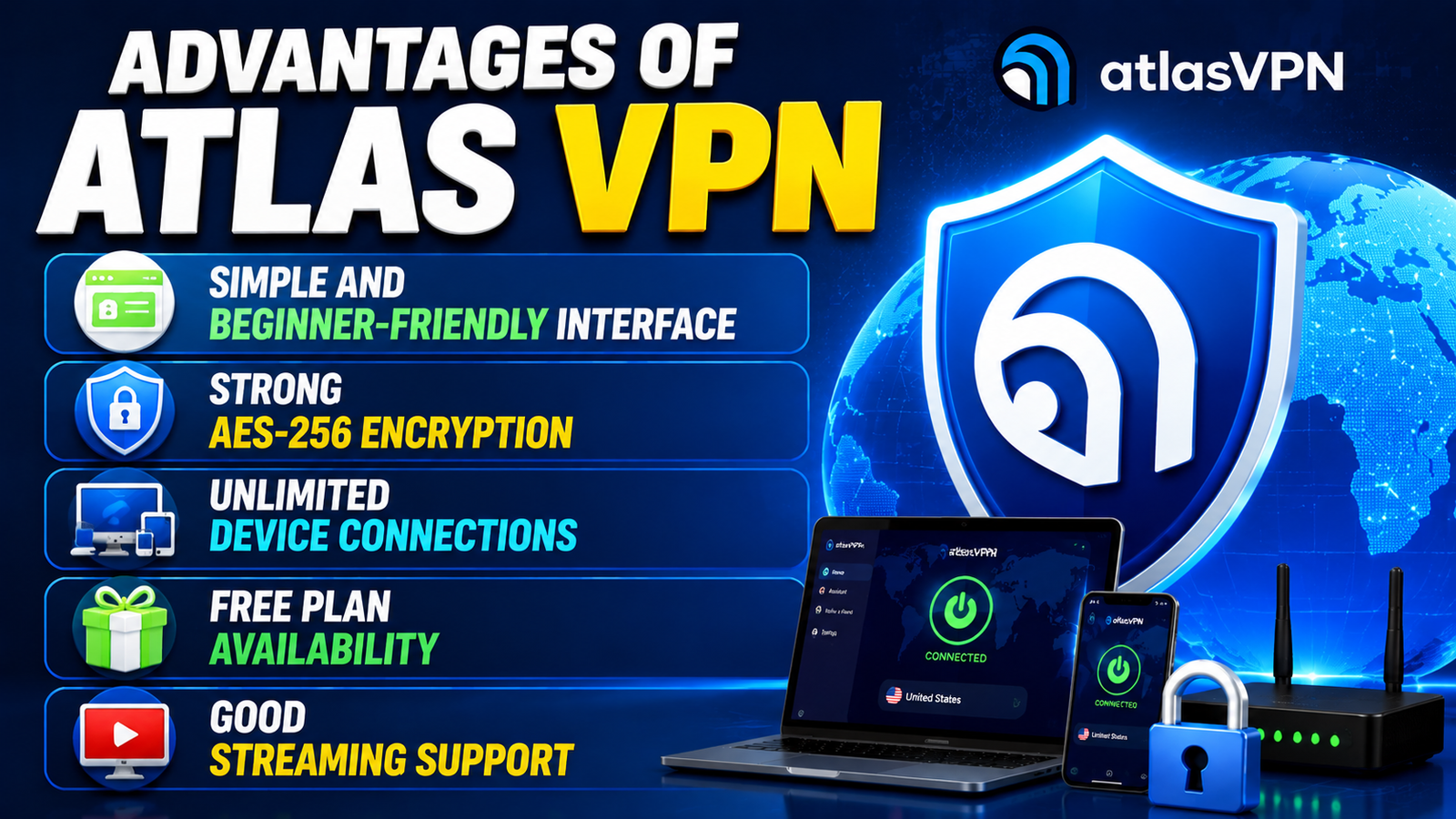
Some of the strongest benefits include:
- Simple and beginner-friendly interface
- Strong AES-256 encryption
- Unlimited device connections
- Free plan availability
- Good streaming support
These advantages make it appealing for casual VPN users who want quick protection without complexity.
Limitations and Drawbacks
Despite its strengths, Atlas VPN has several drawbacks:
- Small server network
- Limited advanced features
- Inconsistent performance on long-distance servers
- No dedicated IP option
- Some platform inconsistencies
These limitations make it less suitable for power users or businesses.
Device Connections and Compatibility
One standout feature is unlimited simultaneous connections, allowing users to protect multiple devices under one account. This is especially useful for families or users with multiple gadgets.
Unlike many VPNs that restrict device limits, Atlas VPN removes that barrier, making it highly flexible for everyday use.
Atlas VPN Alternatives in 2026
Users often compare Atlas VPN with alternatives like:
- NordVPN (advanced features, large network)
- Surfshark (budget-friendly unlimited devices)
- Proton VPN (strong privacy focus)
These competitors generally offer more mature ecosystems and broader global coverage.
Expert Opinion and User Feedback
Recent VPN reviews and user discussions suggest that Atlas VPN was a promising lightweight solution but struggled to compete with larger providers in the long term. Many users appreciated its simplicity but wanted more advanced features and stability.
Experts often highlight that while it performs well for basic use, it is not designed for heavy or enterprise-level requirements.
Conclusion
Atlas VPN remains a solid entry-level VPN option with strong encryption, easy usability, and flexible device support. However, its limited infrastructure and feature set prevent it from competing with top-tier VPN providers.
It works best for users who want simple privacy protection without complexity, rather than advanced security professionals or heavy streamers.
Frequently Asked Questions
Q. Is Atlas VPN still working in 2026?
Service availability has changed over time, and users should verify current status before subscribing.
Q. Is Atlas VPN safe to use?
Yes, it uses AES-256 encryption and secure protocols like WireGuard.
Q. Does Atlas VPN keep logs?
It claims a no-logs policy, with only minimal diagnostic data collection.
Q. Can Atlas VPN unblock Netflix?
Yes, it can unblock several Netflix libraries depending on the server.
Q. Is Atlas VPN good for gaming?
It works for casual gaming but may not be ideal for competitive low-latency requirements.
Recent Post

Discovering Luxury Hospitality Experiences with Niccolo Hotels(GLOBAL)
Exploring Smarter Personal Data Protection Strategies with Incogni
Understanding Modern Crypto Finance Solutions and the Role of Nexo

Key Factors to Know Before Exploring Bellway Products

Exploring Modern Beauty Tools and the Growing Appeal of Luxie

How Innovative Consumer Products Are Changing With Dip Devices

What Makes Creative Haircare Stand Out With IGK Hair?

A Beginner-Friendly Guide to Understanding R+R Medicinals CBD

A Complete Guide to Choosing the Right Products From R+Co
Releted Post