


Transform Your Business Phone System With VirtualPBX: A Practical Guide
Business communication has changed dramatically in recent years. Traditional phone systems that required expensive hardware, complicated wiring, and constant maintenance are slowly being replaced by smarter cloud-based solutions. Companies today need phone systems that are flexible, affordable, and capable of supporting employees working from offices, homes, and different locations around the world. This is where VirtualPBX becomes a valuable solution for modern businesses.
VirtualPBX is a cloud-based business phone system that helps organizations manage calls, messages, customer interactions, and team communication through internet-based technology. Instead of depending on physical phone infrastructure, businesses can use software-powered communication tools that are easier to manage and scale. VirtualPBX offers features such as call routing, auto attendants, mobile applications, analytics, business texting, and integrations with popular business tools.
Table of Contents
- 1 Understanding VirtualPBX and Modern Business Communication
- 2 What Makes Cloud Phone Systems Different From Traditional Phones
- 3 Why Businesses Are Moving Toward VirtualPBX Solutions
- 4 How VirtualPBX Helps Businesses Improve Productivity
- 5 VirtualPBX Security and Reliability Features
- 6 VirtualPBX for Customer Support Teams
- 7 Key Features That Make VirtualPBX Powerful
- 8 How VirtualPBX Improves Customer Experience
- 9 VirtualPBX Pricing and Plan Options
- 10 How VirtualPBX Supports Business Growth
- 11 Important Factors to Consider Before Choosing VirtualPBX
- 12 Setting Up VirtualPBX for Your Organization
- 13 Advantages and Limitations of VirtualPBX
- 14 VirtualPBX Integrations and Productivity Benefits
- 15 Is VirtualPBX the Right Choice for Your Business?
- 16 The Future of Business Communication With Cloud Technology
- 17 Conclusion
- 18 Frequently Asked Questions
Understanding VirtualPBX and Modern Business Communication
A business phone system is no longer just a tool for making and receiving calls. Modern companies require communication platforms that connect employees, customers, and business applications in one place. VirtualPBX works as a cloud PBX (Private Branch Exchange) system, allowing businesses to handle calls through the internet rather than traditional phone networks.
Traditional PBX systems usually require physical servers, dedicated phone lines, and technical experts for installation and maintenance. These systems can become expensive as businesses grow because adding new employees often requires additional hardware and configuration. VirtualPBX removes many of these challenges by hosting the phone system in the cloud.
With a cloud phone system, employees can access business communication tools from computers, smartphones, or supported desk phones. This flexibility allows companies to maintain professional communication even when employees are working remotely or traveling.
Think of VirtualPBX as a digital office receptionist that never sleeps. It manages incoming calls, directs customers to the correct department, provides professional greetings, and helps teams stay connected. Instead of having communication limited to one physical location, businesses gain a communication system that moves wherever they work.
What Makes Cloud Phone Systems Different From Traditional Phones
The biggest difference between traditional phone systems and cloud phone systems is the technology behind them. Traditional systems rely on physical equipment installed inside a business location. Cloud systems use internet connectivity and software to deliver communication services.
A traditional system may require:
- Expensive phone hardware
- Installation charges
- Regular maintenance
- Limited mobility
- Difficult upgrades
A cloud-based system like VirtualPBX provides:
- Online management dashboards
- Remote access
- Easy user additions
- Mobile communication
- Software-based updates
This makes cloud phone systems more suitable for businesses that need flexibility. A company can add new employees, create extensions, or modify call settings without installing new physical equipment.
Why Businesses Are Moving Toward VirtualPBX Solutions
Businesses are adopting VirtualPBX because communication requirements have become more advanced. Customers expect faster responses, employees need flexible tools, and companies want technology that reduces operational costs.
A phone system should not only connect calls; it should improve the entire customer journey. VirtualPBX provides tools that help companies organize communication, improve efficiency, and maintain a professional image.
Cost Savings and Flexible Communication
One of the biggest advantages of VirtualPBX is cost efficiency. Traditional phone systems often involve high installation costs and ongoing maintenance expenses. Cloud-based solutions reduce the need for expensive hardware investments.
VirtualPBX plans start around $15 per user per month for its Smarter Voice offering, with features such as unlimited local calling, call routing, mobile access, and business communication tools.
Businesses can also avoid paying for unnecessary infrastructure. Instead of purchasing equipment for every employee, organizations can use software applications that allow workers to make and receive business calls through their existing devices.
This is especially useful for startups and small companies that want professional communication features without spending large amounts of money.
Supporting Remote and Hybrid Work Environments
Remote work has changed how companies communicate. Employees are no longer always sitting beside office phones. They need communication tools that work across multiple devices and locations.
VirtualPBX supports remote teams by providing desktop and mobile applications. Employees can use their business numbers from smartphones, laptops, or tablets instead of depending on office phones.
For example, a sales employee traveling for meetings can still answer customer calls using the company number. A customer support representative working from home can manage calls without customers knowing their location.
This creates a consistent business experience. Customers receive professional service regardless of where employees are working.
How VirtualPBX Helps Businesses Improve Productivity
In today’s competitive business environment, productivity depends heavily on how quickly and effectively teams can communicate. A traditional phone system often creates limitations because employees must stay connected through fixed office locations. VirtualPBX removes these barriers by providing a flexible communication platform that allows employees to manage calls from anywhere.
With VirtualPBX, employees can access business communication tools through desktop applications, mobile devices, and web browsers. This means sales teams can respond to customers while traveling, customer support representatives can work remotely, and managers can stay connected with their teams without depending on physical office phones.
VirtualPBX Security and Reliability Features
Security is one of the most important factors when choosing a business communication system. Since phone systems handle sensitive conversations and customer information, companies need a platform that protects their data.
VirtualPBX uses cloud-based infrastructure designed to provide secure business communication. The platform includes security features such as encrypted connections, user authentication, and administrative controls that help businesses manage access.
Businesses can also control user permissions and communication settings from a centralized dashboard. This makes it easier for administrators to manage employees, extensions, and communication policies.
A reliable phone system also reduces downtime. When communication services are unavailable, businesses may lose customers and revenue. Cloud-based solutions like VirtualPBX provide flexible infrastructure that helps organizations maintain communication continuity.
VirtualPBX for Customer Support Teams
Customer support teams depend on efficient communication tools to solve problems quickly and maintain customer satisfaction. A slow response or missed call can negatively affect the customer experience.
VirtualPBX helps support teams organize incoming calls through features such as call queues, automatic attendants, and department-based routing. Customers can quickly reach the correct representative instead of waiting unnecessarily.
Support managers can also use call monitoring and reporting features to understand team performance. These insights help businesses identify areas for improvement and provide better training for employees.
For example, a company can analyze:
- Average call duration
- Number of missed calls
- Employee response time
- Call volume patterns
These insights help businesses make smarter decisions and improve customer service operations.
Key Features That Make VirtualPBX Powerful
VirtualPBX provides several features designed to improve business communication. These tools help companies manage calls professionally and improve team productivity.
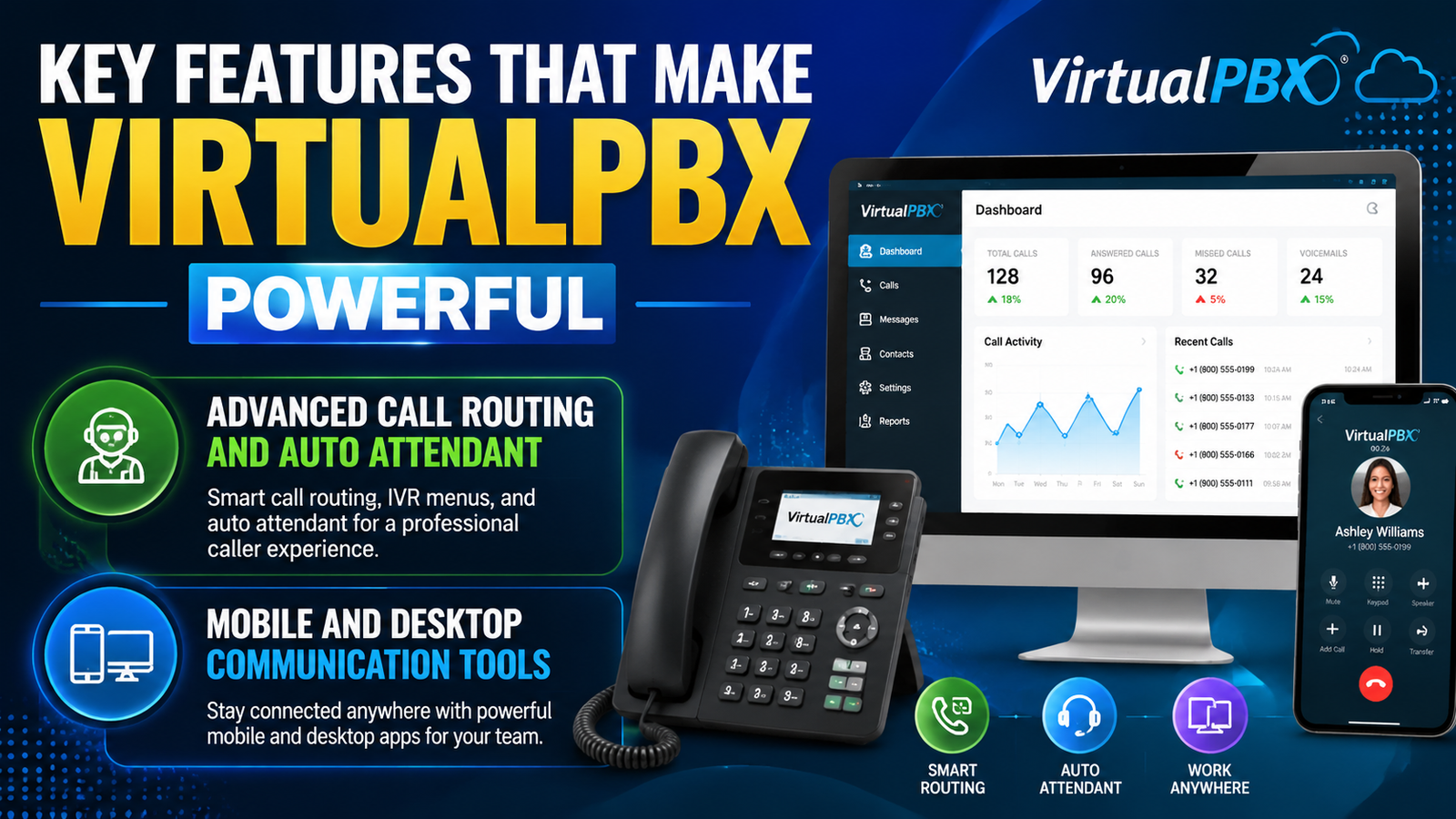
Advanced Call Routing and Auto Attendant
One important feature of VirtualPBX is automatic call management. Instead of every call reaching a single employee, businesses can create intelligent routing systems.
For example, when a customer calls:
- Sales calls can go to the sales team.
- Support calls can reach customer service.
- Billing questions can reach the finance department.
The auto attendant feature works like a virtual receptionist. It greets callers and guides them through menu options.
This creates a professional experience similar to large companies, even for smaller organizations.
Call routing also prevents missed opportunities because customers are directed to the right person quickly.
Mobile and Desktop Communication Tools
Modern businesses need communication beyond desk phones. VirtualPBX provides applications that allow employees to communicate using computers and mobile devices.
Employees can:
- Make business calls
- Receive company calls
- Manage extensions
- Access communication features remotely
This improves productivity because employees can stay connected without carrying additional office equipment.
A business phone system should adapt to employees, not force employees to adapt to outdated technology. VirtualPBX follows this approach by providing flexible communication options.
How VirtualPBX Improves Customer Experience
Customer experience is one of the most important factors affecting business success. A customer who receives fast and professional service is more likely to trust and continue working with a company.
VirtualPBX helps businesses improve customer interactions through organized call handling, professional greetings, and faster responses.
A missed call can result in lost revenue. Features like call forwarding, voicemail management, and routing ensure important calls are not ignored.
Businesses can also create customized greetings that provide customers with useful information before connecting them with employees.
For example, a company can create a greeting such as:
“Thank you for calling ABC Solutions. Press 1 for sales, press 2 for technical support.”
This simple improvement creates a more professional image.
VirtualPBX Pricing and Plan Options
VirtualPBX provides different options depending on business needs. Pricing can vary based on selected features, users, and communication requirements.
Feature | Benefit |
Cloud Calling | Internet-based business communication |
Mobile Apps | Work from anywhere |
Call Routing | Better customer management |
Analytics | Understand call performance |
CRM Integration | Connect communication with business tools |
The Smarter Voice plan includes features such as business caller ID, mobile access, flexible call routing, unlimited local minutes, and support options.
Before selecting a plan, businesses should evaluate:
- Number of employees
- Expected call volume
- Required integrations
- Customer support needs
- Growth plans
Choosing the right plan ensures companies pay only for features they actually need.
How VirtualPBX Supports Business Growth
A growing company needs technology that can grow with its changing requirements. Communication systems should not become obstacles when a business expands.
VirtualPBX allows organizations to add new users, departments, and locations without replacing the entire phone system. This flexibility makes it suitable for startups and businesses experiencing rapid growth.
For example, a company with ten employees can start with a basic plan and later expand communication features as the team grows. New extensions can be created, additional users can be added, and advanced features can be activated when needed.
World Of Warships Guide to Ships, Combat, Progression, and Strategy
Tips for Making the Most of Publishing Services on Www.Swiftpublisher.Com
How Ooma Office Can Transform Your Business Communication Strategy
Top Benefits of Using Mackeeper for Mac Security and Optimization
How to Choose the Best Organic Aromas Diffuser for Your Home
Important Factors to Consider Before Choosing VirtualPBX
Before selecting VirtualPBX, businesses should evaluate their communication needs carefully. Every organization has different requirements based on size, industry, and customer interaction.
Important factors include:
Business Size
Small businesses may need basic calling features, while larger organizations may require advanced call management and analytics.
Internet Quality
Since VirtualPBX works through the internet, businesses should have a stable and reliable internet connection for the best performance.
Required Features
Companies should identify important features such as:
- Call recording
- Video meetings
- Business texting
- CRM integration
- Mobile applications
- Analytics
Setting Up VirtualPBX for Your Organization
Implementing VirtualPBX is usually easier than installing a traditional phone system.
The general process includes:
- Selecting a suitable plan.
- Choosing or transferring business phone numbers.
- Creating users and extensions.
- Configuring call routing.
- Installing mobile or desktop applications.
- Testing communication workflows.
Businesses should plan their setup carefully. A well-designed call structure improves customer experience and prevents confusion.
For example, a company should decide:
- Which departments need extensions?
- Who handles customer calls?
- What happens after business hours?
- How should emergency calls be managed?
A thoughtful setup helps businesses get maximum value from the platform.
Advantages and Limitations of VirtualPBX
Advantages
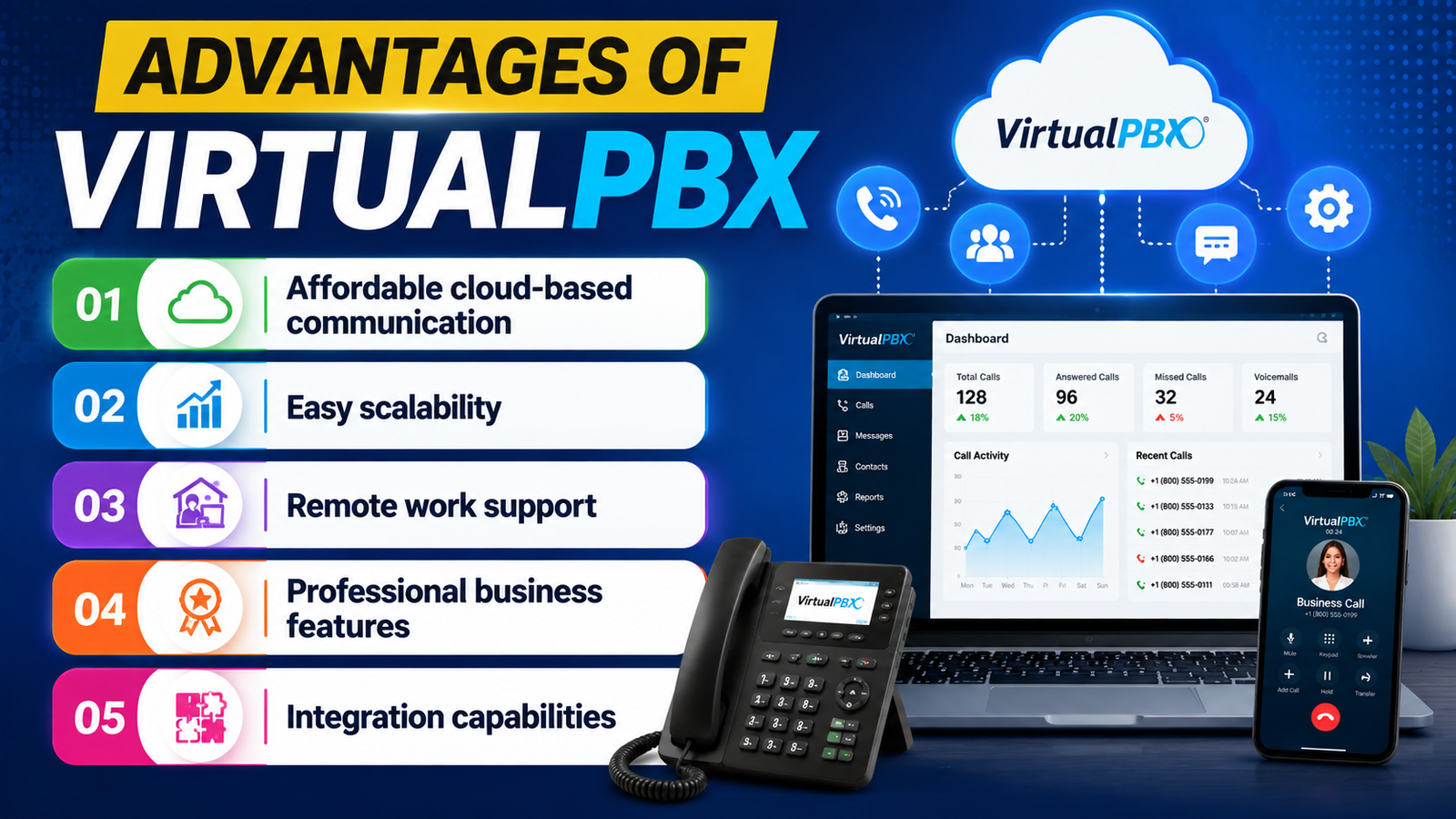
- Affordable cloud-based communication
- Easy scalability
- Remote work support
- Professional business features
- Mobile and desktop access
- Integration capabilities
Limitations
- Requires reliable internet connection
- Advanced features may require higher plans
- Initial configuration requires planning
Like any technology solution, VirtualPBX works best when businesses understand their communication requirements before implementation.
VirtualPBX Integrations and Productivity Benefits
Modern businesses use many software applications every day. A phone system becomes more powerful when it connects with other business tools.
VirtualPBX supports integrations with platforms such as CRM systems and productivity applications.
Integration benefits include:
- Better customer records
- Faster employee workflows
- Improved tracking
- Reduced manual work
For example, when a customer calls, a connected CRM system can help employees quickly access customer information.
This creates smoother conversations and improves service quality.
Is VirtualPBX the Right Choice for Your Business?
VirtualPBX is a strong option for businesses looking for a flexible and professional phone system without investing heavily in traditional hardware.
It is especially suitable for:
- Small businesses
- Remote teams
- Growing companies
- Customer support departments
- Sales organizations
Companies that need advanced communication management can benefit from features such as call analytics, routing, and integrations.
However, businesses with extremely specialized communication requirements should compare different solutions before making a final decision.
The right phone system depends on company size, budget, customer communication needs, and future growth plans.
The Future of Business Communication With Cloud Technology
Business communication continues to evolve with advancements in cloud computing and artificial intelligence. Companies are moving away from traditional phone infrastructure and adopting smarter digital communication platforms.
Future business phone systems will likely include more automation, AI-powered customer support, intelligent call analysis, and advanced integration with business software.
VirtualPBX represents this shift by providing businesses with flexible cloud communication tools that match modern workplace needs.
Conclusion
VirtualPBX provides businesses with a modern way to manage communication through cloud-based technology. By replacing traditional phone infrastructure with flexible software solutions, companies can reduce costs, support remote teams, and deliver better customer experiences.
With features such as call routing, mobile applications, business messaging, analytics, and integrations, VirtualPBX helps organizations create a professional communication environment.
For businesses looking to improve productivity and stay competitive, investing in a smart phone system is no longer optional. Communication is the foundation of customer relationships, and VirtualPBX offers tools that help companies build stronger connections.
Frequently Asked Questions
Q. What is VirtualPBX used for?
VirtualPBX is used for managing business communication through a cloud-based phone system. It allows companies to handle calls, messages, routing, and team communication without traditional phone hardware.
Q. Is VirtualPBX suitable for small businesses?
Yes, VirtualPBX is designed for small and medium-sized businesses that need professional communication features without expensive infrastructure.
Q. Does VirtualPBX support remote employees?
Yes, employees can use VirtualPBX mobile and desktop applications to access business communication tools from different locations.
Q. How much does VirtualPBX cost?
VirtualPBX pricing depends on the selected plan and features. Some plans start around $15 per user per month.
Q. Does VirtualPBX replace traditional phone systems?
Yes, VirtualPBX can replace many traditional business phone systems by providing cloud-based calling, routing, and communication features.

Recent Post
Understanding Managed Hosting Features and Tools Offered by WP Engine

A Practical Guide to Making the Most of gymdolphin for Fitness

Discovering Contemporary Men’s Clothing Styles at Incerunmen

Why Online Shoppers Are Exploring UOOZEE for New Products

How Weblium.com Helps Simplify the Website Creation Process

Understanding Supplement Selection and Quality at BulkSupplements.com

How Digital Solutions Are Evolving With CHENGDU OUMEI NETWORK INFORMATION L.T.D

Beauty Trends Worth Exploring With Dominique Cosmetics – 122027

The Growing Role of 3D Scanning and Revopoint 3D Technologies Inc
Releted Post