How Remote Simplifies Global Payroll & Compliance explains how Remote helps businesses manage international payroll, taxes, and labor law compliance with ease. The post highlights how Remote streamlines global hiring, ensures legal compliance across countries, and eliminates the complexity of paying remote teams—making global expansion faster, safer, and more efficient.
Imagine running a business where your team spans five countries, each with different tax laws, currencies, labor rules, and payroll schedules. Sounds exhausting, right? That’s global payroll in a nutshell. One small mistake—late tax filing, incorrect payslip, or misclassified worker—and suddenly you’re facing penalties, audits, or worse.
This is exactly where Remote steps in. Think of it as your global payroll GPS—it tells you where to go, what to avoid, and how to stay compliant without losing your sanity.
Let’s break down how Remote simplifies global payroll and compliance, without drowning you in legal jargon.
What Is Remote and Why It Matters
Remote is a global HR and payroll platform designed to help companies hire, pay, and manage international employees and contractors—legally and effortlessly.
Why does it matter? Because modern businesses are no longer limited by geography. Talent is everywhere. But laws? They’re very local. Remote bridges that gap.
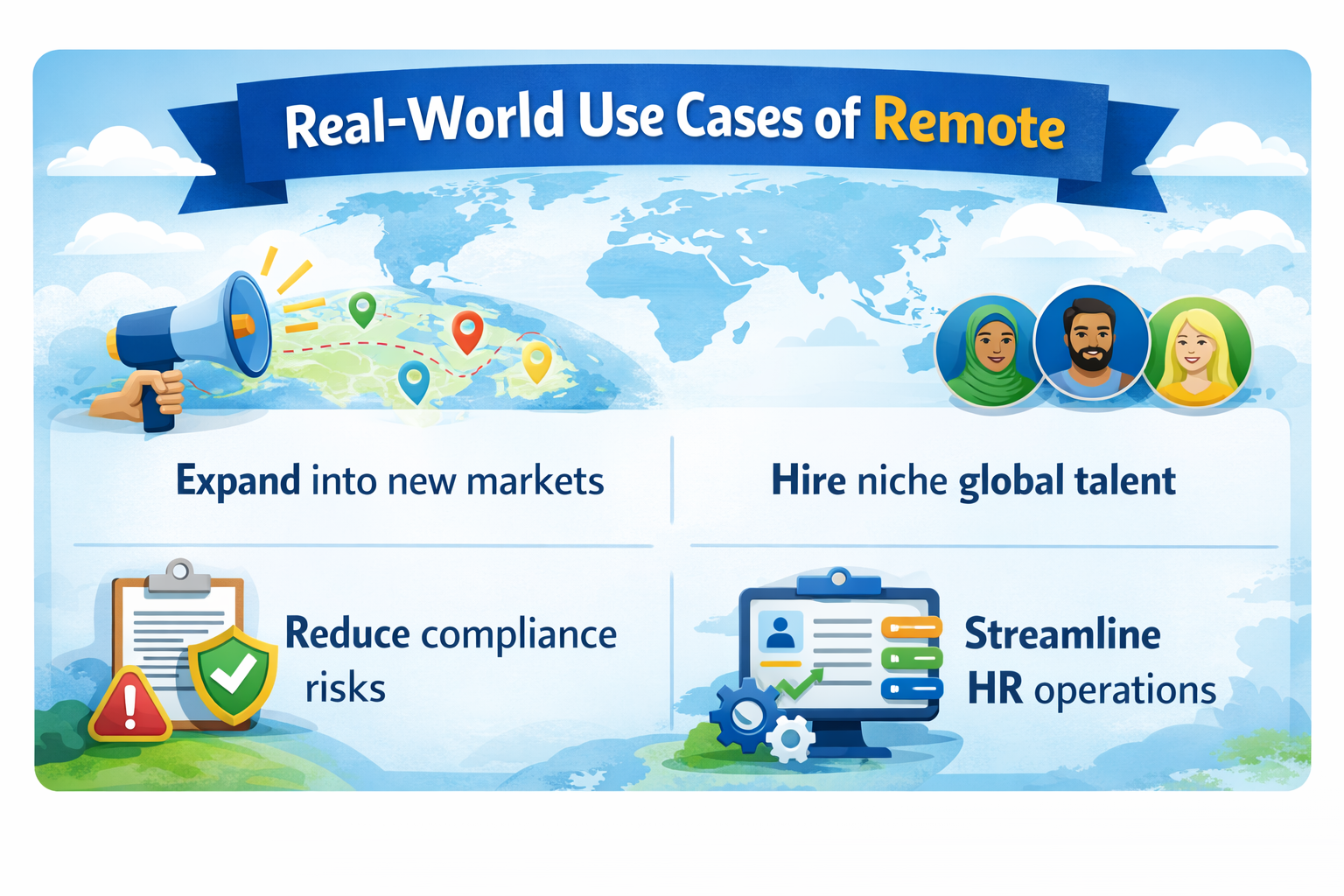
Instead of setting up foreign entities or juggling multiple payroll vendors, Remote gives you one platform, one process, and peace of mind.
The Growing Complexity of Global Payroll
Global payroll isn’t just “salary × exchange rate.” It includes:
Country-specific tax systems
Social security contributions
Mandatory benefits
Paid leave regulations
Termination rules
Payroll reporting formats
Managing this manually is like trying to spin ten plates at once. Eventually, one falls.
Why Compliance Is the Biggest Challenge
Compliance is the silent killer of global expansion.
Each country has its own:
Labor laws
Payroll calendars
Tax deadlines
Employee protections
And here’s the catch: ignorance is not an excuse. Governments expect full compliance from day one.
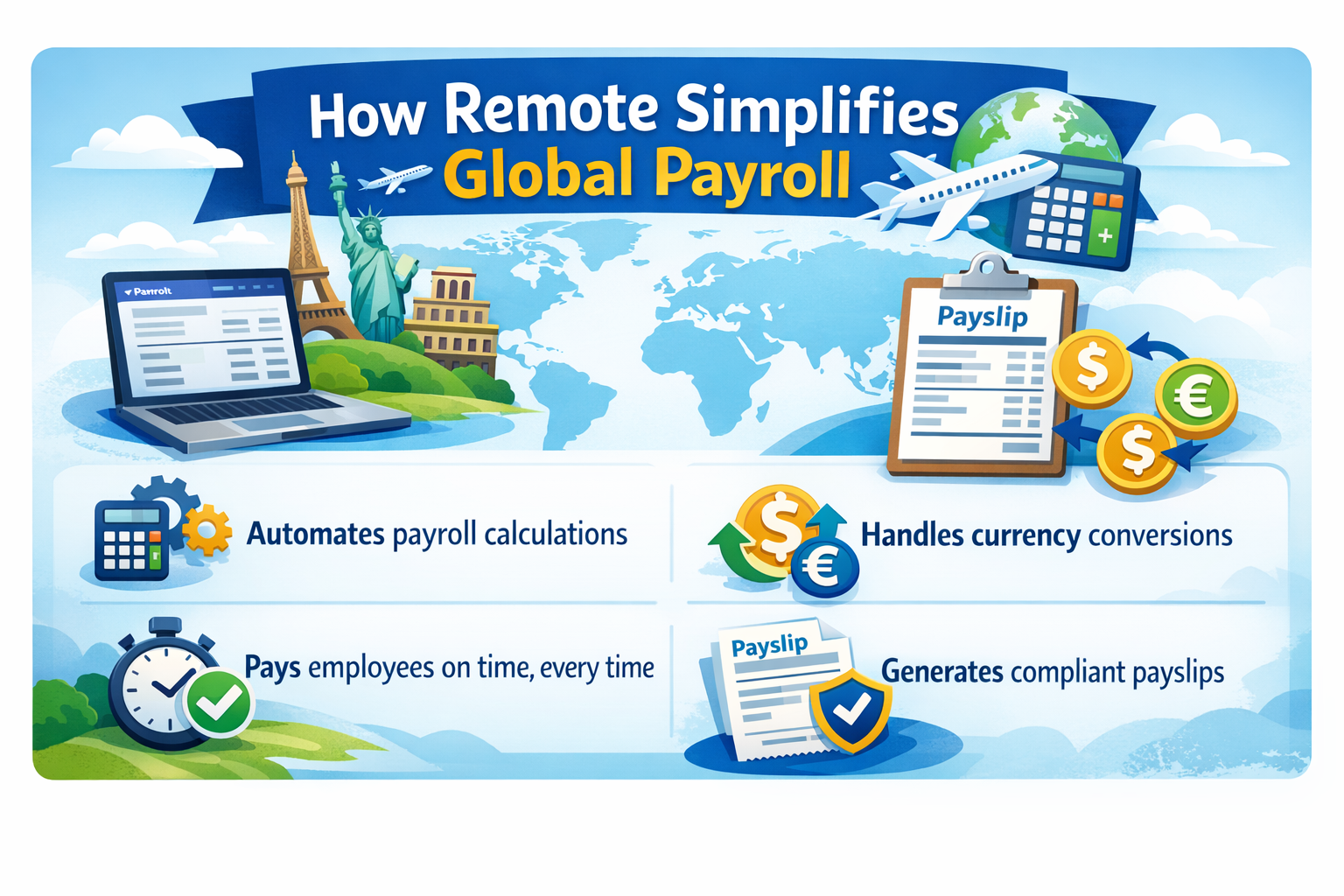
Remote solves this by embedding local compliance into its system—so you don’t have to become a legal expert overnight.
Understanding Global Payroll
Payroll vs. International Payroll
Domestic payroll is like driving on a familiar road. International payroll? That’s driving in a new country with different rules, signs, and penalties.
International payroll adds layers of:
Multi-currency payments
Cross-border taxes
Local employment laws
Remote removes these layers by centralizing everything.
Key Stakeholders in Global Payroll
Employees & contractors
Tax authorities
Local labor departments
Finance & HR teams
Remote acts as the coordinator, keeping everyone aligned.
Global payroll doesn’t have to be complicated, risky, or time-consuming. With Remote, businesses can focus on growth while payroll and compliance run quietly in the background—accurate, automated, and compliant.
In a world where talent knows no borders, Remote makes sure your payroll doesn’t either.
Frequently Asked Questions
Q. What makes Remote different from other payroll platforms?
Remote combines payroll, compliance, and legal expertise into one global platform.
Q. Can Remote handle both employees and contractors?
Yes, Remote supports compliant management of both employees and contractors worldwide.
Q. Is Remote suitable for small businesses?
Absolutely. Startups and SMBs benefit the most from Remote’s simplicity and scalability.
Q. Does Remote manage local taxes automatically?
Yes, Remote calculates, withholds, and files taxes according to local laws.
Q. Is Remote secure for sensitive payroll data?
Yes, Remote follows strict data protection and security standards.