banner
MEL Science

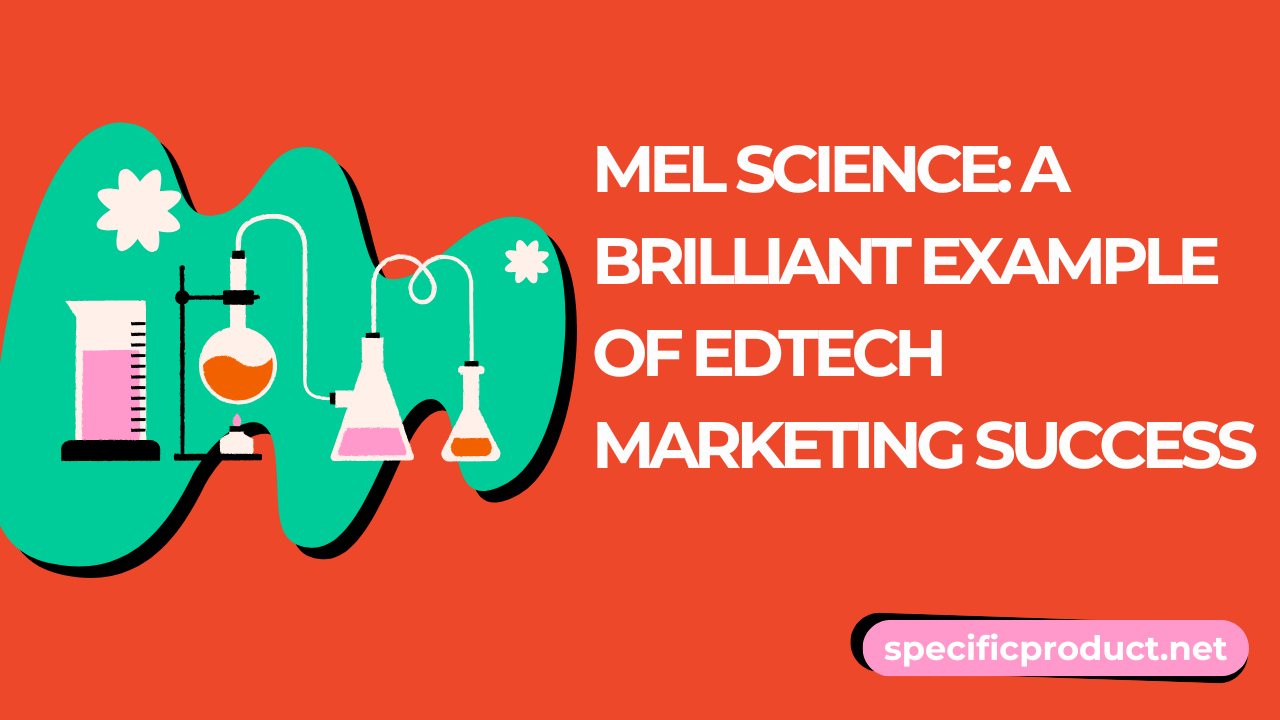
MEL Science: A Brilliant Example of EdTech Marketing Success

This blog explores how MEL Science became a brilliant example of EdTech marketing success by combining hands-on learning, smart branding, storytelling, and digital innovation to build trust, engagement, and long-term customer loyalty.

Education is serious business—but marketing it? That’s tough.

Parents are cautious. Kids are distracted. Schools move slowly. Yet somehow, one EdTech brand managed to break through all that noise and build a global fanbase. That brand is MEL Science.

Instead of shouting “learn science,” MEL Science quietly showed how fun, safe, and exciting science can be. And that’s exactly why it stands today as a brilliant example of EdTech marketing success.

What Is MEL Science?

MEL Science is an EdTech company that delivers hands-on science kits to children through a subscription model. Each box includes real experiments, step-by-step instructions, and digital content powered by augmented reality (AR).

Their main focus areas include:

    1. Chemistry
    2. Physics
    3. Biology
    4. STEM learning for kids

But MEL Science isn’t just selling kits—it’s selling curiosity, confidence, and future-ready skills.

Why EdTech Marketing Is So Challenging

Marketing education is harder than marketing entertainment or fashion. Why?

    1. Parents worry about safety
    2. Kids lose interest quickly
    3. Outcomes are long-term, not instant
    4. Trust matters more than hype

Most EdTech brands struggle because they talk about education instead of showing it in action. MEL Science flipped that approach.

How MEL Science Cracked the Code

MEL Science didn’t start with ads. It started with experience.

Their marketing success rests on three pillars:

    1. Product-led growth
    2. Emotional storytelling
    3. Visual, experience-driven marketing

In short, they let the product do the convincing.

Hands-On Learning as a Core Product Strategy

Kids don’t want lectures. They want action.

MEL Science boxes allow children to:

    1. Mix chemicals
    2. Build circuits
    3. Observe reactions
    4. Learn by doing

From a marketing perspective, this is gold. Every experiment becomes:

    1. A social media moment
    2. A YouTube demo
    3. A parent “wow” experience

Hands-on learning isn’t just educational—it’s highly shareable.

Subscription Model That Parents Love

The subscription model is simple and smart:

    1. Monthly or quarterly kits
    2. Age-appropriate content
    3. Predictable pricing

For parents, it feels like:

    • “Netflix… but for science education.”

This model improves retention, lifetime value, and brand loyalty—key EdTech marketing metrics.

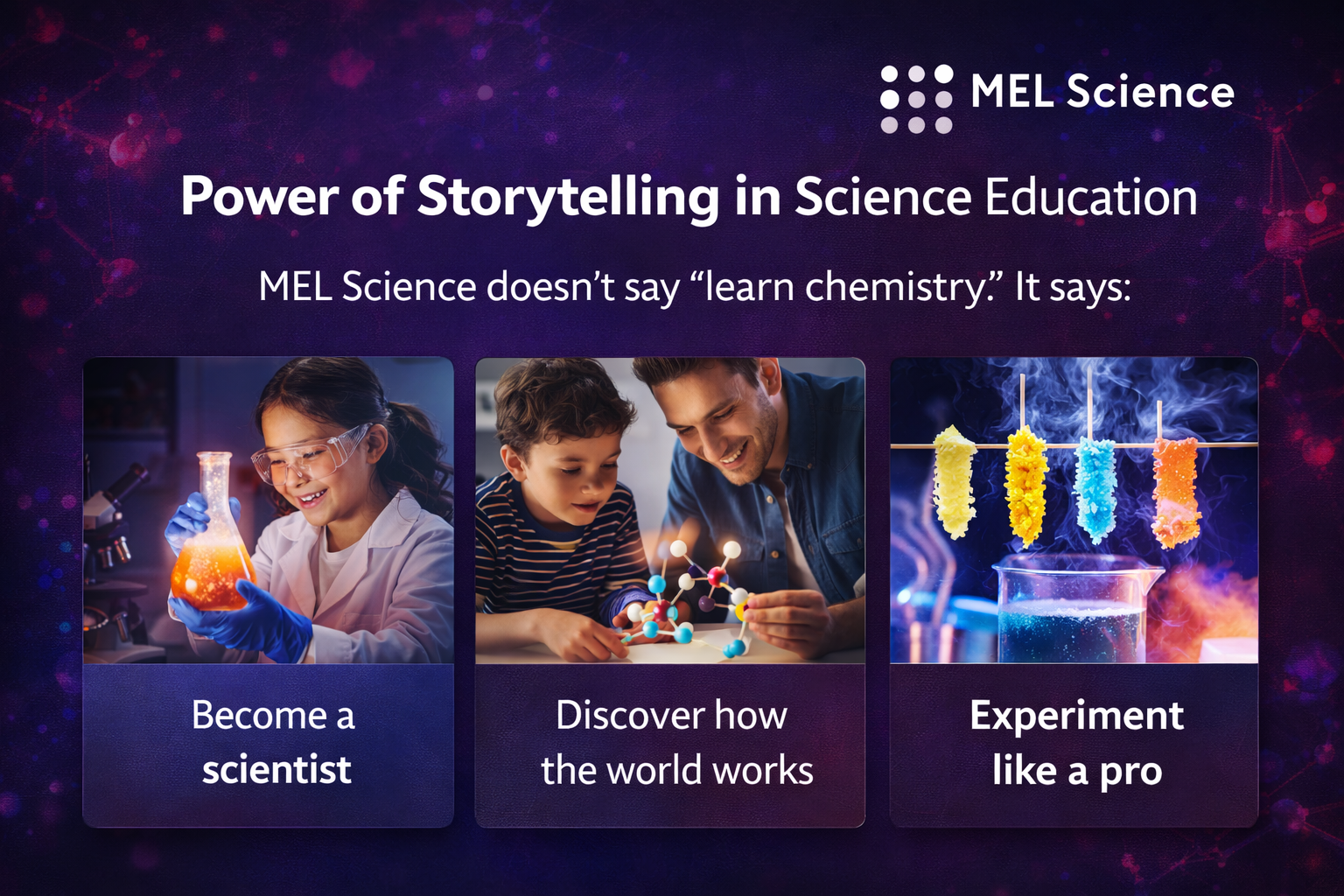
Power of Storytelling in Science Education

MEL Science doesn’t say “learn chemistry.”
It says:

    1. “Become a scientist”
    2. “Discover how the world works”
    3. “Experiment like a pro”

Each kit is framed as a mission, not a lesson. This narrative approach keeps kids engaged and parents emotionally invested.

Strong Brand Positioning in EdTech

MEL Science positions itself as:

    1. Premium but approachable
    2. Fun yet academically sound
    3. Safe, modern, and innovative

The branding—colors, visuals, language—feels more like a tech startup than a school textbook. That distinction matters.

Targeting Parents, Not Just Students

This is where MEL Science gets it right.

Kids are the users.
Parents are the buyers.

Marketing messages focus on:

    1. Child development
    2. Screen-free learning
    3. STEM career readiness
    4. Safe experiments at home

By speaking directly to parental concerns, MEL Science builds trust fast.

Content Marketing That Educates and Converts

MEL Science produces:

    1. Blog posts
    2. Experiment videos
    3. Educational explainers
    4. Parent guides

This content serves two purposes:

    1. Educates families
    2. Gently pushes conversions

It’s value-first marketing—and it works.

Influencer and YouTube Marketing Strategy

Science is visual—and YouTube loves visuals.

MEL Science collaborates with:

    1. Parenting influencers
    2. Science educators
    3. STEM YouTubers

Unboxing videos and experiment demos act as social proof, reducing hesitation for new buyers.

Social Media Presence and Community Building

On platforms like Instagram and Facebook, MEL Science highlights:

    1. Kids performing experiments
    2. Parent testimonials
    3. Behind-the-scenes content

This builds a community, not just a customer base.

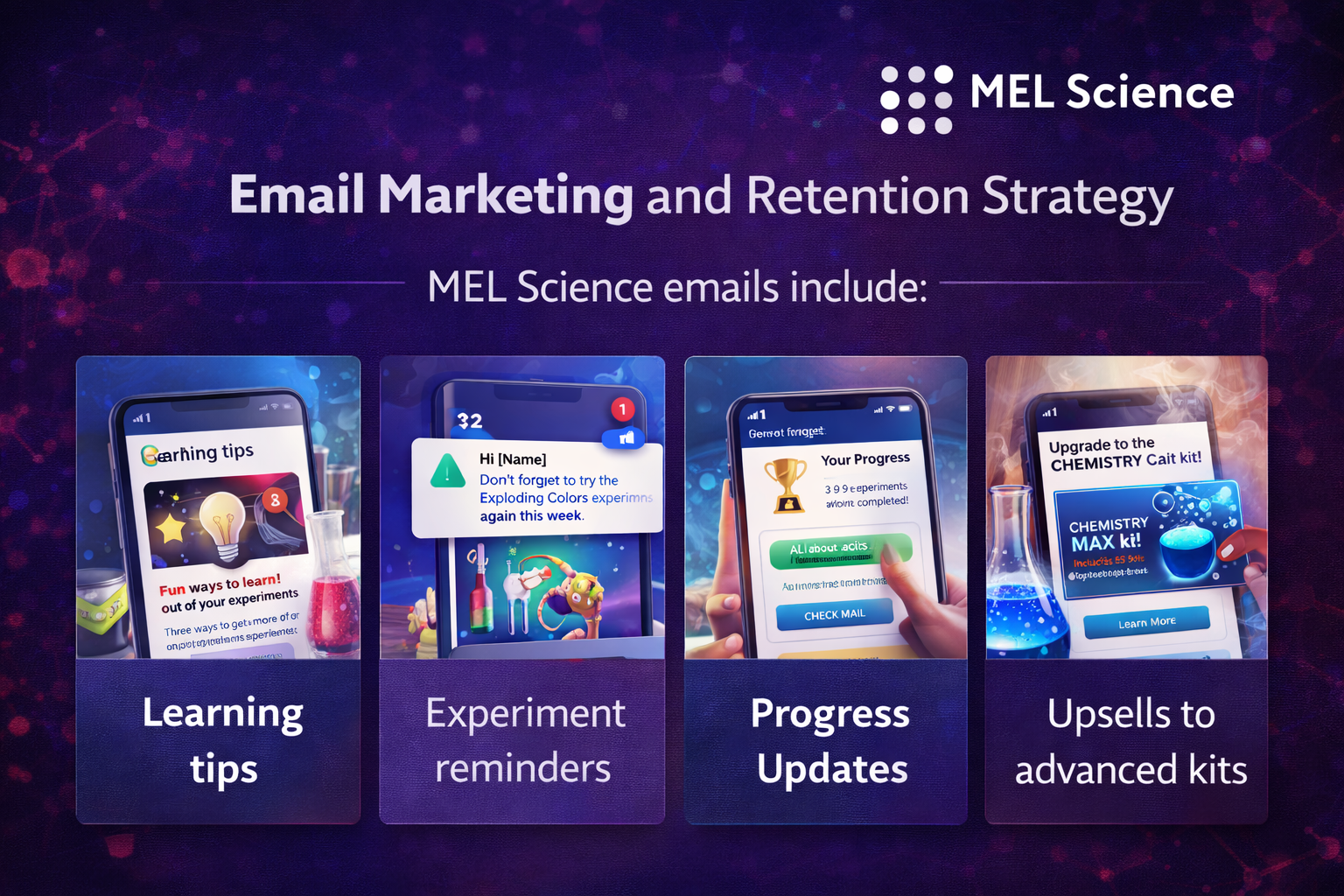
Email Marketing and Retention Strategy

Email isn’t used just for promotions.

MEL Science emails include:

    1. Learning tips
    2. Experiment reminders
    3. Progress updates
    4. Upsells to advanced kits

This keeps families engaged long after the first purchase.

Gamification and AR/VR Integration

MEL Science integrates AR to:

    1. Visualize molecules
    2. Explain complex concepts
    3. Add a “wow” factor

This isn’t gimmicky—it enhances understanding. And from a marketing angle, AR makes the product feel futuristic and premium.

Global Expansion and Localization Strategy

MEL Science operates internationally by:

    1. Localizing content
    2. Adjusting curriculum alignment
    3. Translating instructions

Their marketing adapts to cultural and educational differences, which fuels global growth.

Trust, Safety, and Credibility in Marketing

Science experiments raise safety concerns. MEL Science addresses this head-on by:

    1. Highlighting safety standards
    2. Showing parental supervision
    3. Using certified materials

Trust is baked into every campaign.

Customer Reviews and Word-of-Mouth Growth

Parents talk. Kids show friends. Teachers recommend.

MEL Science benefits massively from:

    1. Positive reviews
    2. Referrals
    3. Repeat subscriptions

Word-of-mouth becomes their strongest growth channel.

Comparison With Other EdTech Brands

Many EdTech brands focus on:

    1. Apps only
    2. Passive video learning
    3. Screen-heavy solutions

MEL Science stands out by blending physical + digital learning, which feels more balanced and engaging.

Pros and Cons of MEL Science

Pros

    1. Strong hands-on learning
    2. Excellent branding
    3. High engagement
    4. Effective subscription model

Cons

    1. Premium pricing
    2. Requires adult supervision
    3. Best suited for specific age groups

Key Marketing Lessons From MEL Science

What other EdTech brands can learn:

    1. Product experience beats aggressive ads
    2. Parents need reassurance, not buzzwords
    3. Visual content drives trust
    4. Community builds loyalty

MEL Science doesn’t chase trends—it builds systems.

Unboxing Experience as a Marketing Tool

Each box feels like a gift. Packaging, layout, and instructions are carefully designed to create excitement from the first moment.

That unboxing often ends up on social media—free marketing.

Free Trials and Entry-Level Offers

Lower-cost starter kits help:

    1. Reduce entry barriers
    2. Increase trial rates
    3. Build confidence

Smart funnel strategy.

Conclusion

MEL Science proves that great marketing doesn’t manipulate—it demonstrates value.

By combining hands-on learning, emotional storytelling, smart digital marketing, and a strong subscription model, MEL Science has become a standout success in the EdTech space.

For anyone studying EdTech marketing, MEL Science isn’t just a case study—it’s a blueprint.

Frequently Asked Questions

MEL Science is designed mainly for children aged 5–14, depending on the kit type.

Yes, all experiments follow strict safety guidelines and require adult supervision.

AR helps visualize scientific concepts like molecules and reactions, enhancing understanding.

For families seeking hands-on STEM learning, the value justifies the premium cost.

Because it focuses on experience, trust, storytelling, and long-term engagement—not just ads.
Shopping Basket