Why Tenable | Vulnerability Management Is Critical for Cybersecurity in 2026
This blog post explains why Tenable | Vulnerability Management is critical for cybersecurity in 2026, highlighting how continuous visibility, risk-based prioritization, and proactive vulnerability detection help organizations reduce attack surfaces, prevent breaches, and stay compliant in an evolving threat landscape.
Introduction: Cybersecurity in 2026 – A New Reality
Cybersecurity in 2026 is no longer just an IT problem—it’s a full-blown business survival issue. Attacks are faster, smarter, and more automated than ever before. Hackers are no longer knocking on the door; they’re already testing every window, every lock, every weak point in your digital infrastructure.
In this high-risk environment, vulnerability management isn’t optional anymore. It’s essential. And this is exactly where Tenable steps in.
What Is Vulnerability Management?
Definition and Core Concept
Vulnerability management is the continuous process of identifying, assessing, prioritizing, and fixing security weaknesses across your systems, networks, applications, and cloud environments.
Think of it like regular health checkups. You don’t wait for a heart attack to see a doctor—you monitor, detect, and prevent issues early.
Vulnerability vs Threat vs Risk
Let’s simplify this:
Vulnerability: A weakness (like outdated software)
Threat: Something that can exploit it (hackers, malware)
Risk: The damage caused if exploitation happens
Vulnerability management focuses on closing gaps before threats turn into disasters.
The Rising Cyber Threat Landscape in 2026
AI-Powered Attacks
In 2026, attackers are using AI the same way defenders do—only faster and with fewer ethical boundaries. Automated scanning, phishing at scale, and zero-day exploitation are becoming the norm.
Manual security checks simply can’t keep up.
Cloud, IoT, and Remote Work Risks
With hybrid work, cloud-native apps, and IoT devices everywhere, the attack surface has exploded. Every new device, API, or cloud workload is a potential entry point.
More complexity = more vulnerabilities.
Why Traditional Security Models Are No Longer Enough
Firewalls and antivirus tools used to be enough. Not anymore.
Traditional security is reactive—it responds after something goes wrong. Vulnerability management, on the other hand, is proactive. It assumes breaches are possible and focuses on reducing exposure continuously.
That mindset shift is critical in 2026.
Introduction to Tenable
Tenable is a global leader in vulnerability and exposure management. Its mission is simple but powerful: help organizations understand and reduce cyber risk.
Instead of just listing vulnerabilities, Tenable shows which ones actually matter.
Tenable provides real-time visibility into all assets—on-premises, cloud, endpoints, and even OT/IoT systems. If it exists, Tenable can see it.
You can’t protect what you can’t see, right?
Risk-Based Prioritization
Not all vulnerabilities are equal. Tenable uses threat intelligence, exploit data, and asset context to prioritize risks that are most likely to be exploited.
This saves time, money, and sanity.
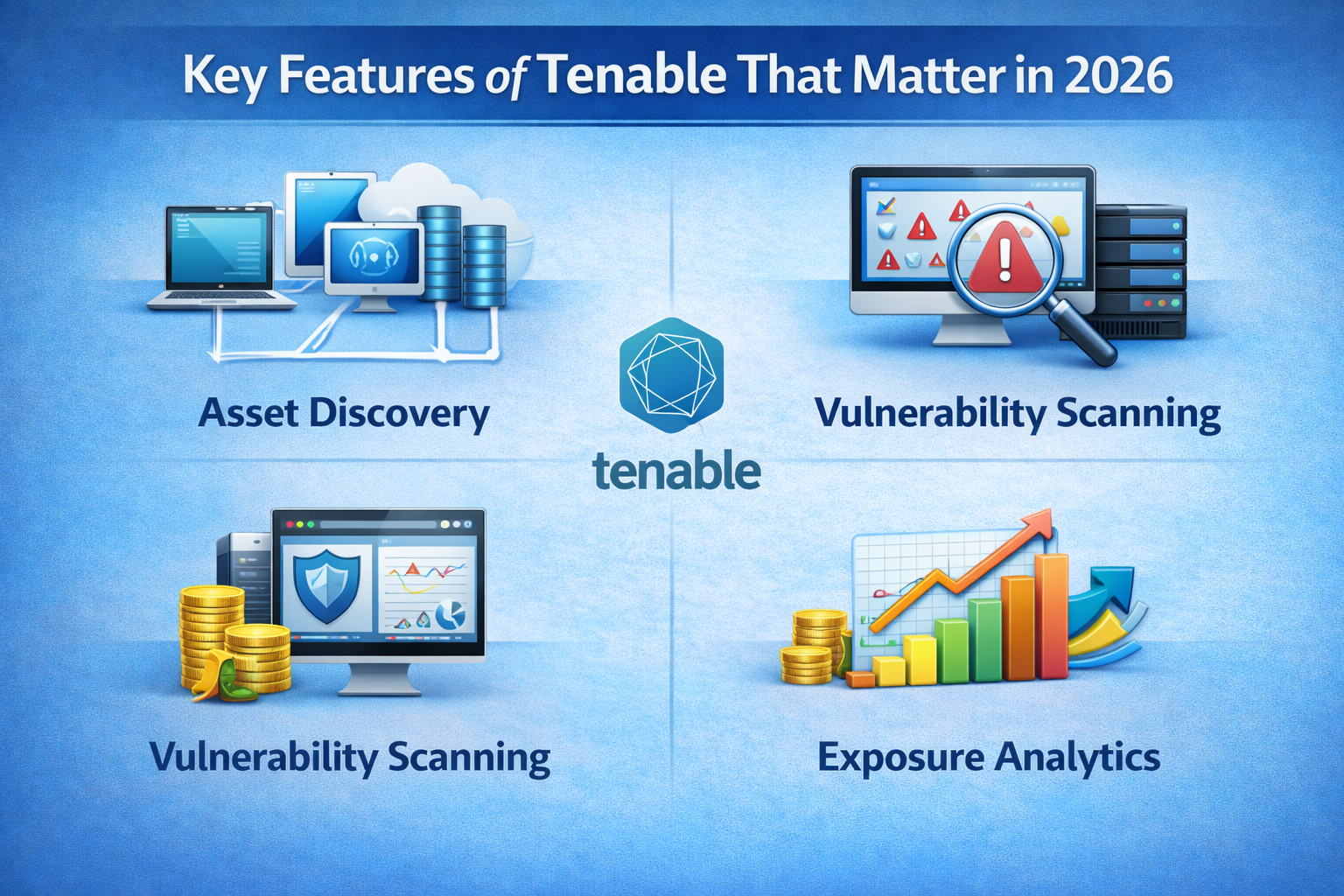
Key Features of Tenable That Matter in 2026
Asset Discovery
Tenable automatically discovers known and unknown assets across your environment, eliminating blind spots that attackers love.
Vulnerability Scanning
From misconfigurations to zero-day vulnerabilities, Tenable scans continuously—not just once a month.
Exposure Analytics
Instead of drowning teams in alerts, Tenable translates vulnerabilities into business risk. This helps CISOs explain security issues in plain business language.
In 2026, most organizations operate across AWS, Azure, GCP, and on-prem systems. Tenable provides unified visibility across all of them.
It’s like having one dashboard instead of juggling five different tools.
Why Vulnerability Management Is Mission-Critical
Preventing Data Breaches
Most breaches don’t happen because of advanced hacking—they happen because of unpatched, known vulnerabilities. Vulnerability management shuts that door early.
Reducing Attack Surface
By continuously identifying and fixing weaknesses, organizations dramatically reduce the number of ways attackers can get in.
Tenable is already aligned with these trends, not chasing them.
Why Organizations Must Act Now
Cyber risk isn’t slowing down. Waiting means accumulating vulnerabilities—and attackers love delays.
Organizations that adopt vulnerability management now will survive 2026. Those that don’t may not.
Conclusion
In 2026, cybersecurity is about visibility, prioritization, and speed. Vulnerability management sits at the heart of all three—and Tenable delivers exactly that.
By helping organizations understand where they are exposed and what to fix first, Tenable transforms cybersecurity from chaos into clarity.
In a world where breaches are inevitable, managing exposure is the smartest defense strategy—and Tenable makes it possible.
Frequently Asked Questions
Q. Why is vulnerability management more important in 2026?
Because attack surfaces are larger, threats are faster, and manual security approaches can’t keep up.
Q. How does Tenable differ from basic vulnerability scanners?
Tenable prioritizes vulnerabilities based on real-world risk, not just severity scores.
Q. Is Tenable suitable for cloud environments?
Yes, it provides strong visibility across hybrid and multi-cloud infrastructures.
Q. Can small businesses use Tenable?
Absolutely. Vulnerability management is critical for organizations of all sizes.
Q. Does vulnerability management replace other security tools?
No, it complements them by reducing exposure before attacks happen.