How Cider Performs in Influencer Marketing Campaigns
How Cider Performs in Influencer Marketing Campaigns explores how Cider leverages influencer partnerships across platforms like TikTok and Instagram to drive brand awareness, engagement, and conversions. The post breaks down Cider’s influencer strategy, content formats, platform focus, and key lessons that make its campaigns highly effective in today’s social media–driven fashion market.
Influencer marketing isn’t just a trend anymore—it’s the backbone of modern fashion branding. And when we talk about brands that really understand this game, Cider often tops the list.
From TikTok hauls to Instagram reels, Cider has built a powerful presence by partnering with influencers who actually feel relatable. But how well does Cider really perform in influencer marketing campaigns? Is it hype, or is there a solid strategy behind the scenes?
Let’s break it all down—no fluff, just real insights.
Understanding Cider as a Digital-First Fashion Brand
What Is Cider and Who Is It For?
Cider is a global online fashion brand that targets Gen Z and young millennials. Think trendy, affordable, and social-media-friendly clothing that looks like it jumped straight out of your Instagram feed.
A Brand Built for Social Media
Unlike traditional fashion brands, Cider was born online. That means influencer marketing isn’t an add-on—it’s baked into their DNA.
Why Influencers Matter More Than Ads
Banner ads are easy to ignore. But when your favorite creator styles an outfit in a 30-second reel? That hits differently. Cider understands this psychology perfectly.
Cider’s Influencer Marketing Strategy Explained
Focus on Micro and Mid-Tier Influencers
Cider doesn’t rely only on mega-celebrities. Instead, it works heavily with:
Micro-influencers (10K–100K followers)
Mid-tier influencers (100K–500K followers)
Why? Because smaller creators feel more authentic and usually have higher engagement rates.
Authenticity Over Perfection
You’ll rarely see overly polished, studio-style content. Most Cider collaborations feel casual—mirror selfies, bedroom try-ons, and everyday styling videos.
The “Friend Recommendation” Effect
This approach makes the content feel like a friend saying, “Hey, this dress is actually good.” And that’s powerful.
Platforms Where Cider Dominates
TikTok – The Real Growth Engine
If influencer marketing were a race, TikTok would be Cider’s fastest car.
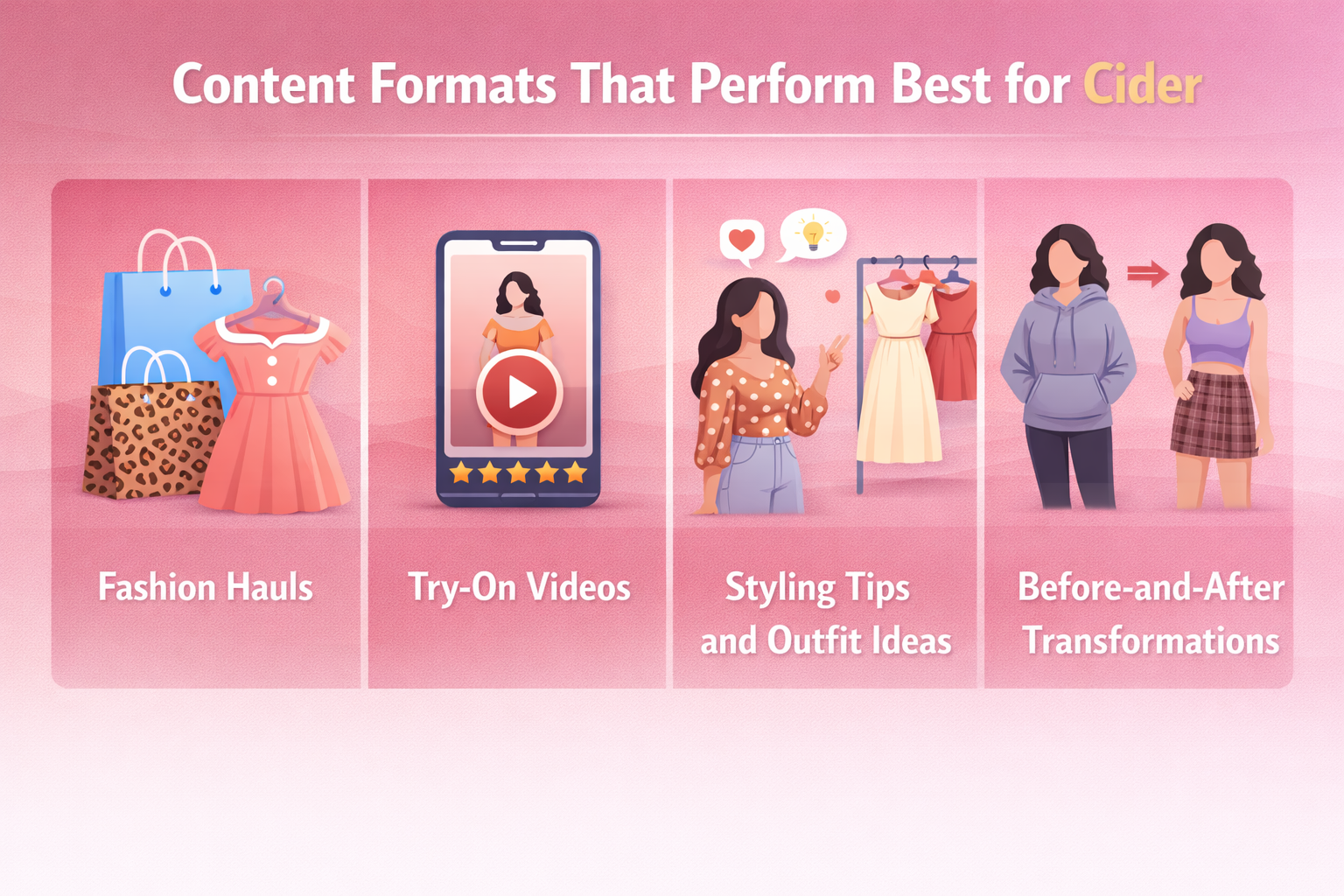
Try-on hauls
“Get dressed with me” videos
Styling challenges
These formats consistently pull in millions of views.
Why TikTok Works So Well for Cider
TikTok rewards authenticity, not polish. That aligns perfectly with Cider’s influencer strategy.
Instagram – Visual Storytelling at Scale
Instagram still plays a major role, especially through:
Reels
Stories with swipe-up links
Carousel outfit posts
Instagram as a Conversion Tool
While TikTok drives discovery, Instagram often closes the sale.
Influencer marketing works best when it’s ongoing, not one-off.
Let Creators Be Themselves
Scripts kill authenticity. Cider allows creative freedom—and it shows.
Data + Creativity = Results
Performance tracking combined with trend awareness is the secret sauce.
Conclusion
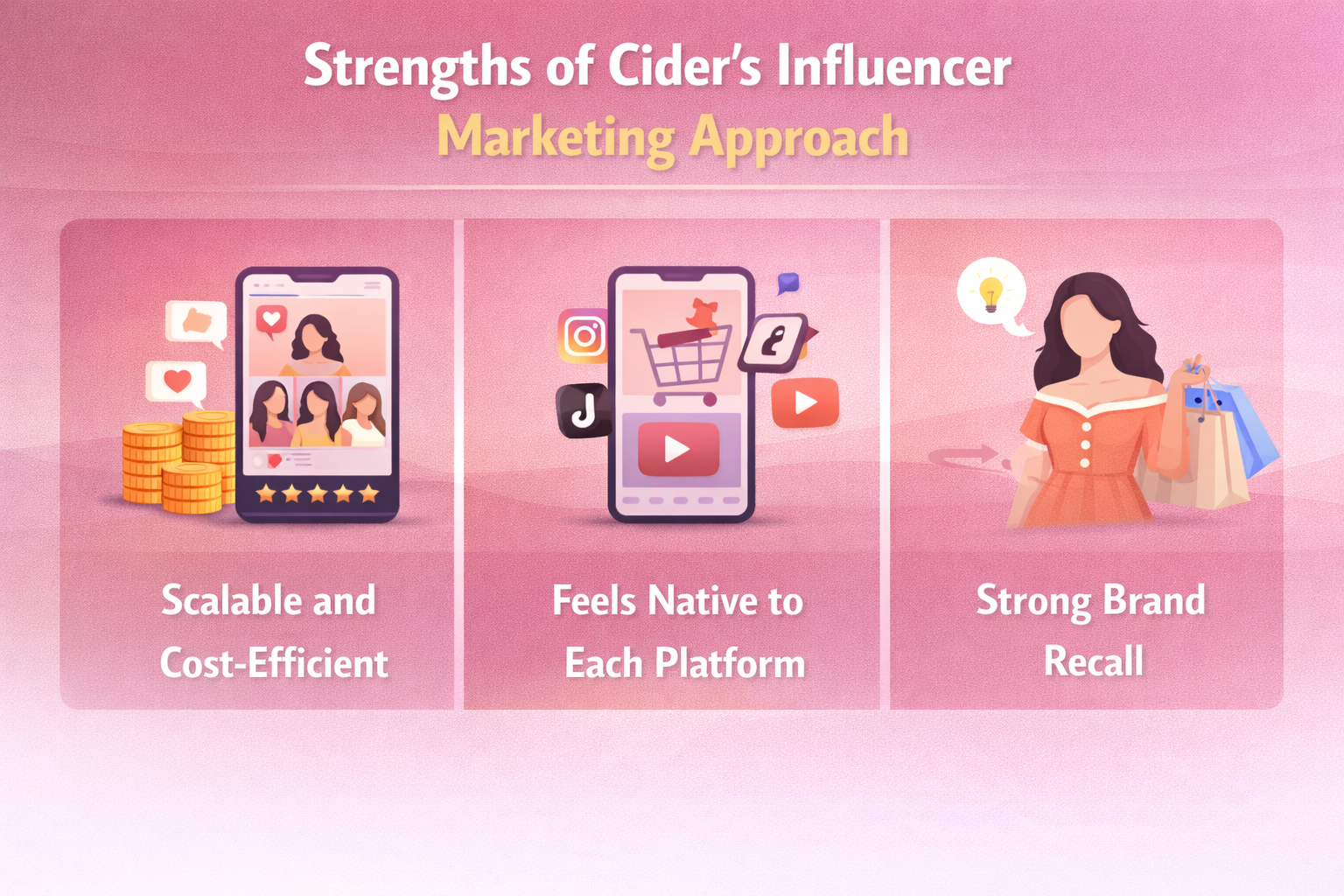
Absolutely—Cider’s influencer marketing performance is a masterclass in modern digital branding. By prioritizing authenticity, platform-native content, and creator relationships, the brand has turned influencers into its most powerful sales engine.
Is it perfect? No. But in a crowded fashion market, Cider stands out by understanding one simple truth: people trust people more than ads.
Frequently Asked Questions
Q. Why does Cider focus so much on influencers?
Because influencer content feels more authentic and drives higher engagement than traditional advertising.
Q. Which platform works best for Cider’s influencer campaigns?
TikTok performs best for reach and discovery, while Instagram helps with conversions.
Q. Does Cider work with small influencers?
Yes, micro-influencers are a key part of Cider’s strategy.
Q. Are influencer discount codes effective for Cider?
Very effective—they drive urgency and help track campaign ROI.
Q. Can other brands copy Cider’s influencer strategy?
Can other brands copy Cider’s influencer strategy?